Mapping Child Protection Systems in the EU
This online resource provides an overview of research, conducted by the European Union Agency for Fundamental Rights (FRA), on national child protection systems in the 28 European Union (EU) Member States.
This report investigates the current experience of siblings in the care system in the UK and whether some placement types are more likely than others to enable siblings to be
raised together.
This paper describes a study that examined the economic challenges faced by low-income, unmarried parents in the United States who participated in the Strong Couples - Strong Children (SC - SC) program, a federally funded initiative intended to help strengthen relationships of fragile families by providing relationship education programs.
This paper discusses and examines the lessons learned from the Munro Review relevant for looked after children. The Munro Review provides an analysis of the current state of the child protection system, challenging bureaucratised practice and arguing for a reclaiming of professional social work identity, knowledge and understanding.
This editorial piece from the Child & Youth Services journal makes observations about the children who live away from home and their vulnerability to violence, the shift in the use of violence as a threat to democracy to its use as a defense of democracy, and the exclusion of young people from globalization.
This report from Family for Every Child and partners summarises research on children’s reintegration that took place in Mexico, Moldova and Nepal from 2011 to 2014.
This report documents a study of the reintegration of child domestic workers in Nepal.
This paper reports on the Mexican arm of Family for Every Child’s three-country study on strategies to ensure the sustainable reintegration of children without parental care.
This document was developed with the aim of assisting Charitable Children’s Institutions (CCIs) in Kenya to boost their capacity for determining which children need to be admitted into CCIs, how to provide adequate care and protection to the children and how to plan the eventual exit of the children back to their families and communities.
The First Peoples Child & Family Review proudly presents this Special Edition on Custom Adoptions in partnership with the Siem Smun’eem Indigenous Child Wellbeing Research Network at the University of Victoria. This edition contains research articles, agency experiences, cultural perspectives and personal stories that highlight custom adoption from a historical and contemporary perspective.
This paper forms Part 2 of a two-part discussion paper on Indigenous custom adoption.
This paper forms Part 1 of a two-part discussion paper on Indigenous custom adoption.
This article is a review of lessons learned from the Yellowhead Tribal Services Agency (YTSA) pilot program.
This paper calls for creative pathways of engagement that delineate places of belonging for and with Indigenous youth in care.
This article describes a group of Elders in the Lax kw’alaams community of British Columbia who provide support and mentorship to the Lax kw’alaams children in care.
This study examines the relationship between foster care placement as a predictor of adult substance use disorders (including frequency, severity and type), mental illness, vocational functioning, service use and duration of homelessness among a sample of homeless adults with mental illness.
This edited volume introduces the complexity of intercountry adoption and gives voice to the many sides of the intercountry adoption debate – for, against, and the ranges in between.
The aim of this study was to assess the prevalence and comorbidity of mental disorders applying diagnostic interviews in an entire population of adolescents living in residential youth care (RYC) in Norway.
This report from Family for Every Child begins to fill the gap in understanding on how to deliver effective, safe foster care programmes through an exploration of the literature and interviews with experts.
This report from Family for Every Child explores rising concerns about the expansion of foster care services in low and middle income countries, it begins to fill the gap in understanding, and aims to assist in both states’ and NGOs’ decisions on whether to invest in foster care, and in the kinds of supportive services needed to make foster care safe and effective.
This easy to use resource from the Ministry of Gender Labour and Social Development in Uganda, in consultation with civil society, outlines a continuum of care framework for responding to vulnerable children.
The Government of Brazil and the Global Movement for Children in Latin America and Caribbean (MMI LAC), hosted a regional Expert Consultation on Violence against Children and Care prior to the 21st Pan American Child and Adolescent Congress.
In advance of the 21st Pan American Child and Adolescent Congress, an international consultation on the elimination of violence against children in alternative care was convened. This position statement from the consultation was presented at the 21st Pan American Child and Adolescent Congress.
This report from SOS Children’s Villages and the University of Bedfordshire provides reviews and assessments of the implementation of the Guidelines for the Alternative Care of Children in 21 countries around the world.
This Unified Resolution from the Twenty-First Pan-American Child and Adolescent Congress highlights resolutions and recommendations relevant to violence against children, recognizes achievements made by Member States in addressing violence against children, and presents 17 specific resolutions related to ending and preventing violence against children in the Americas.
Wendy McMahan, Director of Church Engagement for Food for the Hungry, shares a personal anecdote from her own family, illustrating the importance of family care.
This paper combines data on the age distribution of current and projected mortality from Ebola with the fertility distribution of adults in Guinea, Liberia, and Sierra Leone, to estimate the likely impact of the epidemic on the number of orphans in these three countries.
This qualitative study explored the experiences of adults who had lived in group home care as adolescents and transitioned back into the community at the end of their treatment.
This study compares the development of children living in orphanages with that of children living in slums with their biological parents in Odisha, India.
This document provides guidelines to reintegrating trafficked and displaced children in Nepal, based on the approach and methodology developed and utilized by Next Generation Nepal (NGN) and The Himalayan Innovative Society (THIS).
The present study aimed to evaluate and discuss the appropriateness of institutions caring for Orphans and Vulnerable Children (OVCs) in the face of HIV/AIDS through a systematic literature review.
The Office of the Inspector General at the Department of Health and Human Services in the USA conducted a study, focused on four states in the US, to determine whether children in foster care received initial and periodic health screenings as established in each State’s plan.
This paper identifies the challenges the OVC are experiencing in schools as absenteeism, lack of physical infrastructure, insecurity, psychological trauma, among others. The paper also proposes strategies and programmes that various stakeholders have, and should put in place to assist OVC.
This factsheet looks at whether States in the US are following best practices in regards to the Indian Child Welfare Act, such as notification of Tribes and placement preferences. Findings from the Reviews are presented.
In January and February of 2015, in order to create an evidence-based foundation on which to design community-oriented family preservation services, FCI conducted a rapid assessment survey of 366 Palanhar Yojana beneficiary families in the city of Udaipur, Rajasthan, India.
This article provides an overview of inter-country adoption of children from the United States to other countries.
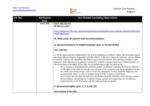
This country care review includes the care-related Concluding Observations adopted by the Committee on the Rights of Persons with Disabilities during the sixteenth session (15 Aug 2016 – 2 Sep 2016) of the Convention on the Rights of Persons with Disabilities.
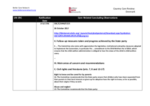
This country care review includes the care-related Concluding Observations adopted by the Committee on the Rights of the Child as part of its examination of the third to fifth periodic reports of Uruguay (CRC/C/URY/3-5).
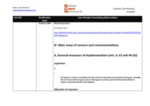
This country care review includes the care-related Concluding Observations adopted by the Committee on the Rights of the Child as part of its examination of the third to fifth combined periodic reports of Tanzania (CRC/C/TZA/3-5).
This country care review includes the care-related Concluding Observations adopted by the Committee on the Rights of the Child as part of its examination of the fourth periodic reports of Switzerland (CRC/C/CHE /2-4).
This country care review includes care related Concluding Observations adopted by the Committee on the Rights of Persons with Disabilities and the Committee on the Rights of the Child.
This country care review includes the care-related Concluding Observations adopted by the Committee on the Rights of the Child and the Committee on the Rights of Persons with Disabilities as part of the Committees' examinations of the periodic reports of Iraq.
This country care review includes the care-related Concluding Observations adopted by the Committee on the Rights of the Child as part of its examination of the consolidated third and fourth periodic reports of Jamaica (CRC/C/JAM/3-4).
This country care review includes the care-related Concluding Observations adopted by the Committee on the Rights of the Child as part of its examination of the combined second and third periodic reports of The Gambia (CRC/C/GAM/2-3).
This country care review includes the care related Concluding Observations adopted by the Committee on the Rights of the Child.
This paper systematically reviews surveys of kinship carers in Australia, New Zealand and the United Kingdom to identify messages for policy and practice about the characteristics and support needs of kinship care families.
This report is based on the outcomes of a survey addressed to eight National Coordinators of the Opening Doors campaign. It aims to assess the extent to which EU Member States have used ESIF to catalyse child care systems reform.
This report - from the Better Volunteering, Better Care Initiative and its members - seeks to understand the trends and motivating factors for volunteerism in care centres for children.
This overview is intended to contribute to discussions on international volunteering in residential care centres as an anecdotal research piece on the situation in Ghana.
This video was produced as part of the “Don’t Create More Orphans” Campaign, developed by Child Safe Network, Friends International, and partners.
This podcast is a presentation given by Kate Van Doore at the Interdisciplinary Conference on Human Trafficking held on October 9-11 2014 at the University of Nebraska.
This qualitative study sought to understand the experiences of parents in England who are separated from their children due to their placement in a secure psychiatric center. The study included participants whose children had been placed into foster or kinship care or family adoption.
This report summarises the findings of original research commissioned by the National Society for the Prevention of Cruelty to Children (NSPCC) in the UK carried out by the University of Edinburgh/NSPCC Child Protection Research Centre to address a significant gap in current understandings of deaf and disabled children and young people's experiences of the child protection system.
This review of literature covers international material related to stability and permanence for disabled children, in particular permanence achieved through fostering and adoption.
The purpose of the research highlighted in this report was to assess and analyze the extent to which World Vision UK is reaching ‘the most poor and marginalised’ or Most Vulnerable Children (MVC) through its Child Protection programming in Cambodia, Tanzania, and Eastern DRC.
In this comment, published in the Houston Law Review, the author, Destinee Roman describes and assesses the practice of “re-homing” adopted children.
In this brief article, the authors make their case for extending the age limit for young people to receive care in the foster care system, focusing on the UK and the US.
This paper offers strategic guidelines to improve alternative care for children younger than six years of age, who are under protective measures.
This overview document provides a brief update on child care reform in Rwanda.
This paper reviews the literature on foster care and explains the issues that foster children in Canada experience.
The aim of this study was to explore the experience of consultation in three residential childcare settings in the UK.
This post on the Missions Dilemma website features an article and 30 minute documentary film on the harmful impact of institutionalization on children.
This report aims to provide the basis for an agenda to improve university attendance among care leavers in Australia by highlighting the nature and extent of the problem, and suggesting practical solutions within both the education and community service sectors.
In this article, the author, David Graham, draws comparisons between the experiences and needs of youth transitioning out of care in the UK and those of individuals who are formerly incarcerated reintegrating into society.
This Call for Change from the ‘SAFe’ Campaign in Uganda provides an overview of the situation of orphaned and vulnerable children in Uganda, highlights key concerns related to this situation, and outlines ways forward for strengthening families.
This study has, through an immense literature review analysis explored: the role of OVC care institutions; policy environment of care and protection of OVCs; care of OVCs in institutional care in both South Africa and Botswana; and the experiences of OVCs in care institutions.
This report examines and analyses policies and provision for family support and parenting support based on general literature searches and evidence gathered from 33 UNICEF national offices and detailed case studies of nine countries.
The Government of Ghana has established a relatively comprehensive legal framework for child protection, guided by the Constitution and the Children’s Act 1998 (Act 560).
The present study, through an extensive review of literature has explored and reconceptualised institutional care and considered the dynamics of institutionalization. The study also examines the effects and impacts of institutionalization on OVCs in South Africa, such as educational attainment, socialization and psychosocial impacts.
In this article, the author addresses the topic of child neglect, or allegations thereof, as it relates to children and families in the Child Welfare System in the United States.
The report from the two-day Training Workshops on “Mental Health and Interventions for Better Care and Management of Institutionalized Children and Young Adults” is now available.
This report is a product of a three-year investigation by Disability Rights International (DRI) into the abuses experienced by children - both with and without disabilities - in large-scale institutions, psychiatric facilities, and boarding schools in Ukraine, of whom there are nearly 100,000, according to the report.
This report from UNICEF and World Vision International documents country level approaches that respond to HIV and child protection challenges facing children and adolescents by linking both those responses.
The initial goal of the development of these guidelines was to seek to regulate Guardianship and Foster Care of children in Kenya.
This study was aimed at assessing growth and developmental outcomes of children living in orphanages in Odisha, India aged birth to 72 months and to make recommendations for “possible remedial measures” for addressing poor growth and developmental outcomes for children in institutions.
This report provides a general background to the demographic makeup of the population of unaccompanied minors who have migrated to Sweden, including an examination of their educational and employment characteristics.
This report examines the policy challenge in the United States of balancing protection and immigration enforcement in the recent unaccompanied child migration “crisis” in the US.
In this “Quick Lesson About Therapeutic Foster Care,” the author provides a description of, and background information on, therapeutic foster care in the United States, an overview of national statistics regarding therapeutic foster care, and an overview of the risk factors and symptoms associated with children in need of therapeutic foster care.
This paper explores the impact of temporary labour migration of parent(s) on school attendance of children between 6–14 years and their dropping out from school through an analysis of cases from both ends of the migration stream in India - children accompanying their migrant parents and children left behind.
This policy brief from the World Bank provides an overview of cash transfers in African countries.
This study was designed to illuminate the different manifestations of transactional sexual exploitation and abuse among Rwanda's children in order to inform effective responses by policies, programs, and communities.
This brief was prepared by the Rwandan Ministry of Gender and Family Promotion (MIGEPROF), requesting the Cabinet to approve the proposed child care reform strategy and to support its implementation.
This paper provides an overview of the violence perpetrated by gangs and other criminal organizations in Mexico and Central America which compels many children to flee their communities. The paper also describes the US government’s obligations to protect unaccompanied children upon arrival, and good practices of other governments relating to the protection of child migrants and refugees.
This leaflet was developed by the Working Group ‘Quality of Care’ of Better Care Network. It is published by Better Care Network Netherlands. The leaflet provides useful information on child development and children’s care for those planning to volunteer at orphanages in developing countries.
The 2nd Annual Global Social Service Workforce Alliance Symposium was held on June 10, 2015. The full webcast, presentations, and summary are now available.
This first annual report from the Global Social Service Workforce Alliance, published on June 10, 2015, sheds light on the social service workforce, an important group of people who help to ensure that effective prevention and support services reach those who need it most.
On June 2, 2015, the USAID Center on Children in Adversity/Displaced Children and Orphans Fund hosted a panel discussion event with the CPC Learning Network to mark the tenth anniversary of the Network.
This practice brief provides an overview of critical self-reflection questions that can be used, in a variety of ways, for training purposes for professionals in the US who work with grandparents raising grandchildren.
This article describes a kinship navigator program for children and kin caregivers involved in Child Protective Services in-home treatment cases.
The purpose of this qualitative study was to understand the experiences of grandparents in the US and the challenges they face raising their grandchildren.
This report was developed by Save the Children to accompany the State of the World’s Fathers 2015 report (SOWF), produced by MenCare. This Child Rights Perspective report is an excerpt of the main SOWF report, highlighting the content from the main report that is related to children’s rights and gender equality.
This report from Sonke Gender Justice is an adaptation of the global State of the World’s Fathers report, produced by Mencare. The report highlights the research and findings from the State of the World’s Fathers report that are specific to Africa.
This publication introduces the official text of the Guidelines for the Alternative Care of Children (General Assembly A/HRC/11/L.13) and provides questions for reflection on some of the key content areas outlined in the Guidelines.
The Committee on the Rights of the Child held a day of general discussion on 16 September on “Children without parental care”.
This resource includes data on children's living arrangements in Sierra Leone.
The Child Protection Index (the Index) is a comparative policy tool, organised and implemented by local and national level civil society organisations, that examines a country’s current child protection system using a common set of 626 indicators that measure a country’s policy and actions toward greater child protection. This Index measures Moldova’s efforts toward child protection in comparison with other countries in the region.
The Child Protection Index (the Index) is a comparative policy tool, organised and implemented by local and national level civil society organisations, that examines a country’s current child protection system using a common set of 626 indicators that measure a country’s policy and actions toward greater child protection. This Index measures Georgia’s efforts toward child protection in comparison with other countries in the region.
This document, developed through a mapping exercise conducted by the National Council for Children’s Services (NCCS) and the Department of Children Services (DCS) of Kenya, provides a comprehensive list of the agencies and programs in Kenya that provide services for children.
To gain insight into how practitioners can best meet the needs of grandfamilies, 40 custodial grandmothers and their adolescent grandchildren were interviewed in this study.
This issue of GrandFamilies: The Contemporary Journal of Research, Practice and Policy includes several articles related to kinship care in the United States.