Early Intervention - Erken Mudaxile
A video from UAFA emphasizing the importance of early intervention.
In this issue of ODR, Maxim Tucker details the deinstitutionalization challenges facing Ukraine
This article discusses Bulgaria's challenges since the shut down of its crowded institutions, which housed disabled children.

This fact sheet from Lumos provides a short look at the world wide problem of children in orphanages.
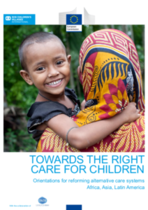
This synthesis report contains findings of a study that conducted research in six South and Central American, Asian and African countries for the purpose of gaining understanding of the nature, extent, and scope of institutionalization and the feasibility of deinstitutionlisation.
This desk review examines the reasons children are being placed in care, evaluates the types of care in the region, and discusses regional efforts towards deinstitutionalisation.
This report is a case study of alternative child care in Indonesia. Research was conducted that found that with an estimate of 8,000 institutional facilities servicing 500,000 children, Indonesia was overly reliant on institutional care.
In the attached document, Lumos reports that 8 million children worldwide are in institutions globally.
This report shares outcomes to date for a group of 1,292 children and young people with disabilities who have transitioned out of large residential institutions (institutions) into small group homes (SGHs) in the community.
This report, first distributed at the seminar co-hosted by Lumos and USAID on the challenge of institutionalization in Haiti, provides some background information on the effects of institutionalisation as well as the particular situation in Haiti.
This study provides a systematic review of the literature, focusing on the conceptualization and evaluation of continuity.
The Committee's recommendations on the issues relevant to children's care are highlighted, as well as other care-related concluding observations, ratification dates, and links to the Universal Periodic Review and Hague Intercountry Adoption Country Profile.
This country care review includes the care-related Concluding Observations adopted by the Committee on the Rights of the Child.
The Committee's recommendations on the issues relevant to children's care are highlighted, as well as other care-related concluding observations, ratification dates, and links to the Universal Periodic Review and Hague Intercountry Adoption Country Profile.
This country care review includes the care-related Concluding Observations adopted by the Committee on the Rights of the Child.
This document provides an outline of the Workshop on Indicators and Information Systems, held on day 2 of the Alternative Care Workshop in Bangkok in November 2005.
This document provides a summary of the group discussions and recommendations from day 2 of the Alternative Care Workshop held in Bangkok in November 2005 to discuss children's care in the region, post-tsunami.
This presentation from Save the Children was given at the Alternative Care Workshop in Bangkok in November 2005.
This presentation from UNICEF was given at the Alternative Care Workshop in Bangkok in November 2005. It outlines the standards and principles for residential and community-based care in the region.
This presentation was given at the Alternative Care Workshop in Bangkok in November 2005. It provides a guideline for assessment, including the purpose of the assessment, the legislative framework, approach used, context, tools used, and analysis and decision-making processes.
This document presents notes from the Group 1 session of the Alternative Care Workshop in Bangkok in November 2005, focused on Social Protection and strengthening Social Services for supporting families to care for their children.
This presentation was given at the Alternative Care Workshop in Bangkok in November 2005. It provides an overview of the structure, policies, and minimum standards for alternative care in Cambodia and the main features of residential care in the country.
This presentation from UNICEF was given at the Alternative Care Workshop in Bangkok in November 2005. It highlights the links between alternative care and social protection in the South East Asia region and outlines a strategic plan.
This presentation was given at the Alternative Care Workshop in Bangkok in November 2005. The presentation describes the slow shift toward family-based care options in the South East Asia region.
This presentation was given at the Alternative Care Workshop in Bangkok in November 2005.
This presentation was given at the Alternative Care Workshop in Bangkok in November 2005. It provides an overview of the situation of children without parental care in Vietnam and the child welfare system in the country, including residential/institutional care.
This presentation was given at the Alternative Care Workshop in Bangkok in November 2005. It provides an overview of the situation of children without parental care in Timor-Leste and the child welfare system in the country, including residential/institutional care and adoption.
This presentation was given at the Alternative Care Workshop in Bangkok in November 2005. It provides an overview of the situation of children without parental care in Papua New Guinea and the child welfare system in the country, including residential/institutional care.
This presentation was given at the Alternative Care Workshop in Bangkok in November 2005. It provides an overview of the situation of children without parental care, or primary caregivers, in Fiji and the child welfare system in the country.
This presentation was given at the Alternative Care Workshop in Bangkok in November 2005. It provides an overview of the situation for children without parental care in China, the legal framework for child protection in the country, and the social welfare institutions that support children's care.
This presentation, delivered at the Alternative Care Workshop in Bangkok in November 2005, provides an outline of alternative care in the Philippines.
This presentation, delivered at an Alternative Care Workshop in Bangkok in November 2005, provides an outline of alternative care in Laos.
This presentation provides an overview of the situation in Indonesia for children without parental care in a post-tsunami context and the alternative care system in the country.
This presentation from UNICEF provides an overview of the situation in Cambodia, particulary for children without parental care, and the alternative care system in the country.
This presentation from UNICEF provides an overview of the situation in Myanmar, particulary for children without parental care, and the alternative care system, or lack thereof, in the country.
This presentation includes the objectives and agenda from an Alternative Care Workshop held in Bangkok in November 2005 to present findings from a study on alternative care choices for children affected by the Tsunami in South East Asia and to share experiences and best practices related to children's care.
This country care review includes the care-related Concluding Observations adopted by the Committee on the Rights of the Child.
A review of the evidence on deinstitutionalisation (DI) and the status of care reforms across Europe in 2016 from the Opening Doors for Europe's Children campaign - a pan-European campaign advocating for strengthening families and ending institutional care.
This manual aims to help trainers, OVC programme staff and volunteers refocus on the non-material support they offer to children and to demonstrate how this can be offered in a structured way.
The ARC resource pack provides an essential collection of information and training material, to strengthen people’s capacity: to tackle the root causes of children’s vulnerabilities to build effective child protection systems for use in emergencies and long-term development to ensure that no activities inadvertently compromise children’s rights or safety.
This document accompanies the ARC Resource Pack modules and other materials and offers a glossary of terms used in the resource pack.
This training manual provides guidance on how to conduct ARC workshops based on the modules in the ARC Resource Pack.
This Critical issue module provides guidance and practical exercises aimed at increasing the ability of staff to respond appropriately and effectively to child separation in an emergency.
This toolkit has been produced as a resource for people who will be facilitating training using the ARC resource pack. It can be read alone as a basic introduction to facilitating training but it is best used in conjunction with ARC. It can also be used to form the basis of a Training of Trainers for ARC.
This module does not attempt to address all areas that affect children with disabilities in depth but aims to support the development of skills and knowledge in relation to emergency aspects, and to provide information and links for facilitators and trainers who require more detailed resources and guidance.
This module on community mobilisation has been developed as a resource for those humanitarian and emergency workers whose engagement with child protection, brings them into contact with communities.
This module provides practical information, guidelines, examples and tools to support organisations and key actors to undertake advocacy to bring about positive change for children in humanitarian contexts.
This module provides practical information, guidelines, inspiring case studies and participatory tools to support organisations and key adult actors to engage with children as rights holders and social actors, supporting their participation in decision making processes, which affect them and their communities.
This module provides practical information, guidelines and participatory tools for taking rights-based approaches to programme planning and implementation.
This module is intended to provide a basic understanding of one of the key concepts underlying ARC resource pack: child rights and rights based approaches and why they are important in emergency settings.
This module aims to equip those responding in emergencies with an introduction to the theory and practice of working with children and of children’s rights.
In the attached article Susanna Davies and Carol Batchelor discuss the importance of ensuring methods of resettlement are able to function in today’s global context.
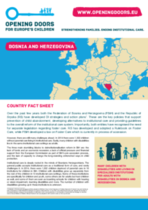
This infographic provides quick status reports on deinstitionalisation in the following countries: Estonia, Latvia, Lithuania, Ukraine, Moldova, Bulgaria, Greece, Serbia, Bosnia & Herzegovina, Hungary, Poland and Romania.
This module aims to support the development of skills and knowledge in relation to emergency aspects of working with children affected by armed conflict, and to provide information and links for those who require more detailed resources and guidance.
This module places emphasis on understanding the vital need for reestablishing education during and after an emergency so as to minimise the psychological impact of the event and maximising the opportunity to strengthen preexisting education structures.
This module aims to provide guidance on essential aspects of child abuse and exploitation, highlighting the main forms of abuse and presenting some possible action against it.
This resource guide reflects the theme of the Office on Child Abuse and Neglect’s 20th National Conference on Child Abuse and Neglect, "Building Community, Building Hope," which was held in Washington, DC, in August 2016.
The attached study compared the care environments of family-based care and institutional care to determine if care environment contributed to differences in sexual behavior and/or sexual exploitation of orphaned and separated adolescents.
Three semi-structured focus group interviews were conducted with twelve schoolchildren, aged 13–15 years for the purpose of exploring the knowledge and attitudes towards disability of young people within Moldova.
This abstract relays the findings of a survey on informal carers' views and opinions under the current conditions of social support in the Czech Republic.
The EAC Child Policy is the culmination of various processes geared towards the harmonisation of standards on and approaches to the implementation of child rights in the EAC.
This paper is a literature review on the conditions of HIV/AIDS orphans in Kenya.
In this article, William W. Hansen argues that the street children who populate the cities of Northern Nigeria have no means of support other than begging for their daily food, petty crime or providing casual labor.
This report from Opening Doors discusses the Opening Doors II pan-European campaign launched in Chisinau.
The attached Summary Sheet, provides a short summary of the preliminary findings of the 2015-2016 ZIMPHIA Report.
This HIV Fact Sheet provides short demographics on HIV prevalence and trends in Zimbabwe
Maxim’s story illustrates the problems with institutional care and the stagnation often seen in the child protection system.
In this Innocenti Podcast, Tia Palermo discusses The Transfer Project, a government run large-scale social cash transfer program in Sub-Saharan Africa.
Este manual proporciona orientación a los profesionales que trabajan con niños con discapacidades en el cuidado residencial.
Ce manuel fournit des conseils aux professionnels qui travaillent avec les enfants handicapés dans les soins en établissement.
This manual provides guidance to professionals who work with children with disabilities in residential care.
This document details the guiding principles for para professionals in the social service workforce.
This study investigates how the relationship between youth recently emancipated from care and certain key adults affect the youths' lives.
In this film, Charell shares the story of foster care and how she broke free from the cycle that trapped her parents.
A column from Journal of Adolescent and Adult Literacy reviewing two short films, which feature former foster care youths and their memories of the foster care system.
This qualitative study explored how volunteers delivering social welfare to orphans and vulnerable children through a community initiative supported by donors made sense of volunteering during a period of hyperinflation in Zimbabwe.
Employing focus groups and participant-observation, this exploratory study examined areas of personal development, knowledge, and skills of young women who were formally in residential care in the Philippines to determine success factors for young women with traumatic histories.
This paper examines the two basic models of the state authorities’ intervention into family life aimed at protecting children.
This paper discusses the style and efficacy of child preservation services for the purpose of reducing child abuse and neglect.
This Supervision Guideline document from Save the Children contains guidelines and underlying principles for Pusan Dukungan Anak dan Keluarga (PDAK) child and family support centre social workers in working with children and families.
Jose Luis Rodriguez III reviews the book Whose Child Am I: Unaccompanied Undocumented Children in US Immigration Custody by Susan J. Terrio.
The Zambia National Consultation Accelerating Children’s Care Reform Report is a summary report of a stakeholders’ meeting held between key stakeholders in children’s care in May, 2016.
This article discusses the challenges in research and practice that have grown out of the evolution of volunteer tourism.
This paper analyses how social support enhances family resilience in kinship foster families by involving the families in an educational group programme.
Key findings on the state of the United Kingdom’s foster care system by The Fostering Network note that although most foster carers say they want to continue caring for children, only 55% say that they would recommend it to others.
Delphine Moralis discusses the 10,000 refugee children that have gone missing in the EU.
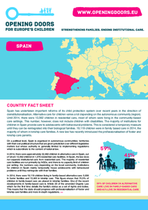
The Bulgaria Country Fact Sheet provides short details on the state of institutional care in Bulgaria.
Many young people rely on their parents when they transition into adulthood. Young people transitioning out of alternative care rarely have that option.
Researchers investigated the prevalence of child sexual abuse in foster care and residential care facilities and found that 3.5 children per 1,000 had been victims of child sexual abuse.
The topic of this webinar is child and youth participation in monitoring and evaluation. This video provides a brief context of child participation and participatory methods.
In this Ethiopia Child Protection Fact Sheet, UNHCR provides the main child protection highlights, issues, and trends for 2014 to 2016.
In this video from The Dr. Phil Show, Dr. Phil discusses the foster care crisis in the U.S. and the negative impact over-reliance on foster care can have on children and families.
In examining to what extent poverty reduction policies and family support services mitigate the risk factors associated with out-of-home placement, this study found that absolute poverty influences a child’s risk factors for out of home placement.
Extracting on chronologic data, this book discusses the politics and practice of intercountry adoption starting with the state international adoption to in the 1950s continuing to present-day adoption practice and protections.