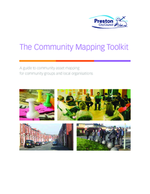
The Community Mapping Toolkit: A Guide to Community Asset Mapping for Community Groups and Local Organisations

Preston City Council

This toolkit explains the process behind asset mapping, looks at how to carry out a Community Street Audit, provides advice on making asset mapping meaningful and ensuring it leads to constructive action, and on involving different sections of the community - including community residents, elected councillors and representatives from local services. Finally it looks at the tools you may need, and how to keep community and local agencies informed of any action plans arising from the asset mapping.

File

Webinar Recording: Spotlight Series on Foster Care Practice Webinar 4: On the Same Team - Parents and Foster Carers Working Together

Transforming Children's Care Global Collaborative Platform

Speakers from Mothers Choice, Hong Kong and the International Parent Advocacy Network participated in the webinar and their presentations focused on:

- Examples of family based care, reunification and support in Hong Kong
- The shared goals of parents and foster carers
- The resources required to work together successfully

Chapter 2: Holistic Organizational Capacity Assessment Instrument (HOCAI)

Catholic Relief Services (CRS)

Catholic Relief Services’ (CRS) Holistic Organizational Capacity Assessment Instrument (HOCAI) is designed to assist organizations to conduct a self analysis of their strengths and challenges, develop an action plan, and improve organizational functions through capacity strengthening. With HOCAI, CRS creates a standardized framework to help organizations engage in a process of continuous assessment and improvement that will sustain organizational capacities.

File

Kinnected Myanmar Partnership Agreement

Kinnected Myanmar

A critical step of the transition process is to put in place a written agreement that clearly outlines the commitments, expectations, and conditions of the partnership. A partnership agreement is typically signed after successful completion of the onboarding process. It formalizes the decision of key stakeholders to transition and should not be done before ample time and opportunity have been provided to secure buy-in.

File

Advancing Partners & Communities: Organizational Capacity Assessment Tool

Advancing Partners & Communities (APC), USAID, fhi360, JSI

Advancing Partners & Communities (APC) is a five-year cooperative agreement funded by the U.S. Agency for International Development beginning October 1, 2012. The project focuses on advancing and supporting community programs that seek to improve the overall health of communities and achieve other health-related impacts, especially in relationship to family planning. APC provides global leadership for community-based programming, executes and manages small- and medium-sized sub-awards, supports procurement reform by preparing awards for execution by USAID, and builds technical capacity of organizations to implement effective programs.

File

Due Diligence Guidelines

ACCI Relief

The purpose of these guidelines is to equip you with a tool that helps you build a sound understanding of an organisation so that you can make a well-informed decision about whether or not to establish a partnership with them. The check can also reveal to you other ways in which you can support the project achieve it’s goals – that may be helping them access additional training for the staff, sending your accountant to help them set up good cash management systems or providing the funding for them to hire an experienced staff member.

File

Protecting Children in Short-Term Missions: A Guidance Manual and Toolkit for Churches and Christian Organizations

Better Care Network, ACCI Missions & Relief

The Child Protection in Short-Term Missions Manual and Toolkit has been produced by ACC International Missions and Relief. It has been designed for those who are passionate about missions and engaging people in missions through short-term teams, who pursue excellence in all they do and who are committed to pursuing God’s heart for children and vulnerable members of society in the context of global missions.

File

Changing Mindsets and Practice: Engaging Christian Faith Based Actors in Deinstitutionalisation and Child Welfare Systems Reforms

ACCI Missions and Relief

This tool was designed to help those seeking to assist Christian faith-based actors involved in long-term residential care programs make the transition from institutional to non-institutional (family and community-based) child welfare programs. It was written to give some insight into what this journey called ‘deinstitutionalisation’ might look like and what steps and processes might be involved. Whilst it contains a brief overview of the technical stages, its main purpose is to guide you through the process of achieving buy-in and is not intended to be a technical deinstitutionalisation manual.

File

Invisible Children: Visible Harms - The Scale and Effects of Child Institutionalisation

Lancet, Lumos

This is a summary of three major new papers published in the Lancet with the support of Lumos which shed new light on the situation of children living in institutions globally and make important recommendations for donors, governments, civil society and individuals to help ensure every child can grow up in a safe, supportive and loving family and have the best chance in life.

File

Case Story of Transition: Formalizing a Foster Care Program - Identity Mission

Changing the Way We Care (CTWWC), Identity Mission

The story of Identity Mission tells how a program focused on supporting vulnerable children by providing family-based care solutions alongside the local church came to be and what the challenges were to creating a mission focused on family. It is the story of one person’s own transition.

File

Council of Europe Action Plan for the Republic of Moldova 2021 - 2024

Republic of Moldova, Council of Europe

The Council of Europe Action Plan for the Republic of Moldova 2021-2024 is a strategic programming instrument that aims to bring the Republic of Moldova’s legislation, institutions and practice further into line with European standards in the areas of human rights, the rule of law and democracy. The Action Plan is intended to support the country’s efforts to honour its obligations as a Council of Europe member State. The Action Plan aims to support the Republic of Moldova in its efforts to implement the United Nations Sustainable Development Goals (SDGs) of the UN 2030 Agenda for Sustainable Development.

Image
Council of Europe Action Plan for the Republic of Moldova 2021 - 2024

Indaba Post-Conference Report: The Theology and Practice of Child Protection in Africa in Times of Pandemics

Jesuit Justice and Ecology Network – Africa (JENA), the Africa Task Force of the Vatican COVID-19 Commission

This report captures the learning at a two-day conference which brought together practitioners and specialists for a critical examination of the Theology and Practice of Child Protection in Africa in Nairobi on May 23 - 24, 2022.

File

Compendium on Family Strengthening and Alternative Care Programmes Practised Across India

India Alternative Care Network (IACN), Changing the Way We Care (CTWWC)

This report maps the family strengthening and alternative care practices across 14 organisations and provides an overview into a number of elements including nature of care, target, coverage, intervention, the longevity of care, linkage to the child protection system, access to sponsorship provided by the State, challenges in implementing the program, among other aspects.

File

Promoting Kafaalah as an Alternative Family Care System within the Muslim Community

Changing the Way We Care (CTWWC)

This short document describes the process of ensuring Kafaalah is considered as a family-based alternative care option within Kenya and the work to promote best practice within the model. It describes the journey of developing a framework and standard operating procedures, beginning with the launch of the Kenyan Guidelines on the Alternative Family Care of Children in 2014. Changing the Way We Care worked with many partners and shares the learning on Kafaalah through this document. Changing the Way We Care is a global initiative implemented by Catholic Relief Services, Maestral International, and other global, national and local partners working together to change the way we care for children around the world.

File

State of the Social Service Workforce Report 2022: The Vital Role of the Social Service Workforce in Humanitarian Contexts

Global Social Service Workforce Alliance

Drawing from a review of global reports and case studies, as well as from information sourced from Global Social Service Workforce Alliance members, this report brings to light the critical role of the social service workforce in different humanitarian contexts—including those related to armed conflict, natural disasters and widespread disease outbreaks—and across the emergency management cycle. It further highlights the challenges and key areas of learning in deploying social service workers in humanitarian contexts.

Image
Social Service Workforce

Guatemala, Kenya and Moldova Household Survey Reports

Changing the Way We Care (CTWWC)

In 2021 and 2023 Changing the Way We Care (CTWWC) completed a household survey of children and caregivers, in demonstration countries Guatemala, Kenya and Moldova, to understand their experience of CTWWC services, the protective factors in their families, and the status of child well-being. Part of CTWWC’s evaluations, the resulting findings are designed to help CTWWC and other care reform actors to understand the successes and challenges of reintegration from residential care and the provision of family strengthening support. 

Training Package for the Tubarerere Mu Muryango Programme (‘Let’s raise children in families’): Training Module Four for the National Training Team

National Child Development Agency (NCDA), National Commission for Persons with Disabilities - Rwanda, UNICEF Rwanda.

The Trainers Package is primarily for Government of Rwanda Child Protection and Welfare Officers, representatives of the NCPD and others who work directly with children and families on reintegration of children, including children with disabilities, from residential institutions to family care. It can also provide useful information to people working in other local government roles, for example District Disability Mainstreaming Officers and Gender &
Family Promotion Officers, as well as people working in non-governmental organizations (NGOs) or community based systems (for example, Inshuti z’Umuryango - Friends of the Family) who support children and families, and particularly those who have contact with children during the reintegration process.

Training Package for the Tubarerere Mu Muryango Programme (‘Let’s raise children in families’): Supporting Children with Disabilities and their Families

National Child Development Agency (NCDA), UNICEF

This is a Training Module for the Inshuti z’Umuryango volunteer community-based cadre to support the implementation of the Tubarerere Mu Muryango (TMM) Programme (‘Let’s raise children in families’) led by the National Child Development Agency (NCD).

File

The Intentional Inclusion: How the Government of Rwanda and UNICEF Worked Together to Make Sure All Children Can Grow Up Safely and Securely at Home

Government of Rwanda, UNICEF

This present report describes the childcare reform process in Rwanda during 2020 and 2021, against the background of the overall reform initiated since 2012

File

Transforming Children’s Care Webinar #11: Advancing the Care Reform Agenda Using the Systems Strengthening Approach

Transforming Children's Care Global Collaborative Platform

The objective of this webinar was to present the CPSS approach, and reflect on how this approach, and especially the seven intermediate outcomes of CPSS are relevant to the care reform agenda.

OHCHR Publications and E-Products Catalogue 2022

Office of the High Commissioner for Human Rights

The Office of the United Nations High Commissioner for Human Rights (OHCHR) produces an extensive range of publications and e-products on a variety of human rights-related subjects. This broad portfolio provides information of interest to governments, national institutions, civil society, academia, the general public and the media, among other stakeholders. OHCHR publications and e-products aim to increase knowledge and raise awareness about human rights and fundamental freedoms, and to publicize ways of promoting and protecting them worldwide. They also seek to encourage debate on topical human rights issues under discussion at the United Nations.

File

Webinar Recording: Data and Care Reform

ESARO Regional Learning Platform on Care Reform, CTWWC

The Eastern and Southern Africa Regional Learning Platform hosted a webinar on June 22, 2022, featuring speakers from UNICEF's head office and the Better Care Network who provided detailed examples on the importance of data in Uganda's care reform processes. This purpose of this webinar was to examine the importance of using data to inform care reform, and how data can be collected and used effectively.

Wezwanie do wprowadzenia moratorium na adopcję międzynarodową w reakcji na konflikt zbrojny w Ukrainie

Interagency Statement

Adopcja międzynarodowa nie powinna być realizowana w trakcie lub bezpośrednio po sytuacji kryzysowej. Pozostając w zgodzie z decyzją rządu Ukrainy o zawieszeniu adopcji międzynarodowych, wzywamy państwa przyjmujące, organy międzynarodowe i organizacje humanitarne do przyjęcia zharmonizowanego podejścia i wprowadzenia moratorium na przysposobienie międzynarodowe dzieci z Ukrainy. Zgodnie z powszechnie przyjętą zasadą dotyczącą obowiązków państw wynikających z prawa międzynarodowego, w sytuacjach kryzysowych, takich jak konflikt zbrojny, adopcja nie jest właściwym działaniem wobec dzieci pozbawionych opieki. Dzieci, które zostały rozdzielone z rodzicami w trakcie kryzysu humanitarnego, nie można uznać za osierocone. Do czasu ustalenia, co się stało z jego rodzicami lub innymi bliskimi krewnymi, każde dziecko rozdzielone z opiekunami należy traktować jako posiadające żyjących krewnych bądź opiekunów prawnych, a co za tym idzie – niepotrzebujące adopcji.

File

Заклик до мораторію на міждержавне усиновлення як реагування на конфлікт в Україні

Interagency Statement

Міждержавне усиновлення не слід починати під час або відразу після надзвичайної ситуації. Відповідно до призупинення українським урядом міждержавного усиновлення ми закликаємо держави прийому, міжнародні організації й гуманітарні установи застосувати гармонізований підхід і закликати до мораторію на міждержавне усиновлення дітей із України.

File

25 Years of Children and Armed Conflict: Taking Action to Protect Children in War

Johan Vigne, Katherine Cocco, Brigid Kennedy Pfister - UNICEF

This report presents key steps that the international community has taken to protect children in situations of armed conflict, with a specific focus on the Security Council-mandated Monitoring and Reporting Mechanism (MRM) to document grave violations against children and to foster accountability by identifying perpetrators.

Ukraine Response Republic of Moldova: Third Country Nationals (TCNs) Displacement Analysis

IOM, UN Women

Since the onset of the war in Ukraine, a number of people fleeing from Ukraine to neighbouring countries has been observed. This report presents findings based on cumulative and daily registrations, by the General Inspectorate for Border Police (GIBP), since 24 February 2022 onwards, of movement flows of Ukrainian refugees and third-country nationals (TCNs) entering from Ukraine to the Republic of Moldova from all Border Crossing Points (BCPs) and exiting the country from all BCPs, towards Romania and towards Ukraine, as well as via flights. In addition, it presents data on those who entered since 24 February and are still present in the country.

File

Children's Rights and Alternative Care: What Next for Scotland? Learning from the UNCRC Day of General Discussion

CELCIS

This webinar focused on the themes and recommendations of the UN Committee on the Rights of the Child’s Day of General Discussion (DGD) about the rights of children and young people in alternative care and the implications for children and adolescents in Scotland.

Emotional and Behavioral Problems Among Children and Adolescents in a Residential Care Institution in Colombo, Sri Lanka – Implications for Service Delivery

Yasodha Maheshi Rohanachandraa, Kurukula Arachchige Sarangi Dilrukshi Nanayakkara, Santhrasulochana Vipulanandan

There is evidence that children in residential care institutions (RCI) have higher rates of psychological problems, suicide and criminal behaviour. There is only one study in Sri Lanka which has examined the psychological well-being of children in RCIs. This study aims to provide further evidence to formulate policies related to the mental health of institutionalized children in the local context.

Image
Asian Journal of Psychiatry

Mental Disorders into Adulthood Among Adolescents Placed in Residential Care: A Prospective 10-Year Follow-Up Study

Süheyla Seker, Cyril Boonmann, Delfine d’Huart, David Bürgin, Klaus Schmeck, Nils Jenkel, Martin Steppan, Alexander Grob, Hilma Forsman, Jörg M. Fegert, Marc Schmid

Child welfare and juvenile justice placed youths show high levels of psychosocial burden and high rates of mental disorders. It remains unclear how mental disorders develop into adulthood in these populations. The aim of this study, based on adolescents in Swiss residential care, was to present the rates of mental disorders in adolescence and adulthood in child welfare and juvenile justice samples and to examine their mental health trajectories from adolescence into adulthood.

File

Traumatic Experiences Affecting Children in Institutions of Care for Orphans in Kiambu County, Kenya

Arlene Nduku, Munyae Mulinge, Josephine Arasa

The purpose of this study was to ascertain the traumatic experiences endured by children in institutional care in Kiambu County, Kenya. The target population for this study was all children in 50 registered institutions of care within Kiambu County aged between 11 and 17 years.

File

Small Town Politics, Stigma, and Services: Understanding the Unique Needs of Rural Families Post-Reunification

Nikki DiGregorio

This pilot study investigated a sample of caseworkers’ perceptions as related to social services for improving family unity post-reunification, as well as barriers that exist for families accessing social services in rural southeast Georgia in the US.

Image
Journal of Social Science Research

Family Foster Care: Perceptions of Portuguese Child Protection Professionals

Mariana Negrão, Maria Ana Mendonça, Elisa Veiga, Lurdes Veríssimo, Marina Moreira

The main goal of this exploratory and descriptive study is to understand the perceptions of Portuguese child protection professionals concerning Family foster care. 101 participants, from different professional backgrounds and child protection contexts, filled out a questionnaire. Main findings show a heterogeneous degree of familiarity to FFC, and a generally positive although reserved attitude to it.

File

Flourishing Mental Health Among Adults with Child Welfare Contact During Childhood: Findings from a Nationally Representative Canadian Survey

EsmeFuller-Thomson, Mahsima Nosrati-Inanlou, Alex Sellors, Andie MacNeila

This study investigated the prevalence of and factors associated with complete mental health (CMH) among a nationally representative sample of Canadians who had contact with child welfare services before age 16.

Image
Psychiatry Research

Provision of Transitional Housing: A Socially Sustainable Solution for Care Leavers in Zimbabwe

Getrude Dadirai Gwenzi

This paper presents findings from a study on care leavers’ experiences of transitional housing at three institutions in Zimbabwe. Using the social sustainability conceptual framework, the study found that transitional housing offers continuity of care, relationships, and a smoother, gradual transition from care to independence.

Image
Social Work in Action

Rural–Urban Migration, Family Arrangement, and Children's Welfare: Evidence from China's Rural Areas

Lili Wei, Ying Yang, Jing Zhang, Lijuan Si

With the rapid economic development in China, large numbers of migrants are moving to metropolitan areas in search of better jobs. They are faced with the dilemma of whether to leave their children behind in the countryside due to various socioeconomic factors. The aim of the study was to analyze the impact of different migration arrangements on child welfare.

Image
Family Relations

Mother's and Father's Migrating in China: Differing Relations to Mental Health and Risk Behaviors Among Left-Behind Children

Hailati Akezhuoli, Jingjing Lu, Guanlan Zhao, Jiayao Xu, Menmen Wang, Feng Wang, Lu Li, Xudong Zhou

In China, the figure for left-behind children (LBC) of migrants stood at 68. 77 million in 2015. Despite being seen as a whole in the last few decades, LBC today differ broadly in parental migrating status. This study focused on LBC with both parents migrating (BLBC), LBC with only mothers migrating (MLBC), LBC with only fathers migrating (FLBC), and previous LBC with one or both parents migrating (PLBC), separately. The authors explored the extent to which LBC were being affected by each migrant parent on both mental health and risk behaviors.

File

Multi-System Factors Impacting Youth Justice Involvement of Children in Residential Out-of-Home Care

Susan Baidawi, Rubini Ball

Children placed in residential care are significantly over-represented in youth justice systems. Drawing on interviews and focus groups with service providers, this exploratory study examines practice factors that impact on the criminalization of this group of children across multiple services and systems, including in the residential care environment, police, lawyers, courts and youth justice systems, as well as multi-systems practice with this group in one Australian state.

Image
Child and Family Social Work

Estrategia de Participación con el Sector Basado en la Fe y Cambiando la Forma en que Cuidamos Guatemala, diciembre 2021

Changing the Way We Care (CTWWC)

El presente documento pretende presentar una estrategia integral que involucre cuidadosamente al sector basado en la fe de Guatemala, con el objetivo de apoyar y promover el cambio en la forma en que el cuidado de los NNA es proporcionado por estos actores importantes y alineado con la visión de CTWWC. La estrategia está dirigida a quienes trabajen en la promoción de la transformación de servicios y el derecho a vivir en familia, y su trabajo está directamente relacionado con organizaciones basadas en  la fe, es decir, directores de hogares de abrigo y protección, Obispos, sacerdotes, pastores, líderes religiosos y laicos comprometidos con el desarrollo humano integral de los NNA.

File

State Care in Childhood and Adult Mortality: A Systematic Review and Meta-Analysis of Prospective Cohort Studies

G David Batty, Mika Kivimäki, Philipp Frank

Removal from family of origin to state care can be a highly challenging childhood experience and is itself linked to an array of unfavourable outcomes in adult life. This systematic review which included Canada, the US, western Europe, and Australia, aimed to synthetise evidence on the risk of adult mortality in people with a history of state care in early life, and assess the association according to different contexts. 

File

Youth in Residential Facilities: “Am I Safe?,” “Do I Matter?,” and “Do You Care?”

Ane Slaatto, Lise Cecilie Kleppe, Anneli V. Mellblom, Gunn Astrid Baugerud

Several youth facilities have devoted considerable resources to improving the quality of practice and the interest in understanding the safety needs of youth in residential care has grown. However, there is limited research that considers how youth in residential facilities themselves define and experience safety, what their safety concerns are, and how they would like systems and staff to respond to their needs. Therefore, this current study investigated youth perceptions of safety in residential facilities in Norway and their experiences of and reaction to staff behaviors and attitudes.

File

Fostering Relational Healing: The Use of CPRT with Foster Caregivers to Promote Family Success

Caitlin Frawley, Viki P. Kelchner

A large proportion of children in the foster care system experience placement instability, which works against the three national goals for children in the child welfare system: permanency, safety, and well-being. Placement instability has been linked with increased child externalizing behaviors and increased parenting stress. Child-Parent Relationship Therapy (CPRT) is one intervention which combats issues associated with placement instability. The authors outline the needs of children and families in the foster care system, the benefits of relationship-focused play therapy interventions, and provide rationale for the use of CPRT among child welfare agencies.

The Overrepresentation of First Nations Children in the Ontario Child Welfare System: A Call for Systemic Change

Ashley Quinn, Barbara Fallon, Nicolette Joh-Carnella, Marie Saint-Girons

This paper found that there was marked overrepresentation of First Nations children in the child welfare system in Ontario, Canada. These children were three times as likely to be investigated as white children and more likely to be placed when controlling for investigation concerns. The paper concluded that recent policy changes have not brought change to this overrepresentation.

Image
Child and Youth Services Review

Child Poverty and Children Entering Care in England, 2015–20: A Longitudinal Ecological Study at the Local Area Level

Davara L Bennett, Daniela K. Schlüter, Gabriella Melis, Paul Bywaters, Alex Alexio, Ben Barr, Sophie Wickham, David Taylor-Robinson

Children in care face adverse health outcomes throughout their life course compared with their peers. In England, over the past decade, the stark rise in the number of cared-for children has coincided with rising child poverty, a key risk factor for children entering care. The authors aimed to assess the contribution of recent trends in child poverty to trends in care entry.

Image
The Lancet

Next Steps for Our Kids 2022–2030: ACT Strategy for Strengthening Families and Keeping Children and Young People Safe

ACT Government

Next Steps for Our Kids (Next Steps) sets out an ambitious reform agenda building on the positive outcomes seen through the implementation of the previous A Step Up for Our Kids Strategy (A Step Up) and addresses the continuing challenges seen in the child and youth protection system in Australia. Next Steps is an evolution of A Step Up and will see various original elements matured, extended and expanded.

File

Care Experience and Friendship

Autumn Roesch-Marsh, Ruth Emond

This Insight draws on research and policy, as well as practice experience to explore friendship, why it matters and how it can be better supported. It looks critically at the nature of friendship and the impact that aspects of the ‘care system’ can have on children and young people making and maintaining friends. It highlights how significant friendships can be for children and young people who are ‘looked after’ in the UK.

File

Concurrent Planning: Understanding the Placement Experiences of Resource Families

Erum Nadeem, Austin J. Blake, Jill M. Waterman, Audra K. Langley

Concurrent planning is a process by which all options for permanency are considered simultaneously for children in foster care. Children are placed with caregivers (resource parents) who are open to adoption if reunification with birth parents does not occur. This U.S.-based quantitative study explored resource parents’ perceptions of the concurrent planning process via surveys at two time points. Participants included resource parents of 77 infants assessed at 2 months and 1 year after placement.

Image
Adoption Quarterly

Understanding the Transnational Care Arrangements: Experiences in Nonparental Care in the Case of the Filipino Transnational Families

Jeffrey R. Ballaret

This study investigates how experiences and practices of transnational care arrangements are negotiated from the perspective of the nonparental carers. It specifically aims to understand its dynamics and patterns in shaping care relationships, normative familial values and the hope to reconstitute the family amidst migration-induced care.

Image
The Family Journal

Struggling to Survive: The Situation of Asylum Seekers in Tapachula, Mexico, June 2022

WOLA

This report follows the route of asylum seekers arriving in Tapachula. It draws on a March 2022 visit during which the researchers conducted field documentation and interviews with asylum seekers, government officials, UN agencies, and civil society organizations providing services to migrants. The report highlights abuses, arbitrary treatment, and steep obstacles faced by asylum seekers at each step of their process.

File

Preserving “Family Relations”: An Essential Feature of the Child's Right to Identity

Child Identity Protection

The aim of this publication is to highlight the protective aspects related to the child’s identity rights, with a focus on the family relations element, as embedded in international, regional and national standards. The publication provides direction on how to build identity safeguards, drawing on past lessons and capitalising on current opportunities. To do this, the right to identity is explored through a range of examples of existing challenges, promising practices and testimonies.

File

Responding to Children's Care in the Context of the Ukraine Crisis: Key Recommendations and Considerations

The Ukraine Children's Care Group

The aim of this guidance document is to provide a framework to support child protection practitioners and policymakers working both inside Ukraine and in host countries to implement responses related to children’s care in the context of Ukraine in line with international standards and good practice on children’s care and the provision of alternative care.

File

It Takes Behaviour Science to End Violence Against Children: A Guide for Advocating Towards Social and Behaviour Change for Ending Violence Against Children (SBC4EVAC)

R. Danielle Chekaraou, Sarah Osman, World Vision International

This advocacy guide provides ideas and tools for making a case in favour of the inclusion of SBC approaches in the portfolio of solutions embraced by local and national governments, donors and other stake-holders. It includes both a foundational framework as well as worksheets that can be used to elaborate and contextualize advocacy messages intended for delivery to key stakeholders. This guide can be used in concert with the INSPIRE Indicator Guidance and Results Framework and the INSPIRE Handbook.

File

Care Experienced LGBTQA + Young People in Out-of-Home Care in Australia: A Case Study

Kathomi Gatwiri, Nadine Cameron, Lynne McPherson, Janise Mitchell

This paper presents a case study that discusses the lived experiences of two LGBTQA + young people who have been in out-of-home care in Australia, focusing particularly on the influence of relationships on their developing sexual identity.

Image
Child and Youth Services Review

Primera reunificación familiar acompañada por Changing The Way We Care (CTWWC) cumple un año

Changing the Way We Care (CTWWC)

El estudio de caso, plasmado en una página, está dirigido a posibles donantes, público interesado y actores vinculados a la reforma del cuidado infantil, que desean aprender sobre los procedimientos relacionados con el primer caso exitoso de reunificación familiar a cargo de la Iniciativa Cambiando la Forma en que Cuidamos que opera en Guatemala y además sobre el importante papel de la gestión de casos. El presente estudio de caso fue escrito en julio del 2020, un año después de la reunificación.

File

Weaving a Collective Tapestry: A Funder's Toolkit for Child and Youth Participation

Georgia Booth & Ruby Johnson - Elevate Children Funder's Group

This toolkit was developed with and for philanthropic funders who want to better understand how to support child and youth participation. It builds on an ECFG study published in 2021, Shifting the Field: Philanthropy’s Role in Strengthening Child- and Youth-Led Community Rooted Groups, which maps current practices in philanthropic support for child- and youth-led work at the community level and provides strategic advice to donors on how to strengthen their funding modalities through participatory approaches.

File

Ukraine Crisis: How to Support Unaccompanied Minors Crossing Borders

Family for Every Child

In this workshop Family for Every Child members Flüchtlingsrat Niedersachsen (The Refugee Council of Lower Saxony, Germany), Programma Integra (Italy) and METAdrasi (Greece) share their experience around supporting unaccompanied minors, with For Our Children (FoC) in Bulgaria. They share top tips with FoC as they navigate the arrival of unaccompanied minors fleeing the conflict in Ukraine, and find ways to support them.

National Care Reform Strategy for Children in Kenya 2022 - 2032

Republic of Kenya, UNICEF

The strategy, developed with the support of UNICEF and a multisectoral Care Reform Core Team, under the leadership of the National Council for Children’s Services (NCCS), seeks to guide national steps towards prevention and family strengthening, robust alternative family care, and tracing, reintegration and transitioning from institutional care to family and community-based care for all children in need of care and protection. It sets out areas of focus for various agencies in the sector for the next ten years and calls for collaborative effort and active coordination to achieve collective impact approach.

File
Webinar Recording: Breaking the Cycle; Changing the Narrative

Transform Alliance Africa (TAA), Child's i Foundation

The webinar, hosted by Transform Alliance Africa, provides an overview of the progress and findings from our youth wellbeing project. The youth wellbeing project is a community mental health initiative led by care experienced youth that aims to develop a safe transition pathway for young people leaving orphanages and provide support to young people experiencing well being and mental health challenges in the community.

Committee on the Rights of the Child 2021 Day of General Discussion: Outcome Report and Recommendations

The purpose of this outcome document is to provide summaries of plenary sessions and the five working groups that took place during the DGD, and to present a comprehensive set of recommendations on the key themes covered during the preparatory processes leading up to the DGD, including through hundreds of written submissions, a global survey of children and young people with care experience, and during the DGD itself.

File
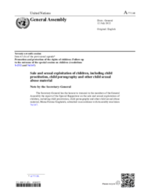
The South African Child Gauge 2021/2022: Child and Adolescent Mental Health

The Children's Institute - University of Cape Town

This sixteenth issue of the South African Child Gauge focuses attention on child and adolescent mental health and how early experiences of adversity ripple out across the life course and generations at great cost to individuals and society. It calls on South African society to put children at the centre of all policies in order to protect children from harm, build their capacity to cope with stress and adversity, and provide them with opportunities to thrive.

File
How Can We Support Children Fleeing Ukraine?

Eurochild

Eurochild has carried out an urgent mapping, with support from its members, UNICEF country teams and government representatives across 13 countries. The mapping examines the laws and policies at national level for children in alternative care and unaccompanied and separated children from Ukraine who arrive in the following countries: Czechia, Estonia, Germany, Greece, Hungary, Italy, Latvia, Lithuania, Poland, Romania, Slovakia, Spain and the United Kingdom.

Image
How can we support Ukraine?

Discussion Paper on Guardianship, Care Arrangements and Custodial Responsibilities for Unaccompanied and Separated Children Fleeing Ukraine and Arriving in the European Union

Child Circle, UNICEF, Eurochild

This discussion paper addresses issues facing unaccompanied and separated children fleeing Ukraine and arriving in the European Union (EU). In particular, it focuses on the priority issue of how care and custodial arrangements and guardianship under child protection and migration measures are established within EU Member States. This question has implications for how children access protection, how information on their circumstances is managed and ultimately how durable solutions are identified and secured for children.

File
Un curs de formare în prim ajutor psihologic pentru îngrijitorii de copii care au suferit o traumă

Catholic Relief Services

Această formare rapidă a fost concepută pentru a oferi informații familiilor de plasament (foster care) din Moldova în vederea pregătirii pentru plasamentul copiilor neînsoțiți și separați din Ucraina. Pachetul de formare include un PPT și un ghid al facilitatorului. Conținutul oferit în timpul programului de formare de șase ore include informații de bază despre traumele din copilărie, experiențele adverse din copilărie, elementele-cheie ale PFA, inclusiv "Privește, Ascultă și Leagă”, precum și înțelegerea modului în care se pot identifica și sprijini atât copiii care au trecut prin traume, cât și modul în care acestea se pot manifesta la diferite vârste și etape de dezvoltare.

File

Care Leavers’ Transitions to Adulthood in the Context of COVID-19: Understanding Pathways, Experiences and Outcomes to Improve Policy and Practice

Emily R. Munro, Seana Friel, Claire Baker, Amy Lynch, Kirsche Walker, Jane Williams, Erica Cook, Angel Chater

The Care Leavers, COVID-19 and Transition from Care (CCTC) study explored how COVID-19 impacted on care leavers’ lives and their pathways out of care; examining where young people went, what services and support they received, and how young people got on.
Image
Care Leavers’ Transitions to Adulthood in the Context of COVID-19: Understanding Pathways, Experiences and Outcomes to Improve Policy and Practice

‘One Hand Does Not Bring Up a Child:’ Child Fostering Among Single Mothers in Nairobi Slums

Cassandra Cotton, Shelley Clark, Sangeetha Madhavan

Childrearing in sub-Saharan Africa is often viewed as collaborative, where children benefit from support from kin. For single mothers living in informal settlements, kin networks may be highly dispersed and offer little day-to-day childrearing support, but may provide opportunities for child fostering. This study conducted in Nairobi, Kenya, uses a linked lives approach, where single mothers’ connections with kin and romantic partners may influence whether – and what type of – kin are relied on to support child fostering.

File

Cognitive Flexibility Moderates the Association Between Maltreatment and Emotion Regulation in Residential Care Children of the Middle Childhood Period

Laetitia Melissande Amedee, Laurence Cyr-Desautels, Houria Benard, Katherine Pascuzzo, Karine Dubois-Comtois, Martine Hebert, Celia Matte-Gagne, Chantal Cyr

The purpose of this study was to examine, in a sample of residential care children, the moderating role of cognitive flexibility in the association between maltreatment and emotion regulation competencies. The sample included 69 children aged 8 to 12 and their group home educator as their primary caretaker. Educators completed questionnaires evaluating child emotion regulation competencies and cognitive flexibility.

File

Honouring Care-Experienced Mokopuna Māori: Creating Conditions for Wellbeing

Tahirah Materoa Moton

This article presents Kaupapa Māori research undertaken by a mokopuna Māori with the lived experience of state care in New Zealand, alongside established Kaupapa Māori researchers. Literature containing the voices of care-experienced mokopuna Māori was reviewed to explore what conditions exist and are needed to uphold wellbeing.

Associations Between Out-of-Home Care and Mental Health Disorders Within and Across Generations in a Swedish Birth Cohort

Viviane S. Straatmanna, Josephine Jackischa, Lars Brännström, Ylva B. Almquista

Previous studies have shown that mental health disorders (MHD) among parents might be an important mechanism in the intergenerational transmission of out-of-home care (OHC). The current study aimed to further study this interplay by investigating the associations between OHC and MHD within and across generations in a Swedish cohort.

Preventing Human Trafficking of Refugees from Ukraine: A Rapid Assessment of Risks and Gaps in the Anti-Trafficking Response

Suzanne Hoff, Eefje de Volder

This report aims to provide a rapid assessment of the risks of trafficking and exploitation created by the war in Ukraine and the gaps in the current anti-trafficking response, in order to identify what needs to be done now to reduce and prevent trafficking before it is too late. This rapid assessment is based on desktop research; interviews/discussions with organisations, experts and participants in the anti-trafficking response including volunteers, translators, refugees, and displaced people; and a field visit to Poland.

File

Discrepancies Between Foster Care Entry and Mental Health Service Use for Black and Latinx Youth

Mehar N. Singh, Omar G. Gudiño

Black and Latinx youth are more likely to be placed into foster care compared to non-Latinx white youth. Foster care placement can facilitate mental health service use, yet youth from marginalized and oppressed racial and ethnic groups in foster care are still less likely to receive mental health services compared to non-Latinx white youth. This study aims to examine this discrepancy Black and Latinx youth face by testing (a) whether mental health need moderates the relationship between race or ethnicity and foster care placement and (b) whether race or ethnicity moderates the relationship between foster care placement and mental health service use.

‘Learning to Hold a Paradox’: A Narrative Review of How Ambiguous Loss and Disenfranchised Grief Affects Children in Care

Jude Leitch

Separation and loss characterise a child’s experience in care, yet losses in the care-experienced population have rarely been studied as a possible source of trauma or as events that may justify a grief response. A literature search of five databases yielded 592 publications. 41 full text articles were reviewed, 16 publications were included. Thematic analysis revealed: children in care are affected by two broad type of ambiguous loss, relationship losses and psychosocial losses; behaviours labelled as ‘problem’ behaviours may in fact be indicators of the manifestations of ambiguous loss and disenfranchised grief; manifold ambiguous losses associated with multiple placement moves has a cumulative effect that can generate long-term negative consequences; the effects of ambiguous loss can be offset by supporting children in care to understand that their losses may not be resolvable, to build tolerance to this ambiguity, to rebuild their identity through forging permanent connections, and to make meaning of their situations.

Antecedents to Child Placement in Residential Care: A Systematic Review

Nicole G. Wilke, Amanda Hiles Howard, Sarah Todorov, Justine Bautista, Jedd Medefind

Individual studies suggest most children and youth in residential care centres (RCCs) have living parents, and parental death is not the primary antecedent to placement in residential care. The goal of the present review was to examine the literature to better understand the primary antecedents to placement in RCCs overall. One hundred thirty-two studies, including 60,683 children in 47 nations meet eligibility criteria for inclusion for the overarching review of antecedents of placement.

The Relationships Between Resilience, Care Environment, and Social-Psychological Factors in Orphaned and Separated Adolescents in Western Kenya

Sarah C. Sutherland, Harry S. Shannon, David Ayuku, David L. Streiner, Olli Saarela, Lukoye Atwoli & Paula Braitstein

This study found a strong relationship between the care environment and resilience in orphaned and separated adolescents and youths (OSAY) in western Kenya. Care environment and resilience each independently demonstrated strong relationships with peer support, social support, and participating in volunteer activities. Resilience also had a strong relationship with familial support. These data suggest that resilience can be developed through strategic supports to this vulnerable population.

File

South Korea’s Legacy of Orphan Adoption and the Violation of Adoptees’ Rights to Know their Origins

Kyung-eun Lee

South Korea experienced international scrutiny over its irregular intercountry adoption practices in the 1980s. However, it eventually came to be viewed as a model of transparent and efficient adoptions. This façade disguises an orphan adoption system that has become entrenched over the decades. Today, adoptees continue to lobby for their right to origins. This paper explores South Korea’s laws and policies, which nullified the rights of adoptees, and it calls for receiving countries to assume co-responsibility to restore these rights.