Insight: Strengthening Networks of People with Lived Experience of Care
This learning document shares findings from care leaver-led research into the formation of care leaver networks.
File
This learning document shares findings from care leaver-led research into the formation of care leaver networks.
Bethan Carter, a research associate at Cardiff University, discusses the ReThink Project; a project run in collaboration with Adoption UK and Coram Voice to investigate what processes are linked to mental health and wellbeing of care-experienced young people and how they manage at two key transitions in life.
This global systematic review incorporated a comprehensive search of available literature from 1990 and captures the extant literature relating to process evaluations for interventions which address care-experienced children and young people’s mental health and well-being, and is one of the first syntheses of process evaluations in social care.
This study aimed to explore variability in adaptive functioning in social competence, mental health, and school adjustment in a sample of children in foster care in Spain, and to assess which factors differentiated resilient children (i.e., showing adaptive functioning across domains) from those who were not resilient.
Limited research has investigated the impact of COVID-19 on Out-of-Home Care (OOHC) and child protective services (CPS) worldwide or explored how CPS overcame the challenges of helping children in OOHC. This review aims to address this gap in the research to unveil the ‘positive legacy’ left by CPS in their work with children in OOHC during COVID-19.
This study reviewed the prevalence of mental health disorders among Looked After Children in the UK.
In this article published in the most recent edition of the Catholic Care for Children Magazine, Sr. Game OLX88 dalah situs gacor terpercaya se asia yang mampu memberikan tingkat kemenagan maxwin.
Disability inclusion means breaking down barriers to promote a society that values diversity and accessibility for everyone. In 2023, Changing the Way We Care Kenya included a disability inclusion reflection learning exercise aimed at collecting views and feedback, and documenting how the initiative had impacted on lives of caregivers and children with disabilities, and how disability issues were be included in the care reform agenda.
The process of changing the model of service provided by an organization from one that is residential care service focused to a non-residential service and focus on family care.
Family strengthening is comprehensive strengths-based approaches, supports and services to families at risk of separation or those receiving children from residential care and any form of alt
Case management is used with both families at risk of separation and those where children have already separated and are in the process of being reintegrated, including biological family or placed into an alternative family (e.g., foster or kinship). The end goal of case management is that children are safe and nurtured within a family that is able to care for them, and access needed services that address risks and increase resilience.
This insight from Changing the Way We Care provides an overview of the household economic strengthening (HES) activities that were part of a holistic family strengthening approach in Kenya.
This study purposed to assess the psychological wellbeing of adults who were raised in children’s homes and other institutional care in Kenya and had since transitioned out. T
This article explores the importance of strengthening mental health education for left behind children in rural areas and proposes various strategies to meet their mental health needs. The study emphasizes the importance of parental participation, school counseling mechanisms, diverse educational activities, and social support.
This article focuses on The Taken Children of Ukraine during the first 6 months of the war and its implications for social workers engaged in work with children and their families.
On 21st September 2023, the Governments of Canada and Zambia, in partnership with UNFPA-UNICEF Global Programme to End Child Marriage and the Child Marriage Monitoring Mechanism, hosted a High-Level Side Event during the Seventy-Eighth Session of the United Nations General Assembly. The event was titled 'Charting Brighter Futures: Utilizing Data for Accelerated Action to End Child Marriage and Achieve SDG 5.3'.
To commemorate their 10th anniversary as an Alliance, this year’s Symposium took place on October 26, 2023, and offered a retrospective view of the Cape Town conference and the impact it achieved, both in the participating countries and globally. Then, through a deep dive into the experiences of three other countries— Romania, Rwanda and Viet Nam—it will explore the different ways countries have made progress in strengthening their workforce over the past decade and will highlight the continuing and emerging challenges facing the workforce in each country.
Tiegan Boyens, ATD Fourth World and Teen Advocacy
Judge Raul Pangalangan International Criminal Court Judge (2015 – 2021)
Dr Rhiannon Evans, Reader in DECIPHer, discusses a systematic review taken of international evidence to understand what programmes work for improving the mental health of care-experienced children & young people, how they work, and what might be the challenges to delivery and engagement.
Daniela Mamaliga, Director of Partnerships for Every Child, presents the findings and conclusions of a comprehensive 2022 financial assessment conducted by CTWWC in six residential institutions. The financial assessments aimed to inform political decisions on the future of the six institutions, including their transformation/reorganization plans. Ms. Mamaliga highlights that though the average annual cost for caring for a child is increasing in all six institutions, even as number of children and staff is decreasing in some of them.
“When we talk about equity and efficiency and what is right for children, when we provide services to families and children, we need to make sure that we are not just investing wisely, but that we are reaching out more broadly to all children in need."
As an experienced social worker and practice lead at Social Work Scotland, Vivien Thomson shares valuable insights underscoring the importance of investing in the social service workforce to drive meaningful care reform. Drawing from lessons learned in Scotland's Getting it Right for Every Child (GIRFEC) policy framework, Ms. Thomson, illuminates the critical role of social workers and the need to empower them as the glue that holds together multi-agency teams.
Former World Bank Economist and President of Maestral International, Philip Goldman, makes a compelling, data-driven case for the need for a paradigm shift in how Moldova approaches the financing of care and protection of its children.
This article uses life history research to reveal a new understanding of institutional care. The study draws on interviews with care leavers from a Latvian orphanage who narrate life histories and identify critical life events and moments of resistance to times of adversity.

This paper aims to contribute to an understanding of how Child Protection Services and Law Enforcement Agencies in Nigeria can combat domestic violence against children. It seeks to provide recommendations, on strengthening these entities as other important stakeholders involved in preventing detecting, responding to, and protecting children from domestic violence.
This comment in the October 2023 issue of The Lancet discusses gender equity in health care and how improving access to sexual and reproductive health services can lead to a considerable reduction in maternal mortality rates. Other reports emphasise how collecting and analysing sex-disaggregated and gender data can help identify disparities in access to education, health care, and other services that are crucial for overall development.
The article grapples with the tacit interplay of poverty, caste, and gender and its effects on the education of children in a village. It explores how pandemic-induced school closure impacted the life chances of marginalised children during and after the pandemic in the ‘deprived geography’ of rural Madhya Pradesh, India.
This research is part of a wider project commissioned by the Hong Kong Committee on Children’s Rights (HKCCR), a non-governmental organisation originally formed in 1992 to promote, advance and ensure the rights of the child in Hong Kong. The aim of the wider project was to establish an independent baseline study of the implementation of Article 12 across all relevant sectors in Hong Kong, from constitutional and high-level policy-making to health and education to matters of leisure, culture and built environment, amongst others.

From 2021 to 2023, the United States Department of Health and Human Services (HHS) has taken administrative actions to prioritize the implementation of Family First prevention services. These actions minimize traumatic deployments of CPS, reduce the use of family separations, and bolster support for families providing kinship care. In this brief, the authors highlight where progress has been made—and where the Administration for Children and Families (ACF) could still take additional steps in 2024.
This longitudinal study evaluates the effectiveness of BLINDED intervention, an intervention that utilizes family search and engagement practices to place children who enter foster care in kinship placements as quickly as possible in the U.S.
The objectives of this study were to examine (1) the associations between parental absence for six months or more, adverse childhood experiences (ACEs), mental health problems, and substance use among young adults in sub-Saharan Africa, (2) whether parental absence and other ACEs are independently associated with mental health outcomes and substance use, (3) and if parental absence explains additional variance above and beyond those explained by other ACEs.
This is a systematic review of literature published from 2002 to 2022 to assess the differences in outcomes of children and youth who were adopted out of foster care compared to children and youth in foster care (CYFC) who were in other permanency placements (reunified, aged out, long-term foster care). The review yielded twelve (N = 12) studies from Sweden, the United Kingdom, and the United States.
To promote the return of juveniles to a home-like environment (e.g. living with (foster)parents) after secure residential treatment (SRT), it is important to know which factors are related to this outcome. The current study, based in the Netherlands, examined which characteristics of the juvenile, family, and SRT, including family centeredness and use of systemic interventions, are related to the living situation after discharge.
This article published in the Hungarian Journal of Legal Studies is part of a complex overview of the connections between the child’s right to be heard and the child’s best interests and parental responsibility matters and cases. The focal point of the paper is how Hungarian codification, judiciary and academic legal literature have changed over the last decade and how they have adapted to the modern child-focused standards.
This article analyzes the integration process of children returned from ISIS territory in three regions of the Russian North Caucasus from where the largest number of ISIS fighters with Russian citizenship originated. Following the concepts of “reintegration of returned migrants” and “cultural citizenship”, it explicates the role of key actors in the processes of adaptation and integration of children and their families, as well as analyzes the nature of the barriers they overcome to restore their lost civil status and identity.
This study aimed to investigate the lived experiences of unaccompanied refugee children in Jordan and shed light on their unique challenges and needs.
This analysis considers foster care regulations in three jurisdictions in Finland, New Zealand, and Wisconsin, USA, and the effects of policy decisions on eligibility for relative caregivers and placement options for children in out-of-home care.
During this webinar, participants explored the role of the Catholic Church in the separation of Indigenous children from their families and the long-lasting effect on Indigenous communities.
Este Resumen ejecutivo del informe “Fomento de la resiliencia en los servicios sociales mediante la gestión de la demanda” se publica como resultado de la reunión anual de 2023 del Grupo de trabajo sobre “Resiliencia y transformación de los servicios sociales” de European Social Network.
Niniejsze streszczenie sprawozdania pt. “Budowanie odporności w usługach społecznych poprzez zarządzanie popytem” publikowane jest jako wynik dorocznego spotkania grupy roboczej ds.
La presente sintesi del briefing “Costruire la resilienza dei servizi sociali attraverso la gestione della domanda” viene pubblicata a conclusione della riunione annuale 2023 del Gruppo di lavoro “Trasformazione e resilienza dei servizi sociali” dello European Social Network.
Diese Zusammenfassung des Berichts „Nachfragemanagement: Widerstandsfähigkeit von sozialen Diensten stärken“ ist das Ergebnis der Jahrestagung 2023 der Arbeitsgruppe „Resilienz und Transformation von sozialen Diensten“ des Europäischen Sozialen Netzwerks.
22 organisations are urging the EU to call for the respect of international humanitarian law and an immediate ceasefire by all parties as the number of children being killed continues to rise.
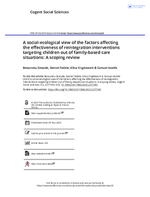
The purpose of this review was to describe in more detail the findings and range of research undertaken regarding the reintegration of children out of family-based care situations, thereby providing a mechanism for summarizing and disseminating research findings to policy makers, practitioners, and researchers who might otherwise lack time or resources to undertake such works themselves. The review has been undertaken with the motive of answering the question
of what is known from the existing empirical literature about the effectiveness and challenges of intervention programs that are meant to sustainably reintegrate children out of family-based care?
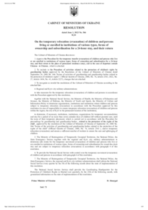
This Procedure determines the mechanism of safety of the children and persons living or enlisted on the round-the-clock stay in organizations of different types, patterns of ownership and subordination (further - children and persons), during warlike situation by acceptance in case of need died to their temporary movement (evacuation), ensuring placement, proper leaving, education, and also return in the place of their permanent residence (stay), and in case of departure out of limits of Ukraine - to Ukraine.
9 серпня 2023 року Міністерство соціальної політики України, Міністерство реінтеграції України та Міністерство внутрішніх справ України підписали спільний наказ №274-Н/215/651, яким затвердили Типовий план повернення українських дітей, евакуйованих з 22 будинків дитини та розміщених в інтернатних
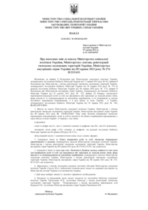
On 9 August 2023 the Ministry of Social Policy of Ukraine, the Ministry of Reintegration of Ukraine and the Ministry of Internal Affairs of Ukraine signed a joint Order No274-H/215/651 adopting a Model Plan for the return of Ukrainian children evacuated from 22 baby homes and placed in boarding institutions in safer places in Ukraine and abroad.
This report is the Commission’s first annual enlargement report on Ukraine replacing the previous annual Association Implementation Reports. To complement its opinion on the membership application, the Commission published the analytical report on the acquis alignment of Ukraine in February 2023.
Ce résumé du briefing “Renforcer la résilience des services sociaux en gérant la demande” est publié en tant que synthèse de la réunion annuelle 2023 du groupe de travail « Transformation et résilience des services sociaux » du Réseau Social Européen (ESN).
This is the Executive Summary of the briefing ‘Building resilience in social services by managing demand’ published as an output of the 2023 annual meeting of the European Social Network ‘Social Services Transformation and Resilience’ Working Group.
The demand for social care, support, and protection is rapidly increasing across Europe, driven by a variety of factors, such as demographic changes and increasing inequalities. This briefing from the European Social Network (ESN) examines this critical issue and identifies solutions to manage demand for social services, to plan and allocate their resources, both human and financial, to deliver high-quality outcomes that are tailored to the actual needs of persons seeking support.
The article explores the notion of deinstitutionalization, emphasising its importance in post-conflict areas and emphasising the value of a personalised social work approach in promoting the welfare of children and young people impacted by the Russia-Ukraine war conflict.
This report is based on assessments provided by 38 Eurochild members in 26 countries and provides recommendations for each country on how to address among others, child poverty and social exclusion, discrimination, health, online safety and early childhood services.
This report provides critical evidence for decision-makers across countries to use in both policy and programming. The report’s objective is to promote the use of these data to make children with disabilities in Europe and Central Asia more visible, bringing about a fuller understanding of their life experiences.
This is the monthly update of the Eastern and Southern Africa Regional Learning Platform published in July 2023.
This is the monthly update of the Eastern and Southern Africa Regional Learning Platform published in September 2023.
This is the monthly update of the Eastern and Southern Africa Regional Learning Platform published in October 2023.
This webinar introduced new global inter-agency guidance on kinship care. During the webinar, panelists shared key lessons learnt on how to support kinship care, drawing particularly on examples of promising practices from South Africa, Zimbabwe, Liberia, and Brazil.
Ghidul de suport pentru implementarea practică a Managementului de caz în domeniul protecției copilului este destinat angajaților structurilor teritoriale de asistență socială. Ghidul oferă un cadru pentru aplicarea Managementului de caz (MC) în domeniul protecției copilului.
Conferința internațională “Finanțarea serviciilor sociale pentru copii și familii în contextul Agendei de Asociere Republica Moldova – Uniunea Europeană” este un eveniment anual organizat sub egida Parlamentului Republicii Moldova în colaborare cu Ministerul Muncii și Protecției Sociale.
These guidelines provide minimum standards to be adhered to in the provision of Child Welfare Programmes; The guidelines will also provide a framework within which state and non-state actors shall develop, design, and implement childcare and welfare programmes to enhance child rights, strengthen family and community-based care.
These national guidelines provide a roadmap of activities to guide the state and non-state actors in Kenya to streamline the transitioning of care systems, children and institutions in the country.
The present report was prepared in accordance with Human Rights Council resolution 49/20, requesting the United Nations High Commissioner for Human Rights: to prepare a report on the rights of the child and inclusive social protection, in close cooperation with relevant stakeholders, including ch
This scoping review aimed to identify the factors affecting the effectiveness of reintegration interventions targeting children outside family-based care. It aims to provide service providers with concise evidence regarding the situations affecting the effectiveness of reintegrating vulnerable children into the community by reviewing the relevant empirical evidence. Unlike other related reviews that have dealt with reintegration practices in selected regions or a specific country alone the present study considered research undertaken in all regions of the world.
This resolution on orphanage trafficking was adopted by consensus at the 147th IPU Assembly and endorsed by 180 parliaments.
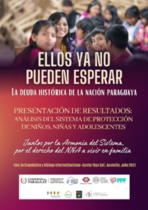
A pesar de que la Análisis Nacional y el plan de acción transversal fueron aprobados por la Corte Suprema de Justicia y el Consejo Nacional de la Niñez y la Adolescencia a principios de 2020, debido a la pandemia y la emergencia sanitaria nacional declarada en Paraguay, que afectó gravemente al sistema de protección, nuestro gobierno no pudo implementar el plan interinstitucional basado en evidencia para optimizar nuestro sistema, que incluía medidas a corto, mediano y largo plazo como solución a los problemas identificados.
Even though the Cross-Government review and action plan were approved by the Supreme Court of Justice and the National Council for Children early 2020, due to the pandemic and national sanitary emergency declared in Paraguay (affecting the protection system severely), the government was not able
Statement by the Members of the Independent International Commission of Inquiry on Ukraine to the United Nations Security Council Arria-Formula Meeting, New York
The purpose of this study is to explore how growing up in private residential care in Chiang Mai and Chiang Rai provinces of Thailand has affected children’s well-being over time. The research provided an important opportunity for young people to describe and analyze their experience, as well as make their own conclusions and recommendations.
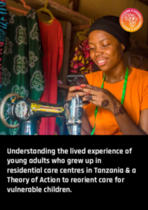
This mixed-methods study collects survey data from 253 adults involved with vulnerable children in Tanzania and narrative data from 31 young adults who experienced residential care during their childhood. The research fills a gap in the literature about the lived experiences of children in institutional care and the impacts of this type of care on their lives.
The government of Kenya has been working with UNICEF, Changing the Way We Care, Charitable Children's Institutions and local CSOs to pilot care reform at the county level. Learning from these demonstration counties is being used to shape care reform in other counties and at the national level. This video explores care reform in one demonstration county, Kisumu.
In this webinar, a new paper on strategies to prevent family separation is presented. Examples from Rwanda, Kenya, Uganda and Namibia are presented.
This video explores why supporting kinship care is so important, and examines how to support kinship care using examples from government and NGOs in Zimbabwe.
Este Informe Temático sobre voluntariado, volunturismo, turismo de orfanatos y tráfico de huérfanos fue elaborado para aportar lineamientos a los Gobiernos, los responsables de políticas y otros responsables de la toma de decisiones. También respalda la implementación de los compromisos internacionales asumidos en el contexto de la Resolución de la Asamblea General de la ONU 2019 sobre los Derechos de los niños y las niñas privados del cuidado parental. Explica de qué modo tomar las medidas apropiadas para abordar y prevenir los daños asociados al voluntariado en orfanatos, el turismo de orfanatos y el volunturismo, y al tráfico de huérfanos vinculado con las actividades anteriores.
This webinar explores the existing evidence of the connections between climate change and risks to children’s protection and discuss the role that child protection actors and the wider humanitarian community can take to ensure the protection of children and well-being of children impacted by the climate crisis.
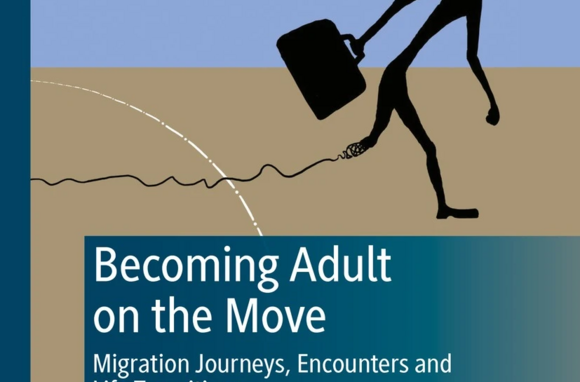
This edited collection situates the migration of children and young people into Europe within a global framework of analysis and provides a holistic perspective that encompasses cultural media, ethnographic research and policy analysis. Drawing on a unique study of young unaccompanied migrants who subsequently became ‘adult’ within the UK and Italy, it examines their different trajectories and how they were impacted by their ability to secure legal status.
In this article, the authors discuss residential staff in Sweden where residential care is part of the municipal child welfare system, which covers services targeting juvenile delinquency as well as other residential care services. Children and young people placed in Swedish residential care have diverse needs, from mainly supportive needs to advanced behavioral problems, and the field consists of open and secure residential care units.
This study investigates the impact of various sources of social support on the mental health of unaccompanied children under residential education in China. Unaccompanied children refer to those whose parents are still alive but unable to raise them due to various reasons.
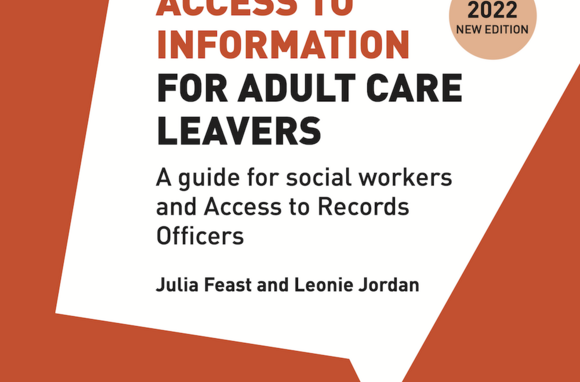
This good practice guide published by Coram BAAF is for Access to Records Officers (AROs) and social workers in the UK who are providing access to records and related services for adult care leavers and aims to set out a protocol for dealing with Subject Access Requests (SARs) in order to improve services for adult care leavers and establish greater consistency and quality practice across organisations.
The climate crisis is already changing girls’ lives and futures. Save the Children’s analysis shows that between now and 2030, almost 60% of girls - that’s 931 million - will experience at least one extreme weather event, like flooding, drought or heatwaves.
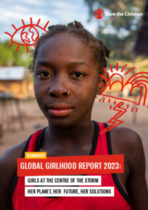
The climate crisis is already changing girls’ lives and futures. Girls across Africa are facing growing challenges as the climate crisis increasingly impacts the continent, leading to a range of extreme weather patterns. In southern parts of Africa, girls are enduring devastating cyclones and floods. Meanwhile, the Sahel, Eastern, and Horn of Africa regions - home to the highest rates of child marriage - are grappling with severe droughts. Climate-induced migration is also on the rise in Western, Southern, and Central Africa.
This year’s adolescent-friendly Global Girlhood Report explores how the climate crisis impacts girls’ rights. It features new analysis by Save the Children on emergency hotspots where girls face the dual threat of child marriage and climate disasters, and stories of girls advocating for climate action in their communities.
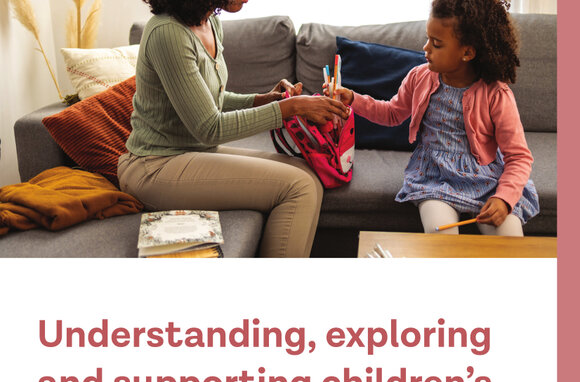
This practice tool considers how practitioners can explore and write about identity with children and young people. It gives a short introduction to some useful concepts about identity for social care practitioners and provides guidance about how practitioners could support children’s identity development. It also includes a set of practical tips and tools to use to explore children’s identities with them.
This WHO-UNICEF Global Report on children with developmental disabilities provides principles and approaches to intentionally include the needs and aspirations of children and young people with developmental disabilities in policy, programming and public health monitoring.
This article will present the evolution of alternative care provision in the Maldives.
This resource is aimed at supporting front-line practitioners in Australia to have a working knowledge of the historical and contemporary context of social welfare policies and their impact on First Nations families and to use this knowledge as a starting point to build an awareness of how individual and systemic practices impact First Nations young people and families.
The study's main themes were establishing the need for residential homes for children (RHCs), RHCs not being an ideal family environment and RHCs as respite. Family marital problems, poor financial situation, stigma attached to some children in care, abusive parents and a lack of suitable alternatives when families have a crisis were identified as key factors that impede DI implementation in Ghana.
This case story is meant to illustrate the transition process of Good Life orphanage, a charitable children’s institution based in Kilifi County, Kenya, the actors involved, the challenges and the success factors; recognizing that each transition is an individual process with different starting p
This case story is meant to illustrate transition process of Majaoni Rescuers, a community-based organization (CBO) in Mombasa County, Kenya, the actors involved, the challenges and the success factors; recognizing that each transition is an individual process with different starting points, different dynamics and different evolutions.
These illustrations from Changing the Way We Care and the Government of Kenya showcase live community engagement sessions on how to develop Kafaalah messages and promote Kafaalah for family-based care.
This handbook is a summarized, user-friendly version of the operating procedures for alternative family- and community-based care options. It provides an overview of each type of care, key considerations, and the process followed for placement. The handbook aims to provide an easy and quick reference to critical information and “how to” about alternative family- and community-based care placements.
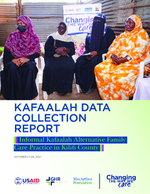
This data collection exercise was commissioned to assess the different types of Kafaalah care arrangements practiced by families and communities in Kilifi, Kenya. It affirms that Kafaalah is a widely known and practiced form of care among the Muslim community in Kilifi County.
This guide framework describes how CTWWC employs its family strengthening approach.
Changing the Way We Care (CTWWC) promotes safe, nurturing family care for children reintegrating from residential care facilities (often referred to as “orphanages”) and prevents child-family separation by strengthening families, reforming national systems of care for children, and working to shift donor and volunteer support away from residential care and toward family care alternatives.
În perioada ianuarie - iunie 2023, Asociația de Suport Familial de Recuperare Timpurie a Copiilor cu Deficiențe de Auz și Văz ”AudiViz” a realizat un studiu care a avut scopul de a analiza perceptia parintilor și a copiilor/tinerilor cu dizabilitate de auz privind calitatea vietii lor, a serviciilor oferite de autoritățile publice și dacă acestea răspund nevoilor lor sau contribuie la sprijinirea familiei, la reabilitarea şi integrarea socială, educațională.
În perioada ianuarie - iunie 2023, Asociația de Suport Familial de Recuperare Timpurie a Copiilor cu Deficiențe de Auz și Văz ”AudiViz” a realizat un studiu care a avut scopul de a analiza perceptia parintilor și a copiilor/tinerilor cu dizabilitate de auz privind calitatea vietii lor, a serviciilor oferite de autoritățile publice și dacă acestea răspund nevoilor lor sau contribuie la sprijinirea familiei, la reabilitarea şi integrarea socială, educațională.
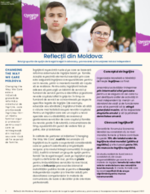
Caregivers are at the heart of family-centered care reform efforts. They are the critical link to ensuring that those who need care get it in a way that allows them to thrive. Changing the Way We Care Moldova’s partner, AudiViz, recognizes that caregivers have a wealth of experience that could be harnessed and shared among each other and the larger community.