Too Many Teens: Preventing Unnecessary Out-of-Home Placements

The Annie E. Casey Foundation

The child welfare system was created to care for abused and neglected children. But too often, teenagers are landing in the system because they simply aren’t getting along with their parents. This paper traces Casey’s efforts to learn from communities that are preventing teens from landing in the system by helping families while the teen remains at home. A survey of the states, interviews with experts, secondary research and visits to several communities show common elements of successful programs.The paper presents information on related laws and policies, funding sources and programs for families while including the infrastructure and services needed to support such initiatives.

File
Presentations: Meeting on Translating Research Evidence Into Action

Know-How Center Bulgaria, Children and Family Initiative, and Changing the Way We Care

These presentations from Know-How Center Bulgaria, Children and Family Initiative, and Changing the Way We Care, were delivered during the September 30, 2021, workshop of the Care Measurement Task Force of the Transforming Children's Care Global Collaborative Platform. The focus of the workshop was translating research evidence into action. 

Presentations: Meeting on Child and Family Outcome Measurement

Hope and Homes for Children, Miracle Foundation and Railway Children

These presentations from Hope and Homes for Children, Miracle Foundation and Railway Children were delivered during the August 20, 2021, workshop of the Care Measurement Task Force of the Transforming Children's Care Global Collaborative Platform. The focus of the workshop was child and family outcome measurement.

Presentations: Meeting on Care Measurement Initiatives in Eastern and Southern Africa and Thailand

Alternative Care Thailand, UNICEF

These presentations from UNICEF and Alternative Care Thailand were delivered during the July 9, 2021, workshop of the Care Measurement Task Force of the Transforming Children's Care Global Collaborative Platform. The focus of the workshop was on care measurement initiatives in Eastern and Southern Africa and Thailand.

My Hero is You 2021: How Kids Can Hope with COVID-19

Inter-Agency Standing Committee Reference Group on Mental Health and Psychosocial Support in Emergency Settings

The book aims to help children stay hopeful and positive during the COVID-19 pandemic. The story is a sequel to ‘My Hero is You: how kids can fight COVID-19!’, published in April 2020. 

Both books have been released by a collaboration of 60 organizations working in the humanitarian sector, including the World Health Organization, UNICEF, the United Nations High Commissioner for Refugees, the International Federation of Red Cross and Red Crescent Societies and the MHPSS  Collaborative for Children & Families in Adversity.

File
Family Engagement: Partnering With Families to Improve Child Welfare Outcomes

Child Welfare Information Gateway

Engaging families in the casework process promotes the safety, permanency, and well-being of children and families in the child welfare system and is central to successful practice. Effective family engagement occurs when child welfare practitioners actively collaborate and partner with the family network, including maternal and paternal relatives and fictive kin, throughout their involvement with the child welfare system and recognizing them as the experts on their respective situations. This bulletin for professionals provides an overview of the foundational elements of the family engagement approach, followed by strategies and promising practices for implementing it.

File
¿Cómo hacer más efectiva la protección a la unidad familiar y la reunificación familiar en situaciones de movilidad humana y movimientos mixtos, y en contexto de pandemia?

Inter-American Commission on Human Rights (IACHR)

la Comisión Interamericana presenta la guía ¿Cómo hacer más
efectiva la protección a la unidad familiar y reunificar a la familia en los procedimientos migratorios y de protección en contexto de pandemia? en la que
se analizan los estándares interamericanos aplicables a la luz de las obligaciones
internacionales de los Estados y propone recomendaciones para garantizar la unidad
familiar y la reunificación familiar así como prevenir los riesgos de separación y minimizar los impactos en los casos de separación familiar. Asimismo, la implementación
de las garantías de la reunificación familiar requiere muchas veces de una estrategia idónea de acceso a mecanismos de regularización documental, así como de condiciones seguras de viaje y movilidad a través de las fronteras nacionales. Esto es especialmente benéfico para familias que se han visto separadas de manera forzada o por
razones asociadas a la movilidad humana.

File
How Can Family Unit Protection and Family Reunification be Made More Effective in Situations of Human Mobility and Mixed Movements, and in the Context of the Pandemic?

Inter-American Commission on Human Rights (IACHR)

he Inter-American Commission on Human Rights (IACHR) has issued, in collaboration with the UN Refugee Agency (UNHCR), a practical guide on how to protect family unity and reunification more effectively in human mobility and mixed movement contexts during the ongoing COVID-19 pandemic. This publication is part of a series of guides issued by the IACHR to address the impact of the pandemic on human rights. The guide makes recommendations to States, so they may protect family unity, prevent separation, and take any necessary measures to ensure the reunification of families who may have been separated in contexts associated with human mobility.

File
Global Minimum Estimates of Children Affected by COVID-19-Associated Orphanhood and Deaths of Caregivers: A Modelling Study

Lancet

Because most COVID-19 deaths occur among adults, not children, attention has been focused, understandably, on adults. However, a tragic consequence of high numbers of adult deaths is that high numbers of children might lose their parents and caregivers to COVID-19, as occurred during the HIV/AIDS, Ebola, and 1918 influenza epidemics. The goal of this report is to shine a bright light on this urgent and overlooked consequence that is harmful for children.
File

COVID-19-Associated Orphanhood and Caregiver Death in the United States

Pediatrics Journal

This report captures overall and U.S. state-specific findings, disaggregated by race/ethnicity, for COVID-19-associated orphanhood and death of grandparent caregivers. High rates of orphanhood, marked disparities, and state-specific differences show the overlooked burden among children at greatest risk, in states most affected.

File

Language that Cares: Changing the Way Professionals Talk About Children in Care

TACT

Language That Cares is a collaborative effort led by TACT that aims to change the language of the care system. Language is a powerful tool for communication but sometimes the way that it is used in social care creates stigma and barriers for understanding. Language is power, and we want children and young people to feel empowered in their care experience.

File

Consequences of Exclusion: A Situation Report on Organisations of People with Disabilities and COVID-19 in Bangladesh, Nigeria, and Zimbabwe

International Disability Alliance (IDA)

The COVID-19 pandemic has exacerbated inequalities and barriers to
social inclusion for people with disabilities. These experiences of social
exclusion have been felt to an even greater extent by women with disabilities
and under-represented groups of people with disabilities, leading to a range of
effects on the operations and priorities of OPDs. To address a critical gap in the
evidence base, the Disability Inclusion Helpdesk carried out a rapid assessment
of the role of OPDs during the pandemic, and how the pandemic has affected
OPDs’ operations and priorities.

File

Breaking the Silence on Special Needs Children in Foster Care: The Diversity of Children in Foster Care, Carers and Processes

Nuria Fuentes- Peláez, Carme Montserrat, Rosa Sitjes- Figueras, Gemma Crous

This study aims to advance the understanding of children with special needs in foster care by identifying the characteristics, processes, and outcomes of their placement. The study uses a quantitative approach to identify 190 children with special needs (registered) from among 2,157 foster children in Catalonia and the Balearic Islands, Spain and examines key data covering 2008 to 2018. The results show that children with special needs are overrepresented in placements with single-parent foster carers (mainly women), raising questions about the extent to which the care system takes the complexity of special needs into account.

File

Promoting Resilience-Informed Care: A practical guidance resource for frontline workers in family based care

Changing the Way We Care

This practical guidance is for anyone working with children at risk of entering, already living in, preparing or having already left care. It discusses why and how to support children who are at risk of or who have already experienced adverse experiences that might lead to distress or trauma.

File

Caseworker's Handbook: Case Management for Reintegration of Children into Family- or Community-Based Care

Changing the Way We Care

This Handbook is a summarized, simplified version of the Case Worker’s Guidebook for Case Management for Reintegration of Children/Young Adults into Family- or Community-Based Care. It provides an overview of the principles and practices of case management for reunification and placement of children/young adults outside of parental care (e.g., street-connected children/young adults or from Charitable Children’s Institutions and Statutory Children’s Institutions) into family- and community-based care, up until sustainable reintegration is achieved. The Handbook aims to provide an easy and quick reference to critical information and “how to” about case management for reintegration.

File

Convocatoria para contribuciones: Informe del ACNUDH al Consejo de Derechos Humanos - “Los derechos del niño y la reunificación familial”

United Nations Human Rights Office of the High Commissioner

En la resolución 45/30, el Consejo de Derechos Humanos decidió centrar su próxima reunión anual de un día completo de los derechos del niño (2022) sobre el tema “los derechos del niño y la reunificación familial”. Además, solicitó a la Oficina del Alto Comisionado de las Naciones Unidas para los Derechos Humanos que prepare un informe sobre ese tema, en estrecha cooperación con todas las partes interesadas, con el fin de proporcionar información para la reunión anual de día completo.

File

Appel à contributions: Rapport du HCDH au Conseil des droits de l'homme - "Les droits de l'enfant et le regroupement familial"

United Nations Human Rights Office of the High Commissioner

Dans sa résolution 45/30, le Conseil des droits de l'homme a décidé de consacrer son prochain débat annuel d’une journée complète sur les droits de l'enfant (2022) au thème « les droits de l'enfant et le regroupement familial ». Il a en outre prié au Haut-Commissariat des Nations Unies aux droits de l’homme d’établir un rapport sur ce thème, en étroite coopération avec toutes les parties concernées, afin d’éclairer le débat annuel d’une journée.

File

Representing care experienced children & young people in police custody: A good practice guide

Fiona Dyer (Children & Young People’s Centre for Justice) and Irina Beaton (Scottish Child Law Centre)

The Children and Young People’s Centre for Justice (CYCJ), in collaboration with the Scottish Child Law Centre, has produced a resource to support Scottish solicitors and practitioners with Good Practice Principles when representing care experienced children in police custody, to ensure their rights are upheld.

File

IASC Guidelines, Inclusion of Persons with Disabilities in Humanitarian Action, 2019

ASC Task Team on inclusion of Persons with Disabilities in Humanitarian Action

The guidelines set out essential actions that humanitarian actors must take in order to effectively identify and respond to the needs and rights of persons with disabilities who are most at risk of being left behind in humanitarian settings.

File

Lifelong Links Briefing II

CELCIS

In June 2020 CELCIS produced the first Lifelong Links Briefing, outlining the ongoing evaluation of Lifelong Links in Scotland. In it, we presented some of the initial topics that were emerging from the data we had received or collected. The aim was to help local sites and Family Rights Group to continue to develop their practice and improve the lives of children and young people in Scotland.

File

Keeping Children Safe: Introducing our Strategy for 2015 – 2020

Children at Risk Action Network (CRANE)

As a network, we aim to achieve more by working together for children than by working in isolation.
For the first years of CRANE’s life, the network strove to be the strongest and most effective Christian
network and to see Christians working together in strategic partnerships towards transformational
change for children. By the 10th anniversary, the network had established that platform. Therefore we
are now looking to make our unique contribution much clearer and much more challenging.

File

A Qualitative Study of Risks and Protective Factors for Violence Against Children Living In Residential Care Institutions (RCIs) In Uganda

Firminus Mugumya, Amy Ritterbusch, Neil Boothby, Joyce Wanican, Timothy Opobo, Noah Nyende, Sarah Meyer and Clare Bangirana

This qualitative study of risks and protective factors for violence against children living in
Residential Care Institutions (RCIs) for children is part of the wider qualitative study on violence
against children in Uganda. The study complements the national wellness survey that sought to
measure the prevalence of violence against children in household, schools and the community from
a quantitative perspective

File

Beyond Neglect: Event Report

Child Welfare League of Canada, Children’s Aid Foundation of Canada

In April 2021, the Child Welfare League of Canada (CWLC), in partnership with the Children’s Aid Foundation of Canada, led a series of cross-sectoral convenings with the goal of introducing a positive obligation for government and service providers to assist families who are experiencing difficulties in a context of poverty. This three-day event convened people across sectors to gain a better understanding of how the child welfare system responds to the conditions that place families at an increased risk of child protection involvement due to assessments of ‘neglect’. The goal of Beyond Neglect is to develop and champion evidence-based legislative frameworks that could help service providers and governments to better meet the needs of children, youth and their families.

File

State of the Social Service Workforce Report 2020: Responding, Adapting and Innovating During COVID-19, and Beyond

The Global Social Service Workforce Alliance

Drawing from a review of global reports and case studies, as well as from information sourced from Global Social Service Workforce Alliance members, this report explores the key challenges social service organizations and workers have faced since the beginning of the pandemic and showcases how they have been able to adapt and innovate in response to such challenges.

File

Hagan valer nuestras voces - Respuestas de las niñas, niños, adolescentes y jóvenes a la encuesta mundial para el Día de Debate General de 2021 sobre los derechos del niño y el cuidado alternativo - Resumen adaptado para niñas, niños, adolescentes

Kate Butler, Ph.D, Vanessa Currie, MA, Katie Reid, MA and Laura Wright, Ph.D. - International Institute for Child Rights and Development 2021

Este resumen para niños y jóvenes acompaña al informe "Hagamos que nuestras voces cuenten: las respuestas de los niños y los jóvenes a una encuesta mundial para el Día de debate general de 2021 sobre los derechos del niño y los cuidados alternativos".

File

2021 Day of General Discussion: Report about what children and young people around the world think of their care if they do not live with their parents

UN Committee on the Rights of the Child

This report is about what children and young people told us about their care and what they want to change. This report is for a meeting that happened in September 2021. The meeting was about care for children who do not live with their parents. People from around the world were at the meeting.

File

Accountability in Our Lifetime: A Call to Honour the Rights of Indigenous Children and Youth

Gabrielle Fayant and Carrington Christmas

For decades, First Nations have called for Canada to respect the sacredness of their children and youth by upholding the best interests of the child, substantive equality and cultural continuity. This call has been echoed in numerous reports including, but not limited to, the Royal Commission on Aboriginal Peoples (1996), the Joint National Policy Review (2000), the Wen: De Reports (2005), the Truth and Reconciliation Commission (2005), A Roadmap to the Truth and Reconciliation Commission Call to Action #66 (2018) and the National Inquiry into Missing and Murdered Indigenous Women and Girls (2019). In June 2020, Bill S-217 (now S-210) was introduced by Senator Rosemary Moodie for the creation of an Office of the Commissioner for Children and Youth in Canada. The Bill proposes the establishment of an appointed Commissioner for Children and Youth to promote, monitor and report on
the implementation of Canada’s obligations under the United Nations Convention on the Rights of the Child.

File

Patterns of sexual violence against adults and children during the COVID-19 pandemic in Kenya: a prospective cross-sectional study

Sarah Rockowitz, Laura M Stevens, James C Rockey, Lisa L Smith, Jessica Ritchie, Melissa F Colloff, Wangu Kanja, Jessica Cotton, Dorothy Njoroge, Catherine Kamau, Heather D Flowe

This study examined patterns of sexual violence against adults and children in Kenya during the COVID-19 pandemic to inform sexual violence prevention, protection, and response efforts.

File

Make Our Voices Count: Children and young peoples’ responses to a global survey for the Day of General Discussion 2021 on Children’s Rights and Alternative Care - Child and Youth-Friendly Summary

Kate Butler, Ph.D, Vanessa Currie, MA, Katie Reid, MA and Laura Wright, Ph.D. - International Institute for Child Rights and Development

This child and youth friendly summary accompanies the report "Make Our Voices Count: Children and Young People's Responses to a Global Survey for the 2021 Day of General Discussion on Children's Rights and Alternative Care".

File

Make Our Voices Count: Children and young peoples’ responses to a global survey for the Day of General Discussion 2021 on Children’s Rights and Alternative Care

Kate Butler, Ph.D, Vanessa Currie, MA, Katie Reid, MA and Laura Wright, Ph.D. - International Institute for Child Rights and Development

This report was commissioned by a group of civil society organizations (CSOs) in an effort to get a broad sense of what children and young people themselves think about their experiences in alternative care.

File

Comité des droits de l'enfant Journée de débat général 2021: Droits de l'enfant et protection de remplacement - Document d'information

Ce document d'information a pour objectif de synthétiser et de présenter les données probantes communiquées dans les contributions soumises au Comité dans le cadre de la procédure de concertation publique (voir le point 1.3 ci-dessous pour plus de détails sur la procédure de concertation).

File

Note technique sur la prestation de prise en charge de remplacement en période de COVID-19

Better Care Network, Save the Children, The Alliance for Child Protection in Humanitarian Action, UNICEF, and the Inter-agency Task Force

Ce document fournit des conseils pratiques aux acteurs du monde humanitaire et du développement sur les adaptations et les facteurs nécessaires à prendre en compte pour soutenir les enfants, que ces derniers soient actuellement soumis à la prise en charge de remplacement ou en attente de placement durant la pandémie de COVID-19.

File

Case Management Procedures for Reunification and Reintegration of Children and Adolescents into Family and Community-based Care

Changing the Way We Care

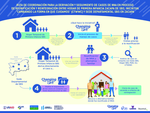
Case Management Procedures for Reunification and Reintegration of Children and Adolescents into Family and Community-based Care was developed together with Secretary of Social Welfare (SBS), the Office of the Child and Youth Advocate (PNA), Guatemala’s Attorney General (PGN), the Judicial Branch (OJ), the National Council of Adoptions (CNA), ASOCRIGUA and Hogar Aldeas de Esperanza. It was informed by Changing the Way We Care’s work in Kenya on the Caseworker’s Guidebook: Case Management for Reintegration of Children into Family or Community-Based Care, adapted to the Guatemalan context.

File

Los Procedimientos de Manejo de Casos para la Reunificación y Reintegración de los Niños, Niñas y Adolescentes al cuidado Familiar y Comunitaria

Changing the Way We Care

Los Procedimientos de Manejo de Casos para la Reunificación y Reintegración de los Niños, Niñas y Adolescentes al cuidado Familiar y Comunitaria se desarrollaron a través de talleres participativos en conjunto con la Secretaría de Bienestar Social (SBS), la Procuraduría de la Niñez y la Adolescencia (PNA) de la Procuraduría General de la Nación (PGN), El Organismo Judicial (OJ), El Consejo Nacional de Adopciones (CNA), la Asociación de Hogares Cristianos de Guatemala (ASOCRIGUA) y Hogar Aldeas de Esperanza. Se basó en el trabajo de Changing the Way We Care de Kenia en la Guía para trabajadores sociales: Manejo de casos para la reintegración de niños y niñas en cuidado familiar o comunitaria, adaptada al contexto guatemalteco.

File

ផលប៉ះពាល់នៃជំងឺកូវីដ១៩ លើមណ្ឌលថែទាំកុមារ ដែល មានដំណើរការ និងទទួលបានមូលនិធិគាំទ្រពីឯកជន

Better Care Network, Law Futures Centre - Griffith Law School, World Childhood Foundation, Eriks Development Partner

This study was a small-scale piece of qualitative research that involved 21 semistructured interviews with founders, funders, and directors of RCIs across 7 countries. It was designed to better understand the impacts of COVID-19 on the operations of residential care institutions including funding, staffing, volunteering, children’s care, education, family connection and reintegration.

File

Population and Response Capacity Study in the INAU 24-Hour Protection System

UNICEF Uruguay & INAU

Study that investigates the situation of children and adolescents who have temporarily or permanently lost the care of their families and reside in INAU institutions: the reasons for admission, the length of stay, their family situation. In turn, this information is analyzed in conjunction with the response capacity of the institution (human resources and infrastructure).

File

Engaging Everyone in the Transformation - Child Rescue Centre and Helping Children Worldwide

Better Care Network and Helping Children WorldWide

The Child Rescue Centre was the first orphanage in Sierra Leone to successfully complete a transition from residential to family-based care. This case study highlights some of the key dynamics that arose throughout the transition of the orphanage and examines how those dynamics both influenced the transition and determined the type of support provided as well as the most appropriate transition strategy.

File

The Effect of COVID-19 on the Wellbeing of Children in Uganda

AfriChild Center

The assessment of COVID-19 effect on the Wellbeing of Children in Uganda was conducted between June and August, 2020 by AfriChild Centre, Makerere University. The study took a retrospective approach with a focus on the three months of the COVID-19 lock down (AprilJune 2020) to counter contradictions that could arise from a longer study period in the face of changing dynamics of COVID-19.

File

Uganda Child Protection National Training Curriculum

Over the past two decades of humanitarian work in northern Uganda, national and international child-focused organisations as well as government departments responsible for children have built a rich body of knowledge that has informed child protection work throughout the country. The development of this Child Protection Curriculum and related training materials is therefore a first step by the Ministry of Gender, the Ministry of Labour and Social Development, the United Nations Children’s Fund (UNICEF), the Child Protection Working Group in Uganda, and selected academic institutions to professionalise the child protection sector within the broader realm of social work in Uganda.

File

Strengthening Uganda’s National Response for Implementation of Services for Orphans and Other Vulnerable Children: Final Evaluation

Coordinating Comprehensive Care for Children (4Children) project

Strengthening Uganda’s National Response for Implementation of Services for Orphans and Other Vulnerable Children (SUNRISE-OVC) is a five-year project, which began June 2010, to deliver and monitor high quality, comprehensive and scaled-up services for OVC in 80 out of 112 districts in Uganda. The project was funded by USAID, working in partnership with the Government of Uganda’s (GoU) Ministry of Gender, Labour and Social Development (MGLSD) for oversight.

File

Multidimensional Child Poverty and Deprivation in Uganda Report: Volume 1

David Gordon, Şebnem Eroğlu, Eldin Fahmy, Viliami Konifelenisi Fifita, Shailen Nandy, Acomo Oloya, Marco Pomati and Helen Anderson

This report represents the successful integration of multidimensional child poverty measures in national statistics. In doing so it provides a better understanding of child poverty in Uganda by augmenting Uganda’s rich tradition of poverty analysis with a more deprivation-centred analytical tool.

File

Basic Requirements and Minimum Standards Indicators for Education Institutions

The Republic of Uganda, Ministry of Education and Sports

In 2001 the Republic of Uganda's Ministry of Education and Sports (MoES) issued the Basic Requirements and Minimum Standards Indicators for Education Institutions (BRMS) to schools and other relevant stakeholders to guide the organization and management of educational institutions. This BRMS has been reviewed by a multi-sectoral team comprising of members from the public and private sectors, development partners, international and national NGOs and other organizations.

File

Inspiring Children’ s Futures - Supporting Children’s Wellbeing During COVID-19: Providers’ and Policymakers’ Successes, Challenges, Lessons Learned and Recommended Actions

The Institute for Inspiring Children’s Futures at the University of Strathclyde

This report presents the findings of the COVID 4P Log Project, which sought to better understand the changing demands on the policies and practices designed to support children's wellbeing in response to the COVID-19 pandemic across different cultures and contexts, in 22 countries and five continents.

File

The impact of COVID-19 on children and families in Scotland: Understanding needs and services through local social work data

Alex McTier and Ruth Sills - CELCIS, e Scottish Government Children and Families Collective Leadership Group

This report was prepared by CELCIS in collaboration with local authorities and stakeholders in Scotland to inform the Scottish Government Children and Families Collective Leadership Group's consideration of the impact of COVID-19 on children and families.

File

Catholic Care for Children in Uganda: A Family for Every Child - Findings from a Midterm Evaluation

GHR Foundation

The goals of Catholic Care for Children in Uganda (CCCU) are to enable children to grow up in safe environments, reduce recourse to institutional care, and encourage family- and community-based care for children. This midterm evaluation examines what has been accomplished in the four years since the program began.

File

Transforming Children's Care Webinar #5 - The Impact of COVID-19 on Privately Run Residential Care Institutions

Transforming Children's Care Global Collaborative Platform

This webinar, the fifth in the Transforming Children's Care Webinar Series focused on a new study ('Impact of COVID-19 on Privately Run Residential Care Institutions: Insights and Implications for Advocacy and Awareness Raising'). The study, comprising 21 semi-structured interviews across seven focus countries, explores the effect of COVID-19 on a small number of privately run and funded residential care institutions.

Impact of COVID-19 on Privately Run and Funded Residential Care Institutions: Briefing Note for Volunteers and Volunteer Sending Organisations

Better Care Network, Law Futures Centre - Griffith Law School, World Childhood Foundation, Eriks Development Partner

This briefing paper draws on data and findings from the report: Impact of COVID-19 on Privately Run Residential Care Institutions: Insights and Implications for Advocacy and Awareness Raising.

Impact of COVID-19 on Privately Run and Funded Residential Care Institutions: Summary Briefing Paper

Better Care Network, Law Futures Centre - Griffith Law School, World Childhood Foundation, Eriks Development Partner

This briefing paper draws on data and findings from the report: Impact of COVID-19 on Privately Run Residential Care Institutions: Insights and Implications for Advocacy and Awareness Raising.

Impact of COVID-19 on Privately Run and Funded Residential Care Institutions: Briefing Paper for In-Country Organisations Engaging with RCIs

Better Care Network, Law Futures Centre - Griffith Law School, World Childhood Foundation, Eriks Development Partner

This briefing paper draws on data and findings from the report: Impact of COVID-19 on Privately Run Residential Care Institutions: Insights and Implications for Advocacy and Awareness Raising.

File

Impact of COVID-19 on Privately Run and Funded Residential Care Institutions: Briefing Note for Donors and Supporters of Overseas RCIs

Better Care Network, Law Futures Centre - Griffith Law School, World Childhood Foundation, Eriks Development Partner

This study was a small-scale piece of qualitative research that involved 21 semistructured interviews with founders, funders, and directors of RCIs across 7 countries. It was designed to better understand the impacts of COVID-19 on the operations of residential care institutions including funding, staffing, volunteering, children’s care, education, family connection and reintegration.

Innovations in care for children separated from parents: Transitioning from residential to family models of service

Nicole Gilbertson Wilke & Amanda Hiles Howard - Children & Society

Research suggests that children develop best in families, but millions currently reside in residential care centers. Using a mixed methods design, the current study examined (1) antecedents to transition, (2) key elements in the process and (3) outcomes of transitioning models of care.

Cadrul Normativ Și Mecanismul De Finanțare A Sistemului De Îngrijire Alternativă În Republica Moldova

Changing the Way We Care (CTWWC)

Cercetarea a vizat o analiză cuprinzătoare a cadrului juridic și de reglementare, conform Orientărilor ONU privind îngrijirea alternativă a copiilor, inclusiv o analiză a mecanismelor de finanțare pentru programarea serviciilor de îngrijire.

File

Dezinstituționalizarea Prin Înțelegerea Particularităților Sistemului Rezidențial De Îngrijire În Republica Moldova

Changing the Way We Care (CTWWC)

A fost efectuată o evaluare cuprinzătoare a copiilor și adolescenților care trăiesc în îngrijire rezidențială identificând că există un mecanism complex de evaluare, axat pe oferirea unei vederi de 360° asupra nevoilor și interesului superior al copilului.

File

Cunoștințe, Atitudini, Practici Privind Reintegrarea Copiilor În Familii Și Prevenirea Separării În Republica Moldova

Changing the Way We Care (CTWWC)

Studiul a evaluat cunoștințele, atitudinile și practicile populației generale în ceea ce privește reintegrarea copiilor în familii, integrarea copiilor cu dizabilități în școala și comunitate și prevenirea separării copiilor care trăiesc în familii vulnerabile.

File

Situația Actuală La Nivel Național În Prestarea Serviciilor Sociale Destinate Copiilor Şi Familiilor Vulnerabile În Republica Moldova

Changing the Way We Care (CTWWC)

Analiza a vizat revizuirea tuturor categoriilor de servicii sociale pentru copiii și familiile vulnerabile, cu accent specific pe  serviciile de prevenire și răspuns.

File

Rezumatul analizei situaționale efectuate în cadrul inițiativei CTWWC Moldova

Changing the Way We Care (CTWWC)

În perioada ianuarie-iunie 2021, Changing the Way We Care în Moldova, împreună partenerii săi cheie P4EC, CCF și Keystone Moldova, a efectuat șapte studii de cercetare privind diferite elemente ale sistemului de îngrijire și protecție a copiilor din Moldova, care, atunci când sunt citite împreună, oferă o imagine cuprinzătoare a sistemului.

File

Unsafe In Foster Care

Deepa Fernandes and Victora Estrada - Latino USA

This two-part investigation looks into Los Angeles County’s Department of Children and Family Services (DCFS), the largest child welfare agency in the U.S., and what happens when the system that is meant to protect these children falls short—and even puts their lives at risk.

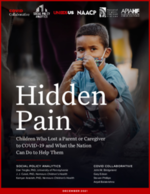
Children: The Hidden Pandemic 2021 – A joint report of COVID-19- associated orphanhood and a strategy for action

Global Reference Group on Children Affected by COVID-19: Joint Estimates and Action

This report presents statistical data from 192 countries on children experiencing COVID-19-associated orphanhood and death of grandparent caregivers, a description of the trends in these data, a real-time COVID-19 Calculator for Death of Parents and Caregivers, and strategies and principles for integrating care for children bereaved by the virus into every nation’s COVID-19 response planning.

File

Khmer: Prakas on Procedures to Implement Kinship Care and Foster Care

Ministry of Social Affairs, Veterans and Youth Rehabilitation (MoSVY) - Kingdom of Cambodia

The Goal of the Prakas is to ensure the best interests of the child and protect the basic rights of the child separated from his/her biological parents and receiving kinship or foster care, so that they are safe and thriving in a warm, loving and happy family environment.

File

Khmer: Cambodia Child Protection Monitoring Framework - Care Indicators and Metadata: A working document to guide the establishment of the Child Protection Information Management System (CPIMS) in Cambodia

Ministry of Social Affairs, Veterans and Youth Rehabilitation (MoSVY)

This document (written in Khmer), the Cambodia Child Protection Monitoring Framework, contains 50 core indicators considered important in assessing the child protection system in Cambodia.

File

Khmer: Report on Results of the Implementation of the Action Plan for Improving Child Care with the Target of Safely Returning 30 Percent of Children in Residential Care to their Families by 2019

Ministry of Social Affairs, Veterans and Youth Rehabilitation (MoSVY)

This report (in Khmer) presents the outcomes of the implementation of the Action Plan for improving child care with the target of safely returning 30 per cent of children in residential care to their families, including key achievements, lessons learned, and recommendations going forward.

File

Report on Results of the Implementation of the Action Plan for Improving Child Care with the Target of Safely Returning 30 Percent of Children in Residential Care to their Families by 2019

Ministry of Social Affairs, Veterans and Youth Rehabilitation (MoSVY)

This report presents the outcomes of the implementation of the Cambodian Ministry of Social Affairs, Veterans and Youth Rehabilitation (MoSVY) Action Plan for Improving Child Care and the safe return of 30 per cent of children in residential care to their families, including key achievements, lessons learned, and recommendations going forward.

File

Study Report on Good Practices in Family Preservation and Prevention of Family Separation Programming in Cambodia

Kirsten Anderson - Coram Children’s Legal Centre (CCLC)

This report provides in-depth analysis of programs of 7 different NGOs in Cambodia working on the prevention of family separation and family preservation in order to respond to risks related to physical and mental well-being and domestic violence.

File

Prakas on Procedures to Implement Kinship Care and Foster Care

Ministry of Social Affairs, Veterans and Youth Rehabilitation (MoSVY) - Kingdom of Cambodia

This Prakas was drafted in accordance with Cambodia’s policies, standards and regulations to enable the implementation of kinship care and foster care. The Goal of the Prakas is to ensure the best interests of the child and protect the basic rights of the child separated from his/her biological parents and receiving kinship or foster care, so that they are safe and thriving in a warm, loving and happy family environment.

File