Image
Displaying 1 - 10 of 665
This article examines how national care systems for orphans and vulnerable children in Cambodia, Uganda, and Zambia are governed, drawing on case studies and a review of existing research. It highlights the gap between strong policy commitments and weak on-the-ground implementation, pointing to historical, political, and capacity-related factors that hinder effective care and protection.
This review compares child protection systems in Indonesia and Ethiopia using UNICEF’s Child Protection System Strengthening framework. Both countries have established solid legal frameworks and coordination mechanisms, but progress toward system maturity remains slow due to gaps in enforcement, accountability, and support services, with Indonesia showing stronger development in workforce and data systems.
This study examines strategies for reintegrating street children in Harare, Zimbabwe, into their families, highlighting the root causes of homelessness and the need for psychosocial support, counselling, family conferences, and community engagement. It emphasizes innovative, evidence-based approaches to ensure effective family reintegration and informs policymakers, social development officers, and researchers addressing child homelessness.
This study explores the transition and livelihood strategies of adolescent girls in and out of institutional care in Harare, Zimbabwe, comparing 16 girls still in care with 16 who had exited. Findings reveal that girls leaving care rely on diverse social networks for survival but often struggle to sustain themselves, highlighting the need for transition programs that reduce institutional dependency, prevent early marriage, and promote economic inclusion.
This paper outlines the development of a community-led child protection approach (Seeds), created through a multi-stage process involving a systematic literature review, formative research in Uganda and Lebanon, a field test in Sri Lanka, a feasibility study in Colombia, and expert review, resulting in a six-phase model designed to strengthen children’s protection and their sense of safety.
This study examines the educational experiences of children in Charitable Children's Institutions (CCIs) in Kenya, highlighting how institutional care often fills gaps left by inadequate education and other services in contexts of poverty. Findings reveal that children in CCIs face marginalization, stigma, and disrupted learning, while promising interventions include cross-sector partnerships, safeguarding training, and transitioning CCIs toward community-based support within national care reform.

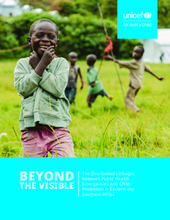
This technical brief examines how public health emergencies in Eastern and Southern Africa—such as polio, cholera, Ebola, Marburg, and mpox—disrupt protective environments and increase risks of violence, exploitation, and neglect for children, including those without parental care. Drawing on lessons from multiple countries, it highlights scalable approaches to embed child protection in health responses and calls for coordinated frameworks that ensure care continuity and resilience during future crises.
Alarmingly high numbers of Ugandan children experience or are at risk of experiencing abuse and neglect. This article analyzes the state of priority for and quality of governance of Uganda’s formal system for the care of orphans and vulnerable children (OVC).
This study explores how stigma management communication can reduce the stigmatization of adoptive parents in Kiambu County, Kenya, where cultural beliefs often privilege biological lineage over adoption. Findings reveal that adoptive parents use strategies such as concealment, disclosure, reframing, and advocacy to challenge stigma and gradually normalize adoption, highlighting the vital role of communication in transforming societal attitudes and promoting acceptance.
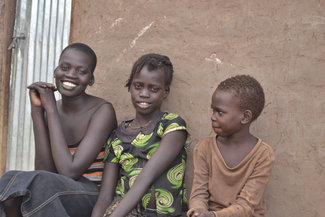
This study examines the experiences of street children in Arusha City, Tanzania, highlighting the challenges they face due to poverty, family breakdown, and rapid urbanization. Findings show that most street children are boys aged 10–14 with only primary education, and reintegration efforts often fail because of institutional mistrust and socio-cultural barriers.