Image
This page contains documents and other resources related to children's care in Africa. Browse resources by region, country, or category. Resources related particularly to North Africa can also be found on the Middle East and North Africa page.
Displaying 51 - 60 of 537
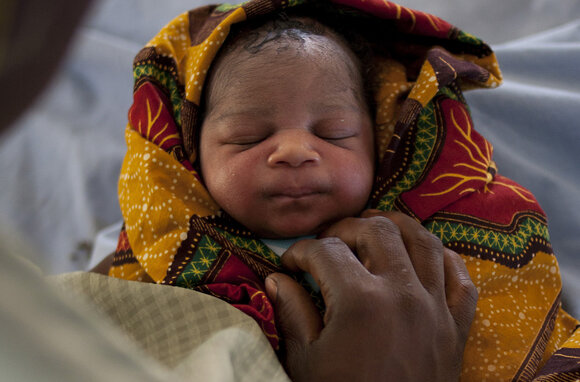
Zambia has made significant strides in the past two decades to improve maternal and newborn health outcomes. The maternal mortality rate dropped nearly 300 per cent in 16 years - from 729 deaths for every 100,000 live births in 2002, to 278 deaths per 100,000 in 2018. What has been critical in this achievement is greater availability of skilled midwifery personnel. The number of births assisted by a skilled attendant more than doubled over the same period, from 42 per cent in 2002 to 80 per cent in 2018.
Her tiny mouth is constantly open, trying to suck in air. Adama Assan is four months old, but tips the scales at a pitiful 3.3 kilograms (7.3 pounds) -- not even the average weight at birth of a typical newborn in Europe. "Normally, a baby of her age would weigh six kilos," said Ousmane Ahmat Mahamat, a supervisor nurse at a ward in a hospital in N'Djamena, the capital of Chad, that specialises in infant malnutrition.
Young people who grew up in alternative care are uniting to support one another and push for changes that can help in their transition to an independent life.
The goal is as simple as it is complicated to achieve: Shift the care of children from institutions like orphanages to a family or family-like environment. Catholic sisters in three African nations — Uganda, Zambia and Kenya — are leading the way in creating new models for caring for children. Their efforts are the core of the recent launch of Catholic Care for Children International (CCCI) under the auspices of the International Union of Superiors General (UISG) — one of many faith groups leading policy reform and family-based alternatives to institutional care.
The United Nations says food distribution in Ethiopia’s blockaded Tigray region has reached its “all-time lowest” while more than 50,000 children are thought to be severely malnourished, the latest sign of growing crisis amid efforts to end the country’s 14-month war.
KAMPALA — Uganda reopened schools this month after a nearly two-year shutdown caused by the COVID-19 pandemic. The majority of students have returned, but many others have not, due to poverty and the need to earn income for their families.
"To the owners of schools, please be honest, do not gamble with the lives of children. If you have any positive cases, please declare them to their parents," Kirunda said.
7.5 million children all over the world live in charitable children’s institutions, commonly known as children’s homes or orphanages, yet 80 per cent to 90 per cent of these children have a living parent or known relatives. In Kenya, an estimated 45,000 children live in charitable children’s institutions for various reasons such as the loss of a parent or primary caregiver, poverty at home, sickness and disability, violence, abuse, and neglect.
A new report from South Africa found over 20 per cent of hospitalisations were of children aged 18 and under.
A new report from South Africa found over 20 per cent of hospitalisations were of children aged 18 and under.