Image
This page contains documents and other resources related to children's care in the Americas. Browse resources by region, country, or category.
Displaying 1211 - 1220 of 1438
Este informe presenta información sobre el problema de institucionalización de niños en América Latina y el Caribe.
This study seeks to understand collaboration dynamics in social services for determining what strategies work best in facilitating collaborative endeavors in specific policy and institutional environments.
This study tests the psychometric properties and construct validity of the Family Needs Scale using sample of 303 informal kinship families recruited through local child welfare and social services in New York, USA.
This article presents a comprehensive, narrative review of international, research literature on informal, kinship care.
Este documento pretende impulsar un cambio en el paradigma de la institucionalización como respuesta a la situación de los niños, niñas y adolescentes privados de cuidados familiares.

This study is a snapshot of a multi-country study involving Italy, Peru, Viet Nam, and Zimbabwe of how individual characteristics, interpersonal relationships, and the communities in which people live interact with institutional drivers to increase or reduce a child’s risk of violence.

This report presents the key findings of a scoping study on the links between education and children’s care. The study involved a literature review in English, French and Spanish; key informant interviews; and consultations with 170 children, carers, teachers and other stakeholders in Guyana, India, Russia and Rwanda.
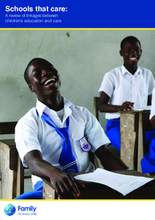
This report examines what family means to children and adults in the following countries: Brazil, India, Guyana, South Africa, Egypt, Mexico, Russia, Kenya. The storytellers use evidence from 59 short films made using digital storytelling technique.
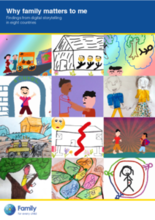
Desde el año 2000, el Ranking anual sobre el Estado Mundial de las Madres se ha convertido en una herramienta fiable para mostrar en qué países les va mejor a las madres y sus bebés y dónde enfrentan las mayores dificultades.
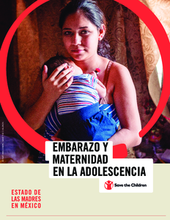
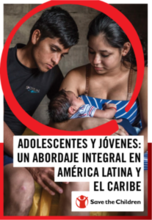
Este documento discute el enfoque integral utilizado por Save the Children para promover la sinergia entre la autonomía personal y el desarrollo económico.