Image
This page contains documents and other resources related to children's care in the Americas. Browse resources by region, country, or category.
Displaying 61 - 70 of 1438
This report presents findings from qualitative interviews conducted with English-speaking Latino individuals from the United States who experienced parental deportation between the ages of 6 and 17 years old. They offer suggestions about what they needed following their loss as a child. By understanding what children need in these moments of crisis, practitioners, providers, and others are better prepared to address this form of complex childhood adversity.
This article analyses the search strategies of first families in Bolivia contesting the separation of their children through transnational adoption. These first parents’ claims to visibility and acknowledgement have remained largely ignored by adoption policy and scholarship, historically privileging the perspectives of actors in adoptive countries, such as adoptive parents and adoption professionals.
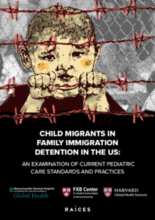
The study is the first analysis of the medical records of children as young as six months old and a median age of nine years old detained between June 2018 and October 2020 at Karnes County Family Residential Center in Texas. The report documents evidence of mental and physical harm relating to inadequate and inappropriate medical care experienced by children during prolonged detention.
Shared parenting, when adults collaborate in childrearing, is a practice of interest for children in out-of-home care. Yet, little is known about its feasibility and outcomes for kinship families who have preexisting relationships with birth parents. This article shares qualitative results from focus groups that explored participants’ experiences and attitudes toward shared parenting in the U.S.
This chapter, which is part of the "Handbook of Human Mobility and Migration" reviews the literature on child migration, highlighting how children compare from adults in their migratory aspirations and migration decision-making, as well as in their experiences in receiving countries in the European and US contexts, where groups of children such as unaccompanied minors benefit from humanitarian protections unavailable to adults.
This 2023/2024 Prevention Resource Guide offers critical information, including concrete examples of how grant recipients and other Federal or national agencies are taking bold actions to authentically engage with and support families.
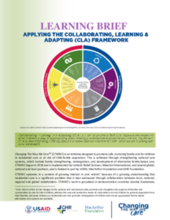
Since care reform is a long and complex process, requiring collaboration between many diverse actors, with different change pathways in diverse contexts, the Changing the Way We Care initiative set out to learn from different demonstration countries, build national and regional knowledge, and reinforce global momentum for family care. This learning brief describes some of that journey.
This brief shares how the initiative used CLA related to the social service workforce strengthening and case management.
The purpose of this study was to explore the impact of deinstitutionalization on the Salvadoran Child Protection System.
This longitudinal study evaluates the effectiveness of BLINDED intervention, an intervention that utilizes family search and engagement practices to place children who enter foster care in kinship placements as quickly as possible in the U.S.
This paper explores how the COVID-19 pandemic affected care leavers in Quebec, a social group already facing obstacles to social integration.