Image
This page contains documents and other resources related to children's care in the Americas. Browse resources by region, country, or category.
Displaying 911 - 920 of 1438
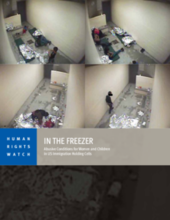
This report examines US authorities’ compliance with the specific protections that should be afforded to children, drawing on 110 interviews with children themselves or women detained with their children.
This country care review includes the care related Concluding Observations adopted by the Committee on the Rights of Persons with Disabilities and the Committee on the Right of the Child at their recent examinations of Guatemala's report.
This study examined the extent to which (a) maltreatment type and (b) foster care placement were associated with the educational attainment of 337 maltreated adolescents.
The authors of this study sought to better understand the potential strengths and challenges of medical foster care (MFC) as a placement setting for children with chronic critical illness (CCI).
This study uses data from the provincially representative Ontario Incidence Study of Reported Child Abuse and Neglect (OIS-2013) to identify the characteristics of the alleged maltreatment, functioning concerns, caregiver risk factors, and socioeconomic conditions associated with the decision to provide ongoing child welfare services to adolescents and their families.
The current study presents findings from a survey of child welfare caseworkers' experiences with reunifications and focuses on practices and key factors at the casework practice and at the system-environment level to assist in achieving successful reunification.
This study analyzes semistructured interviews of 15 foster parents on how foster parents perceive the sibling relationships of youth in foster care and ways to promote these relationships.
This article aimed to investigate traumas experienced by street children and their coping and resilience strategies used to deal with adversities in a logic of survival, relying on a mixed method approach.
In this sample of 160 retained specially-trained public child welfare workers and former students, sources of stress and satisfaction were examined three and five years after the conclusion of the students’ work obligation.
Based on primary and secondary source materials, this article traces the evolution of the US social work field's response to the needs of unaccompanied immigrant and refugee youth during the past two centuries.