Image
This page contains documents and other resources related to children's care in the Americas. Browse resources by region, country, or category.
Displaying 291 - 300 of 566
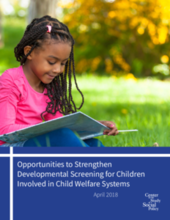
This resource from the U.S. Center for the Study of Social Policy presents recommendations highlighting strategies for improving the delivery of developmental screening and early intervention for children who become known to state and local child welfare systems.
Esta llamada a la acción se propone activar, o profundizar y fortalecer —según el estado de avance en cada país— apuntan a poner fin al acogimiento de niños y niñas en centros residenciales sin que éste responda a los principios de necesidad e idoneidad encuadrados en las Directrices de Naciones Unidas sobre las modalidades de cuidado alternativo de los niños.

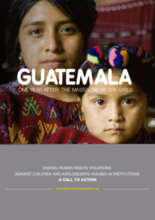
This call to action was issued by the Center of Excellence for Children in Latin American (CEN - el Centro de Excelencia por la Niñez), a joint initiative of RELAF and Hope and Homes for Children, in response to a fire that killed 41 girls and injured 15 others in a children's home in Guatemala in March 2017.
The current study considers the educational experiences of unaccompanied immigrant children (UIC) in the Chicago metropolitan area from the perspective of diverse education, human service, and legal professionals that work with this population in Office of Refugee Resettlement (ORR) facilities, post-release, and community contexts.
The purpose of this study is to (1) retrospectively characterize the specific implementation strategies employed to deliver a coordinated set of evidence-based screening and linkage practices to facilitate identification and treatment of early developmental and social-emotion problems; and (2) examine preliminary indicators of the impact of these strategies.
The purpose of this article is to describe the impact of current and evolving immigration policy on the health of unaccompanied children, to delineate barriers to care and challenges they face prior to gaining legal relief, and to suggest policy recommendations that support health and safety for them from the point of apprehension to and through achieving legal status.
The current study examined family and community factors related to home visiting programme engagement in a sample of 1,024 mothers (primary caregivers, mean age 22.89 years) who participated in family support programmes funded through the US state of Georgia's Maternal, Infant, and Early Childhood Home Visiting programme.
This study is an outcome evaluation of Bay Area Youth Center's Real Alternatives for Adolescents (RAFA) transitional housing program in Hayward, California.
The objective of this study was to assess the impact of voluntary participation in an established statewide home-visiting program for socially high-risk families on child maltreatment as identified by Child Protective Services (CPS).
This study examines a program (iHeLP) for substance use reduction in foster youth aging out of care.