Image
This page contains documents and other resources related to children's care in the Americas. Browse resources by region, country, or category.
Displaying 491 - 500 of 566
This report reviews the literature on Family Resource Centers in the United States.
This factsheet is designed for caregivers and discusses how they can help children in their care by educating themselves about child sexual abuse, establishing guidelines for safety and privacy in their families, and understanding when and how to seek help if needed.
This report provides initial documentation of a pilot program launched by Bethany Christian Services in 2009 in Ethiopia. The pilot aims at moving children from institutional care to family-based care by developing alternative family care for non-relative children using a foster-to-adopt approach, working through a partnership between faith communities in Ethiopia and American faith congregations in the US.
This report presents data from a three-year pilot of a program that set out to prevent removals and expedite permanency by providing multidisciplinary services to at-risk families in Detroit, Michigan, USA.
Zero to Three, a US based non profit organization working to inform, train and support professionals, policy makers and parents to improve the lives of infants and toddlers, combined the evidence from research on early childhood development with feedback from focus groups with families, friends, and neighbors who act as care givers to develop a range of practical resources to strengthen care practices with children between the ages of 0 and 3.
This book focuses on the lives of six mothers who had been pariahs and then became partners with child welfare commissioners, social workers, lawyers, foundation officers, and child welfare agency executives. It recounts how their courage and resilience brought about the most significant changes in the history of New York’s child welfare system.
This document provides an overview of the benefits, costs, and practice implications for adoptions from foster care in the US.
The USA-based National Child Traumatic Stress Network has recently released a second edition of the Child Welfare Trauma Training Toolkit, which is part of the Child Welfare Trauma Training course. The course assists those in the field of child welfare who wish to learn more about child welfare and trauma.
This Resource Guide was developed to support service providers in the US in their work with parents, caregivers, and their children to prevent child abuse and neglect and promote child and family well-being. The Resource Guide was created primarily to support community-based child abuse prevention professionals who work to prevent child maltreatment and promote well-being. However, others such as policymakers, parent educators, family support workers, health-care providers, program administrators, teachers, child care providers, mentors, and clergy also will find the resources useful.
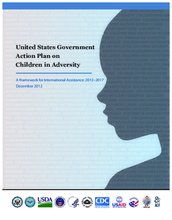
The Action Plan on Children in Adversity is the first government wide strategic guidance for U.S. Government international assistance for children. The goal of the Action Plan is to achieve a world in which all children grow up within protective family care and free from deprivation, exploitation, and danger. It has three principal objectives, with Objective 2 specifically focusing on the importance of promoting family care and prevention of family-child separation.