Image

Displaying 21 - 30 of 792
This article examines the legal status and consequences of concealing the ancestry of adopted children under Indonesian criminal law and Islamic law. It analyzes how such practices are addressed in statutory law and Islamic legal principles, highlighting the importance of lineage clarity, transparency, and the protection of children’s rights in adoption.
This article examines how national care systems for orphans and vulnerable children in Cambodia, Uganda, and Zambia are governed, drawing on case studies and a review of existing research. It highlights the gap between strong policy commitments and weak on-the-ground implementation, pointing to historical, political, and capacity-related factors that hinder effective care and protection.
This study identifies high rates of gross and fine motor delays among young children living in residential care facilities in Thailand and examines factors contributing to these developmental challenges. These findings highlight the developmental vulnerabilities of young children in residential care and point to key predictors that can inform early interventions.
This evaluation of Save the Children Finland’s Child-Sensitive Social Protection (CSSP) programme (2022–2025) found that it improved access to social protection, strengthened government systems, and supported better parenting practices across six countries in Africa and Asia. The programme showed strong results—especially through its parenting component, which improved caregiver engagement and child development outcomes—while highlighting the need for greater government ownership to sustain long-term impact.
This review compares child protection systems in Indonesia and Ethiopia using UNICEF’s Child Protection System Strengthening framework. Both countries have established solid legal frameworks and coordination mechanisms, but progress toward system maturity remains slow due to gaps in enforcement, accountability, and support services, with Indonesia showing stronger development in workforce and data systems.
This study compares child custody and guardianship norms in classical Islamic jurisprudence and modern codifications, focusing on Indonesia’s Compilation of Islamic Law and related laws in selected ASEAN and European countries. It finds that integrating the “best interests of the child” with Islamic legal reasoning through maqāṣid al-sharīʿah can promote child protection and gender equity, offering insights for legal reform in plural societies.

This press release, from the Catholic Diocese of Darwin, highlights how a group of Northern Territory professionals are in Timor-Leste to help expand a disability care centre.
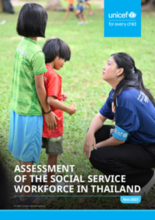
Thailand has a long history of social work and a legal framework recognizing the profession. However, social needs are growing in scale and complexity, while the social service workforce remains under resourced, unevenly distributed, and insufficiently supported. The assessment examined professional social workers, other social service professionals, paraprofessionals, and volunteers across government and non government sectors at national and sub national levels.
This report presents an independent assessment of Cambodia’s national and intercountry adoption systems, with a focus on the country’s progress in aligning adoption practices with international standards for child protection and family-based alternative care. Commissioned by UNICEF Cambodia in collaboration with the Ministry of Social Affairs, Veterans, and Youth Rehabilitation, the assessment evaluates the current capacity, processes, and legal frameworks governing adoption, and provides recommendations to strengthen the system in the context of Cambodia’s ongoing care reform agenda.
This review examined 39 studies on parenting interventions for Southeast Asian families in low- and middle-income countries and diaspora communities, identifying 31 distinct programs that generally improved parenting practices and child behavior. Findings support the effectiveness of these interventions while emphasizing the need for more rigorous research, clearer documentation of adaptations, and stronger evaluation methods to maximize public health impact.