Image
This page contains documents and other resources related to children's care in Europe. Browse resources by region, country, or category.
Displaying 1181 - 1190 of 1752
The present research aimed to describe and compare three new second-level intervention models to improve the care of unaccompanied migrant minors in Italy.
Prepared for the Agenda 2030 for Children: End Violence Solutions Summit, held in Stockholm, Sweden, on 14-15 February 2018, this report tracks progress towards prohibition and elimination of corporal punishment of children in Pathfinding countries.

The objective of this study was to investigate whether men and women who were looked-after (in public care) or adopted as children are at increased risk of adverse psychological and social outcomes in adulthood.
This study uses nationally representative data collected in 2011–2012 in Moldova (N = 1601) and Georgia (N = 1193) to investigate how children’s health associates with five transnational characteristics: migrant and return-migrant household types, parental migration and parental divorce, maternal and/or paternal migration and caregiver’s identity, the duration of migration, and remittances.
This article reports the findings of a multi-country study of medical professionals' perceptions and evaluations of children in three Eastern European countries (Romania, Bulgaria, Moldova).
On the basis of qualitative interviews with 10 children about their experiences collaborating with child welfare professionals, this study has identified ways in which professionals can facilitate children's participation.
This review analyzes and critiques the foster care system in England, offering recommendations for improving the system.
The 2017 country factsheets provide an update on the status of child protection and care reforms from 16 European countries that are the focus of Opening Doors for Europe’s Children campaign in Phase II.
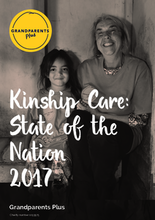
This report is based on a survey of members of the Grandparents Plus Kinship Care Support Network, which includes almost 4,000 kinship carers in the UK.
The Bucharest Early Intervention Project sought to examine the effects of foster care as an alternative to institutional care for abandoned infants in Romanian institutions.