Image
This page contains documents and other resources related to children's care in Europe. Browse resources by region, country, or category.
Displaying 1371 - 1380 of 1752
Using household survey data collected between September 2011 and December 2012 from Moldova and Georgia, this paper measures and compares the multidimensional well-being of children with and without parents abroad.
This study emphasises different facets of peer exploitation awareness and experience identified in closed-type institutions, including a couple of abusive behaviours that have not been previously identified in long-term residential centres.
This study provides a mapping of parenting support service provision in Ireland.
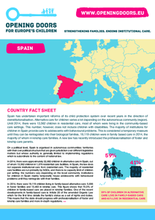
This country fact sheet highlights the care reforms that Spain has instituted over the past few years. This sheet also provides short facts and the latest developments on children in alternative care in Spain.
A review of the evidence on deinstitutionalisation (DI) and the status of care reforms across Europe in 2016 from the Opening Doors for Europe's Children campaign - a pan-European campaign advocating for strengthening families and ending institutional care.
This study used data from the English and Romanian Adoptees study to assess whether deprivation-associated adverse neurodevelopmental and mental health outcomes persist into young adulthood.
This study provides a systematic review of the literature, focusing on the conceptualization and evaluation of continuity.
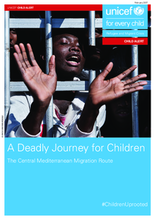
This report from UNICEF shines light on the dangers of the Central Mediterranean Migration Route for children and the particular vulnerability of unaccompanied migrant minors traveling along this route.
This paper examines the deinstitutionalisation process in Bulgaria.
The document outlines the new civil definition of child sexual exploitation, developed by the Home Office and DfE, together with an overview of our current understanding of the issue and an evidence-informed set of principles for responding.