Image
This page contains documents and other resources related to children's care in Europe. Browse resources by region, country, or category.
Displaying 751 - 760 of 1752
This country care review includes the Concluding Observations for the Committee on the Rights of the Child and the Committee on the Rights of Persons with Disabilities adopted as part of the Committees' examinations of Greece’s reports, as well as other care-related concluding observations, ratification dates, and links to the Universal Periodic Review and Hague Intercountry Adoption Country Profile.

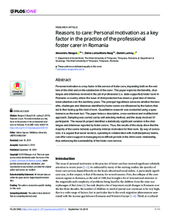
This paper explores the benefits, challenges and dilemmas involved in the job of professional (i.e. state-supported) foster carer in Romania–a country where the issue of child protection has drawn a great deal of international attention over the last thirty years.
This chapter argues that poverty per se should never constitute the basis for removing children from their parents and seeks to understand the British situation, in order to see how poverty is treated in relation to child welfare in Britain.
The objective of this study was to compare the outcomes for the Neuro-Physiological Psychotherapy (NPP) intervention group to those of a control group.
This review synthesises and examines the limited published literature on the impact of traumatic refugee experiences on the mental health and development of Unaccompanied Refugee Minors (URMs).
This study investigated whether information regarding parents' response to an attachment-based intervention impacted placement decisions and agreement among decision makers.
This study provides an illustration of a research design complementary to randomized controlled trial to evaluate program effects, namely, participatory peer research (PPR). The PPR described in current study was carried out in a small sample (N = 10) of young adults with mild intellectual disabilities (MID) and severe behavioral problems [in residential care in the Netherlands].

This study is based on diaries maintained by three social workers in relation to 15 families that were the subject of interventions by the child protective services in Sweden.
In this article, institutions in Russia, China, Ghana, and Chile are described with reference to the circumstances that lead to children’s institutionalization, resident children’s social-emotional relationships, and unique characteristics of each country’s institutional care (e.g., volunteer tourism in Ghana, and shifting demographics of institutionalized children in China).
The authors of this study conducted research with 234 care experienced university students in England and Wales to explore the factors that promoted access to higher education.