File
Displaying 871 - 880 of 1343
In the attached article Susanna Davies and Carol Batchelor discuss the importance of ensuring methods of resettlement are able to function in today’s global context.
This document details the guiding principles for para professionals in the social service workforce.
This global review examines past systematic reviews to determine whether parenting interventions help prevent child maltreatment.

Three semi-structured focus group interviews were conducted with twelve schoolchildren, aged 13–15 years for the purpose of exploring the knowledge and attitudes towards disability of young people within Moldova.
Bringing together cross-disciplinary expertise, this volume addresses a vast range of topics related to child abuse and neglect in Uganda.
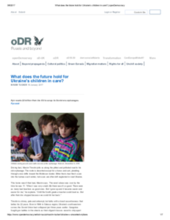
In this issue of ODR, Maxim Tucker details the deinstitutionalization challenges facing Ukraine
The attached study compared the care environments of family-based care and institutional care to determine if care environment contributed to differences in sexual behavior and/or sexual exploitation of orphaned and separated adolescents.
This review is intended to provide Barnardo’s with an overview of what ‘direct work’ with young people entails in the context of CSE.
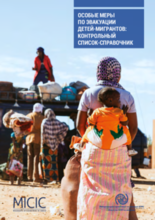
Контрольный список входит в состав инструментария, разработанного МОМ в качестве технического руководства по практическому применению Руководящих положений Инициативы МИСИК, включая руководящее положение 13: Переселение и при необходимости эвакуация мигрантов. Это свод не имеющих обязательной силы рекомендуемых действий, направленных на то, чтобы потребности детей-мигрантов в особой защите были учтены в ходе гуманитарной эвакуации. С помощью этого функционального инструмента государства и международные организации смогут соблюсти принципы защиты детей (ЗД) при организации гуманитарной эвакуации, учитывая индивидуальные условия уязвимости детеймигрантов и обеспечивая их потребности до, во время и после эвакуации. Подразумевается, что рекомендуемые действия будут в полной мере внедрены в операции по всеобщей эвакуации; они не предполагают организации отдельного процесса эвакуации детей.