Image

Displaying 21 - 30 of 708
This article examines how child protection systems continue to reflect colonial power by disproportionately intervening in Indigenous families and undermining cultural practices and kinship systems. It highlights growing Indigenous-led movements to reclaim authority over child welfare, emphasizing self-determination and the rebuilding of care systems grounded in Indigenous laws, values, and relationships.
This article explores the parenting support needs of young mothers in Aotearoa New Zealand who grew up in out-of-home care, highlighting how their childhood experiences shape their access to and perceptions of support. It finds that these mothers face significant barriers and fears in engaging with services, underscoring the need for specialized, independent parenting support as part of after-care.
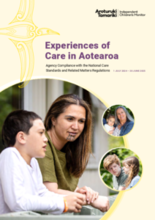
The New Zealand National Care Standards (NCS) Regulations came into effect in 2019, and set out the minimum standard of care that must be provided when the state has custody of a child. This is Oranga Tamariki's fifth report on compliance with the NCS Regulations. It finds that children and youth are still not receiving the minimum standard of care required by the NCS Regulations.
This study explores how children and young people in out-of-home care in Australia understand and experience “home,” finding it to be a deeply meaningful but complex and evolving concept shaped by relationships, safety, and personal space. It highlights that creating and sustaining a sense of home requires ongoing effort from carers and workers within often challenging care systems.
This paper reflects on an author’s return to former orphanage sites in Australia—now repurposed as commercial properties—where personal memories of abuse and neglect resurface. It explores how survivor testimony and memory activism can challenge the erasure of these histories, highlighting tensions between commercial interests and efforts to memorialize sites of past harm.
This study surveys residential care practitioners in Queensland, Australia to examine their training, knowledge, and perceptions related to child sexual exploitation (CSE) among young people in residential care. It finds significant gaps in both pre-service and in-service training and highlights practitioners’ strong demand for more education to improve identification and responses to CSE.
This report explores relational practice in out-of-home care in New South Wales, Australia, highlighting the importance of strong, trusting relationships between children, families, carers, and practitioners for children’s healing and well-being. It finds that although practitioners value relational work, system pressures—such as administrative requirements and compliance demands—often limit their ability to prioritize meaningful human connections.
This study amplifies the voices of seven care leavers in Australia, revealing how inconsistent and conditional out-of-home care (OOHC) often undermines stability, belonging, and participation. Findings highlight six key themes—ranging from the “luck of the draw” in care quality to feeling powerless and unseen—underscoring the need for relational continuity, child-centred approaches, and culturally responsive, participatory care models.
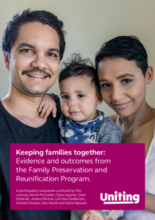
This evaluation of Uniting Vic.Tas’ Family Preservation and Reunification (FPR) Program in Australia found that intensive, in-home support helps families stay safely together, especially when practitioners build trusting relationships and provide both practical and emotional support. The study also identified opportunities to strengthen the program, including longer engagement periods, greater continuity with practitioners, and follow-up support after families exit the program.
This study examines the views of Australian foster and kinship carers on the importance of cultural connection for children from culturally diverse backgrounds, finding broad agreement that culture is central to identity and wellbeing. The findings highlight challenges in delivering cultural care and underscore the need for training in cultural humility, improved cultural data collection, and collaborative cultural care planning that includes children and birth parents as key decision-makers.