Image
Displaying 11 - 20 of 431
This book explores the challenges facing orphans and vulnerable children in Zimbabwe within the broader context of the Global South, highlighting how poverty, inequality, HIV/AIDS, and economic instability deepen children’s vulnerability. Drawing on Ubuntu philosophy, neoliberalism, and African Renaissance perspectives, it underscores the importance of community-led, culturally sensitive, and African-driven approaches to inform policy and practice supporting OVCs.
Cambiar la Forma en que Cuidamos (CTWWC, por sus siglas en inglés) es una iniciativa global que promueve un cuidado familiar seguro y afectuoso para los niños.
These SOPs aim to strengthen the effectiveness and well-being of Kenya’s child protection practitioners by promoting accountability, continuous learning, and reflective practice. By prioritizing practitioners’ psychosocial health and standardizing supportive supervision across the State Department for Children Services, the guidance seeks to improve service quality, reduce burnout, and enhance outcomes for vulnerable children.
This package of materials encompasses a comprehensive costing framework for scaling two key care reform models implemented by the Changing the Way We Care initiative in Kenya—Kafaalah and Case Management for Reintegration.
Changing the Way We Care’s “Care System Strengthening Learning Synthesis: Evaluation Summary” distills lessons from care reform efforts in four countries, examining how change happened across laws, workforce, financing, monitoring, and services. It finds that evidence-based advocacy, strong government ownership, collaboration, and capacity-building were central to driving and sustaining reform across diverse contexts.

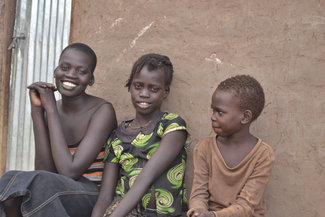
This study explores the transition and livelihood strategies of adolescent girls in and out of institutional care in Harare, Zimbabwe, comparing 16 girls still in care with 16 who had exited. Findings reveal that girls leaving care rely on diverse social networks for survival but often struggle to sustain themselves, highlighting the need for transition programs that reduce institutional dependency, prevent early marriage, and promote economic inclusion.
This report presents findings from an evaluation by Changing the Way We Care (CTWWC) that used a realist approach to examine how care reform progressed in Guatemala, India, Kenya, and Moldova across five key system components. It identifies advocacy, government ownership, collaboration, and capacity-building as major drivers of change and offers recommendations for governments and partners to embed family care in national systems, strengthen coordination and workforce capacity, and sustain reforms through evidence, shared learning, and long-term commitment.
Changing the Way We Care (CTWWC) is a global initiative which promotes safe, nurturing family care for children.
This resource presents a costed policy study on investing in disability-inclusive and gender-responsive community care and support systems across the life cycle in Kenya, developed by the Ministry of Labour and Social Protection.
At the close of the Changing the Way We Care (CTWWC) The Changing the Way We Care (CTWWC) initiative launched in 2018 with the aim to reform child care systems by promoting safe, nurturing family-based care over institutional ca