Image
This page contains documents and other resources related to children's care in Africa. Browse resources by region, country, or category. Resources related particularly to North Africa can also be found on the Middle East and North Africa page.
Displaying 121 - 130 of 597
The general objective of this study is to assess the response strategies of NGOs in meeting the needs of vulnerable children in vulnerable households in selected communities of Nasarawa Eggon LGA of Nasarawa state, Nigeria.
This report details the end of programme evaluation Government of the Republic of Zambia-United Nations Joint Programme on Social Protection as a way of understanding and assessing its operational context and the effect the technical assistance had on the implementation of National Social Protection Policy (NSPP) during the programme’s lifetime.
This webinar - presented by the Kenya Society of Care Leavers (KESCA), the Uganda Care Leavers (UCL), The Better Care Network and Changing the Way We Care - offered policy makers, practitioners, advocates and careleavers a unique opportunity to listen and learn from two leaders of careleaver associations who highlighted two recent documents that illustrate the careleaver experience within and outside of care.
This study aimed to understand the impact of integrating a fee waiver for the National Health Insurance Scheme (NHIS) with Ghana’s Livelihood Empowerment Against Poverty (LEAP) 1000 cash transfer programme - a program for extremely poor households with orphans and vulnerable children, elderly with no productive capacity and persons with severe disability - on health insurance enrolment.
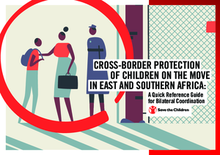
This Quick Reference Guide is a practical guide for all stakeholders who hope to implement a government-led, cross-border coordination mechanism for the protection of children who are unaccompanied and separated while in situations of migration or displacement.
This article from the Vulnerable Children and Youth Studies journal presents lessons learned from a RISE Learning Network learning project focused on monitoring (M&E Learning Project) and aimed to generate understanding of approaches and tools that could effectively monitor children and families’ reintegration outcomes. The mid- and end-term reviews of the M&E Learning Project have captured lessons learned on how practitioners can approach monitoring of reintegration to mainstream it into their programme cycle.
The purpose of this commentary is to reflect on the utility and possible application of the suggestions and study designs in this special issue to real‐life intervention studies in dynamic context settings.

The Accelerating Strategies for Practical Innovation and Research in Economic Strengthening (ASPIRES) Family Care Project focused on how economic strengthening (ES) interventions can help prevent unnecessary separation of children from families as well as support the reintegration into family care of children who were already separated. This mixed methods evaluation was implemented alongside programming that included longitudinal quantitative data collection with all participating FARE and ESFAM households at three time points to assess a range of indicators related to household economic and family well-being, as well as in-depth, longitudinal qualitative research to help understand how (well), from participants’ perspectives, the FARE and ESFAM interventions aligned with perceived drivers of separation and families’ experienced child-level effects of programming.
The Economic Strengthening to Keep and Reintegrate Children in Family Care (ESFAM) project was developed to help build the evidence base on how to appropriately match economic strengthening (ES) activities with families at risk of family-child separation and with families in the process of reintegrating a previously separated child. In addition to supporting families, ESFAM offered an opportunity for learning about how to provide these services and how well they worked. This report focuses on the latter and summarizes changes in key indicators related to family-child separation over the course of the project.
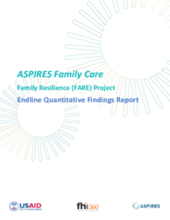
The Family Resilience (FARE) project was developed to help build the evidence base on how to appropriately match economic strengthening (ES) activities with families at risk of family-child separation and with families in the process of reintegrating a previously separated child. The project offered an opportunity for learning about how to provide ES and other family strengthening services and how well they worked. This report focuses on the latter and summarizes changes in key indicators related to family-child separation over the course of the project.