Image

Displaying 151 - 160 of 437
This brief summarizes insights drawn from Community of Practice conversations and provides recommendations for local governments, service providers, and other partners considering Pay for success (PFS) as a tool for financing interventions serving transitional youth.
This issue brief provides an overview of parent education programming, research demonstrating its benefits, and information about different types and examples of evidence-based and evidence-informed parent education programs.
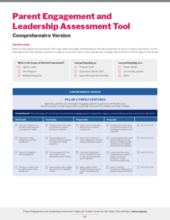
This resource is designed to help agencies, systems, and collaboratives working with young children and their families to chart a course toward an expanded approach to family engagement.
In this article, the authors reflect on a pilot project implementing a mindfulness-based stress reduction program among traumatized youth in foster and kinship care.
The present study describes a community implementation of treatment foster care (TFC) for children and youth involved with child welfare in Ontario, Canada.
The purpose of this scoping review is to assess the effectiveness of independent living programs on educational outcomes among youths aging out of the foster care system in United States.
The aims of this investigation were to (a) examine the effectiveness of the KEEP intervention at reducing behavior problems among children in foster care, as assessed by the Child Behavior Checklist (CBCL), during implementation of the intervention by a community agency using a randomized design and (b) determine whether the intervention is effective at reducing internalizing forms of behavior problems.
This paper reviews the Friends of the Children (FOTC) long‐term mentoring programme in the US and how it was adapted to serve children and families with child welfare system involvement.
The aim of this study was to investigate how workers within Child Protective Services (CPS) systems in Colorado and the Netherlands measure and perceive the effectiveness of their CPS system.
Para ayudarle a los sistemas de primera infancia en los E.E.U.U. a aprender a trabajar con padres de maneras que promuevan resultados equitativos y maximicen las oportunidades para todos los niños 40 padres líderes y personal de agencias de nueve comunidades de Early Childhood Learning and Innovation Network for Communities (EC-LINC) se reunieron en enero de 2018 para crear un manifiesto para el cambio.