Image
This page contains documents and other resources related to children's care in the Americas. Browse resources by region, country, or category.
Displaying 651 - 660 of 1438
This bulletin provides information for child welfare professionals about the importance of permanency for youth and strategies for achieving it. Permanency efforts for youth should include both legal permanency (e.g., reunification, adoption, kinship care) and relational permanency (i.e., a relationship or connection with a caring adult, such as a relative, neighbor, service provider, teacher, or other important person in the youth's life). These adults may provide lifelong support that can help youth transition to adulthood and may even become a legal permanent option for the youth.

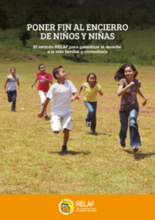
El objetivo de este documento es identificar y transmitir las características del método que ha empleado RELAF para generar la adecuación de los subsistemas de protección integral de derechos de los niños privados de cuidados familiares o en riesgo de perderlos, haciendo énfasis en procesos de desinstitucionalización.
This study investigates staff perspectives on a new form of intensive oversight developed in New York State to prevent maltreatment of youth in care facilities.
This study applies cumulative adversity and stress proliferation theories to examine risk and protective resource profiles of youth with three different levels of housing and parental care instability.
This resource compiles critical data from a variety of sources on children, youth, and families who came in contact with the US child welfare system in federal fiscal year (FY) 2017.
The purpose of this paper is to describe and analyze the interactions between children and their siblings in an institutional shelter in Brazil.
This study utilized administrative data that reviewed child welfare cases in a Midwestern state in the U.S. to examine interactions between teamwork and parent engagement associated with the permanency of children in out-of-home care.
The objective of this study was to examine prenatal care among women with a history of having a child placed in out-of-home care, and whether their care differed from care among women who did not.
The goals of this study were twofold: (1) to compare the pragmatic language skills (i.e., social communication skills) of 42-month-old neglected children with those of same-aged non-neglected children and (2) to measure the prevalence of pragmatic difficulties among the neglected children.
This article has a twofold purpose. First, through synthesizing existing literature this article offers context and education about adverse experiences and concerns of children in foster care. Second, through an attachment lens clinical suggestions and interventions are discussed to assist MFTs in improving many of the emotional, mental, and physical health concerns found in this population.