Image
This page contains documents and other resources related to children's care in the Americas. Browse resources by region, country, or category.
Displaying 3051 - 3060 of 3210
Ce Guide est un outil pour la mise en œuvre des Lignes Directrices relatives à la Protection de Remplacement pour les Enfants. Ses orientations en matière de droits de l’homme s’adressent aux opérateurs professionnels et aux personnes qui travaillent dans les institutions gouvernementales et non gouvernementales, mais aussi aux preneurs de décisions aux différents niveaux des Etats, aux autorités judiciaires, aux législateurs, etc.
This toolkit presents a compendium of research on how Albertans think about the issues of early childhood development, and how to increase public support for policies and programs that support healthy child development.
La Société d’adoption et de protection de l’enfance à Montréal fut, de 1937 à 1972,la plus importante agence de placement «hors murs» de la province. Pionnière dans le domaine au Québec, elle aura œuvré à l’implantation des conditions légales et minimales nécessaires à la désinstitutionnalisation adéquate des enfants sans famille. De fait, le passage du placement asilaire comme mode de protection privilégié à celui en foyer d’accueil ou d’adoption, soulève des enjeux juridiques nouveaux tout comme il appelle la mise en place de pratiques et de savoirs inédits.
This paper examines the relationship between migration and child growth in the rural highlands of Guatemala, a region with substantial international migration outflows, significant remittance inflows, and some of the highest rates of child undernutrition in the world.
Resource guide developed to support service providers in their work with parents, caregivers, and children to prevent child abuse and neglect
Findings of a study aimed to determine the effectiveness and the efficiency of the Foster Care Programme, assess the treatment of children in Foster Care, assess the adherence to child rights in the provision of Foster Care, provide policy direction for the enhancement of the Programme.
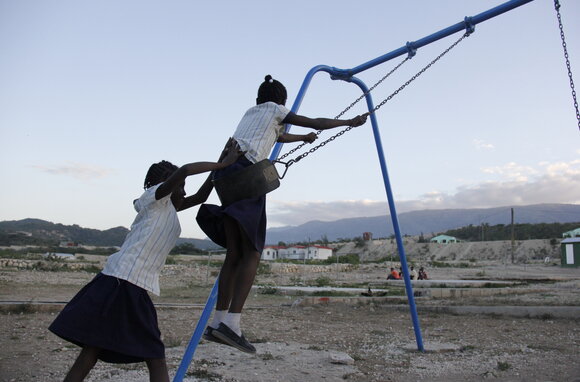
Des milliers d’enfants vivent dans des centres résidentiels (orphelinats et crèches) en Haïti. a plupart d’entre eux ne sont pas orphelins mais ont été placés dans ces centres car leurs familles vivent en grandes difficultés matérielles, sociales ou économiques ou sont installées dans des localités où le manque d’accès aux services de base (santé et éducation) est un vrai défi. Leur protection est un réel enjeu pour les organismes de protection de l’enfance.
Using a range of intergovernmental, governmental, nongovernmental and media sources, this report compiled by International Social Service constitutes an unprecedented effort to document, and draw preliminary conclusions from, the course of events related to intercountry adoptions from Haiti in the first half of 2010
This paper aims to show different organisations, institutions, governments and civil society the reality facing thousands of children in Latin America. This information can be used as a tool for debating and prioritising the issue as well as promoting constructing good practices and public policies that will improve the wellbeing and chances to develop of children without parental care and/or who are at risk of losing

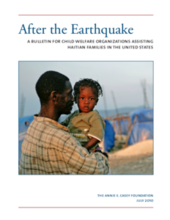
Practical information for agencies and advocates working with this Haitian children and families following the January 2010 earthquake, with special guidance on filing federal Temporary Protective Status applications.