Image
This page contains documents and other resources related to children's care in Asia. Browse resources by region, country, or category.
Displaying 251 - 260 of 2061
Police start to interview witnesses following Guardian reports on adoptions to the Netherlands nearly 50 years ago
Women living in camps for refugees of Bangladesh’s war of independence were told a local care home would look after their children. Decades on, many are still searching for them.
Many children in Vietnam who lost their parents to COVID aren't getting by as support from the outside world is unsustainable.
This is a summary of every private residential care facility in the Chiang Rai Province of Thailand, including institutional care homes, children’s homes, and residential schools. This summary provides an extensive and useful data set for those interested in the reform of private children's homes.
This is a summary of children's homes in the Chiang Mai Province of Thailand over the last 1.5 years. The research team visited a total of 371 private children's homes. This summary provides an extensive and useful data set for those interested in the reform of private children's homes.
'Long road ahead before ending Europe and Central Asia’s long, painful legacy’ of institutionalisation of children, as new UNICEF report highlights rate of children living in residential care across region is double the global average
This report provides an in-depth analysis of the situation of children in alternative care and in adoption in Europe and Central Asia (ECA) based on available data from TransMonEE, as well as other sources such as MICS, DataCare and the Conference of European Statisticians (CES). It marks the first analysis of data on children in alternative care by the UNICEF ECA Regional Office since the publication of the ‘At home or in a home’ report in 2010, highlighting the developments and challenges in collecting and reporting data on children in alternative care and adoption and summarises recommendations derived from recent data review initiatives.

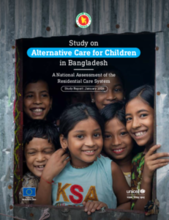
This landmark national assessment, led by the Ministry of Social Welfare and the Department of Social Services with UNICEF support, provides the first comprehensive mapping of residential childcare institutions across Bangladesh.
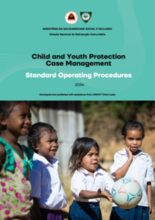
The Standard Operating Procedures (SOPs) for child and youth protection case management in Timor-Leste provide guidance for government and child protection actors to deliver effective, inclusive, and appropriate case management services from pregnancy through adulthood. Developed in alignment with international standards and the Sustainable Development Goals, the SOPs aim to strengthen child protection systems and improve prevention and response mechanisms for protection concerns.
One in four Indians lives in poverty, and many children enter institutional care due to factors like economic hardship, family disruption, and social vulnerabilities, highlighting the need for holistic, socio-legal support systems. This study finds that life skills education significantly improves children’s resilience and self-efficacy, with higher outcomes among those exposed to such programs, underscoring its importance in helping children build stable, constructive futures.