
Image

Displaying 461 - 470 of 1096
Analiza a vizat revizuirea tuturor categoriilor de servicii sociale pentru copiii și familiile vulnerabile, cu accent specific pe serviciile de prevenire și răspuns.

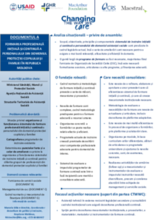
În perioada ianuarie-iunie 2021, Changing the Way We Care în Moldova, împreună partenerii săi cheie P4EC, CCF și Keystone Moldova, a efectuat șapte studii de cercetare privind diferite elemente ale sistemului de îngrijire și protecție a copiilor din Moldova, care, atunci când sunt citite împreună, oferă o imagine cuprinzătoare a sistemului.

Cercetarea a implicat efectuarea unei evaluări a formărilor, competențelor, punctelor forte și lacunelor forței de muncă din serviciile sociale.
This Terms of Reference is developed for an Evaluability Assessment (EA) which aims to look at the extent to which national child care reforms in Europe and Central Asia region (ECAR) with a strong focus on de-institutionalization (DI), including in particular for children with disabilities, are evaluable and can be evaluated in a reliable and credible fashion.
This event will reflect on how cooperation and knowledge sharing can support meeting the needs of children at risk and in the alternative care system.
"The COVID-19 pandemic has had a significant impact on the judicial practice in cases of international adoption," says this article from the Russian Legal Information Agency (RAPSI).
This paper fills a gap in specialized knowledge regarding continuing professional development (CPD) in social work in Romania by examining how child protection Romanian social workers experience CPD throughout their professional lives.
"A woman who left her infant son in a baby hatch – which can be used to safely and anonymously abandon babies – is now fighting in court to get him back," says this article.
This paper explores discourses that have informed debates concerning care leavers in Romania over the last 50 years to understand why rights‐based reforms introduced in the mid‐2000s have been difficult to implement.
Este seminario web es el segundo de una serie de la Plataforma de colaboración global Transforming Children's Care. En el seminario web, Philip Goldman de Maestral International presentó una nueva guía sobre gasto público y cuidado de los niños producida por Changing the Way We Care, que está diseñada para fortalecer la capacidad de las agencias gubernamentales en países de bajos recursos para preparar un marco presupuestario sólido.
