Image

Displaying 851 - 860 of 1115
This study discusses a variance in results in eliminating use of large-scale residential institutions for children across the CEE/CIS region.
This country care review includes the care-related Concluding Observations adopted by the Committee on the Rights of Persons with Disabilities.
This study from Lumos provides an analysis of a survey administered to temporary foster carers in June 2015 in seven regions of the Czech Republic to address negative perceptions of foster carers and to determine whether public criticisms were founded.

This presentation was given by Beth Bradford at the ISPCAN European Conference in September 2015.
This presentation was given at the ISPCAN Conference in Bucharest, Romania in September 2015. The presentation reviews similarities and differences in national care reform efforts in the Eastern Europe region, highlights the main care-related issues in the region 25 years ago, describes the reforms and improvements made in the region as well as the challenges and responses to reforms, and provides recommendations for the way forward.
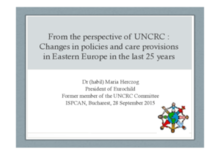
This post on the Global Social Service Workforce Alliance blog, by Stela Grigoras from Partnership for Every Child, Moldova, and Florence Martin, director of the Better Care Network, provides an overview of the situation of children's care in Moldova and ways that community level workers are engaged in helping to reform the care system.
Este evento paralelo del Consejo de Derechos Humanos incluyó presentaciones en separación familiar en los contextos africanos, asiáticos, europeos, y latinoamericanos.
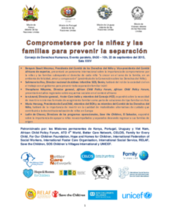
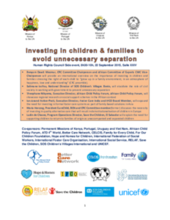
This Human Rights Council Side event included presentations on family separation in the African, Asian, European, and Latin American contexts.
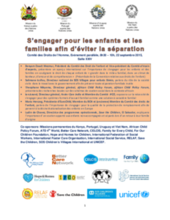
This Human Rights Council Side event included presentations on family separation in the African, Asian, European, and Latin American contexts.
This report provides data and background on challenges of placing siblings together in foster families.