Image
This page contains documents and other resources related to children's care in Europe. Browse resources by region, country, or category.
Displaying 1301 - 1310 of 1752
Young unaccompanied asylum seekers have been portrayed as vulnerable, resilient or both. Those granted residency in Europe are offered support by health and social care systems, but once they leave the care system to make independent lives, what part can these services play?
This paper explores practical and ethical dilemmas for professionals when securing the protection of children in the complex non‐clinical setting of individual families.
As part of the "Children Come First: Intervention at the border" project, Save the Children Italy elaborates and disseminates, on a quarterly basis, a dossier containing quantitative and qualitative information (profiles) relating to migrant minors entering Italy. This dossier contains information relating to the period July-September 2017.
This rapid review from Coram Voice contributes to the understanding of care leavers’ experiences and is also the first stage in a project to develop a survey of care leavers’ subjective well-being, according to young people’s own evaluations of how they feel about their lives.

This report presents a case study on cross-border family law in Scotland in light of the UK's decision to leave the EU ("Brexit").

Increased attention on the situations of unaccompanied refugee minors living in Europe has recently begun to include their voices and perspectives. This article focuses on the micro to macro contexts which give rise to their voices and explores the multiple features of voice.
This study examined visual recognition memory and executive functioning (spatial working memory, spatial planning, rule learning, and attention shifting) in 12-year-olds who participated in the Bucharest Early Intervention Project, a randomized controlled trial of foster care for institutionally reared children.
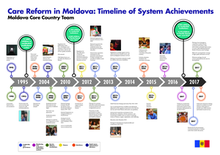
This infographic provides a historical timeline of the alternative care reform process in Moldova, marking key achievements in the establishment of policies, guidelines, procedures, and programs to improve the quality of care and protection for children without adequate family care.
This paper investigates young care leavers' expectations of their future after discharge from care.
This study investigated Portuguese adolescent adoptees' perceptions of their attachment relationships with their adopted parents compared to adolescents living with biological parents and adolescents living in residential care.