Image
This page contains documents and other resources related to children's care in Europe. Browse resources by region, country, or category.
Displaying 1681 - 1690 of 1752
This book features individual empirical studies on the outcomes and progress made for children in foster care around the world.
This report by the UK-based independent think tank, Demos, considers what the UK care system would look like if it were reconfigured to avoid the delay, instability, and abrupt transitions many young people experience. It demonstrates how this type of system could also be less costly to the states in both the short and long term.
In 2009 Eurochild carried out a survey of the situation of children in alternative care in Europe through its member organisations. The survey was not intended as a scientifically rigorous research exercise but rather to identify what information is readily available and to note some common trends across Europe.
This scoping study assesses the nature and extent of the evidence base in relation to increasing the number of care leavers in ‘settled, safe accommodation’. The Social Care Institute for Excellence (SCIE) carried out the study on behalf of the Centre for Excellence and Outcomes in Children and Young People’s Services (C4EO), between November 2008 and February 2009.
Summarizes main issues in public financial management which have prevented resource reallocation between residential and alternative care services for children.
The following is a summary of the Bulgarian experience in implementing a comprehensive reform of the care and protection system for children at-risk.
This Report was drafted by a group of independent experts convened by Commissioner of the European Commission, Vladimír Špidla, in February 2009 to address the issues of institutional care reform in their complexity. The report addresses recommendations to Member States which have the main responsibility for action in this area.
Keys findings from the full investigation into state-run children's institutions in Ireland from the 1930s - 1990s
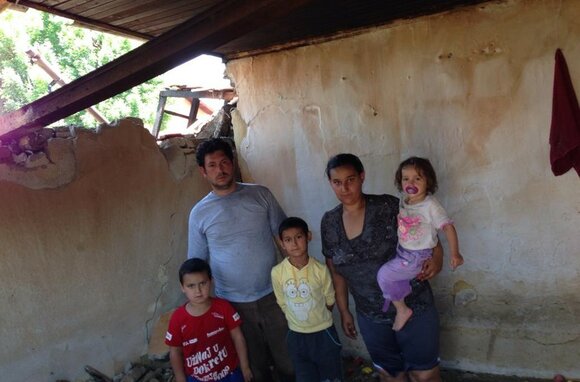
Explores particular vulnerabilities that arise for Roma children and families in regards to care as a result of social marginalization
Examined the eight countries in which USAID supported significant child welfare reform programs: Armenia, Azerbaijan, Belarus, Bosnia-Herzegovina, Georgia, Romania, Russia, and Ukraine. The paper discusses population issues, the current system of child welfare, USAID-funded activities, lessons learned, and best practices.