Image
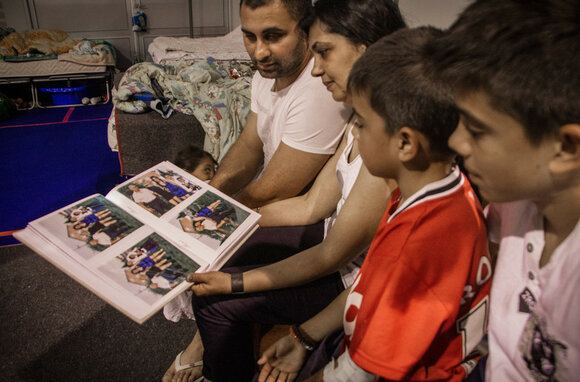
This page contains documents and other resources related to children's care in Europe. Browse resources by region, country, or category.
Displaying 21 - 30 of 1752
This report exposes the severe harm temporary accommodation inflicts on children’s health, education, and wellbeing, with over 160,000 affected across England and rising numbers in London, particularly Southwark. It calls for urgent reforms—including stronger accountability, better inter-agency coordination, and dedicated support roles—to protect children’s rights and prevent lasting damage.
This article examines how foster parents in Sweden navigate and reproduce public suspicions about financial compensation, drawing on texts and interviews from a three-year research project. While payments are essential for recruitment amid a shortage of foster families, foster parents face sensitivity, suspicion, and blame, leading them to develop strategies to deflect questions and avoid stigma.

This study compares residential childcare workforce practices across programs in Poland, Spain, and the United States, examining recruitment, training, supervision, and performance monitoring. Findings reveal both shared priorities, such as upholding children’s dignity, and region-specific differences that suggest potential solutions and highlight the value of international collaboration to strengthen training standards.
This assessment examined how the child protection system supports children and families in vulnerable situations, with a particular focus on supporting the significant number of refugee children from Ukraine who have come to the Czech Republic since the start of the war in Ukraine in February 2022.
This article analyzes data from a qualitative study that aims to investigate the well-being and vulnerability of Swiss children and adolescents in residential care. The empirical findings focus on the importance of digital media for children’s and adolescents’ well-being from their perspectives.
This research explores how the perception of “feeling like a family” impacts the quality of life for children and adolescents in residential care in Spain. Findings from both qualitative and quantitative studies show that shared activities, affectionate relationships, and supportive environments foster this sense of family, which in turn is strongly linked to improved well-being.
Italy and Türkiye, both key transit countries for unaccompanied children, have legal frameworks to support them, yet gaps between policy and practice hinder access to services and a smooth transition to adulthood. This study, based on qualitative fieldwork and 23 interviews conducted in both countries, examines reception systems, accommodation services, and the challenges unaccompanied children face during this critical life stage.
This study reanalyzes interviews with 20 children in Ireland to explore their perspectives on participation in child protection processes involving their families. Findings show that while children often shared adult concerns, they viewed participation differently—particularly regarding risk, safety, stigma, and the need for ongoing dialogue—highlighting the importance of more child-centred approaches in practice.

This report makes a series of recommendations on issues affecting all types of care, including foster care, adoption, kinship care, children’s homes, and support for disabled children in the UK.
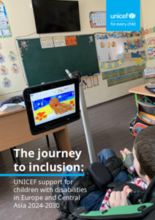
This summary draws on the work of the UNICEF Europe and Central Asia Regional Office (ECARO) with and for children with disabilities to develop pathways for their full inclusion in their communities.