
File
Displaying 1441 - 1450 of 4505
This webinar focused on Early Childhood Development in Humanitarian Settings in the context of the COVID-19 pandemic.
With the aims of highlighting the key issues, innovative programming adaptations, and research considerations, this webinar will focus on Early Childhood Development in Humanitarian Settings in the context of the COVID-19 pandemic.
This document provides interim guidance for child protection and health actors in the context of quarantine and isolation measures to mitigate related child protection risks, minimize family separation, and promote family unity and social cohesion.
Настоящий документ представляет собой временное руководство для субъектов в области защиты прав детей и в системе здравоохранения в контексте карантинно-изоляционных мероприятий с целью снижения рисков, связанных с защитой прав детей, минимизации случаев разлучения семей, а также содействия единству семей и социальной сплоченности.
En este documento se ofrece orientación provisional a los agentes de protección de la niñez y de la salud en el contexto de las medidas de cuarentena y aislamiento para mitigar los riesgos conexos de protección de la niñez, reducir al mínimo la separación familiar y promover la unidad familiar y la cohesión social.
Ce webinaire lance une note technique, COVID-19 et la protection des enfants contre la violence, les abus et la négligence à domicile.
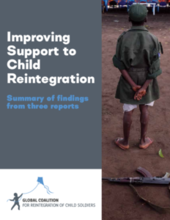
This document is a summary of three papers on how to effectively support children who have exited armed forces and armed groups and contains actionable recommendations at the end to stimulate thinking and action to assist these most vulnerable children and their communities.
This paper provides a structured overview of the existing parenting literature with the aim of developing an evidence-based and culture-sensitive framework of parenting and its influence on child development.
This document builds on existing response action from several countries and case management task force agencies. It provides considerations for adapting Child Protection Case Management (CP CM) interventions to the COVID-19 pandemic and to better understand the important role of case management in the emergency.
This listening session will focus on the impact of COVID-19 on the availability of regular pathways for the protection of migrants in situations of vulnerability, providing a space to share updates on emerging challenges, promising practices, and examples of ongoing collaboration among stakeholders in all regions.