File
Displaying 1991 - 2000 of 4505
This paper analyzes the United States of America (U.S). House Resolution 1409 (H.R.1409) also referred to as the “Assistance for Orphans and Other Vulnerable Children in Developing Countries Act of 2005 (AOVC).”
This book explores how humanitarian interventions for children in difficult circumstances engage in affective commodification of disadvantaged childhoods.
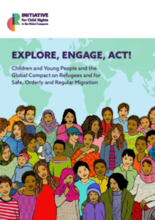
This publication is aimed at children and young people (and adults too!) so that they know what the governments of the world have said they will do. As the Global Compacts can be difficult to read, this ‘child and youth friendly’ briefing summarizes what these documents say about migrant and refugee children and young people.
This chapter identifies the structural components of the transnational illegal adoption market by applying the basic logic of the routine activity theory that has been developed by Cohen and Felson.
The purpose of the study presented in this open access article was to provide an overview of the literature on associations between determinants and social climate and between social climate and outcomes in therapeutic residential youth care (TRC).
This chapter explicates the concept of the orphan industrial complex to argue that persistent narratives of “orphan rescue” not only commodify orphans and orphanhood itself but—counter to their stated goal—can actually spur the “production” of “orphans,” resulting in child exploitation and trafficking.
The Better Care Network is seeking a consultant (40 days) to support the delivery of the next phase of a programme of engagement with the global travel and voluntourism sectors.
The Coalition for Children Affected by AIDS and ViiV Healthcare have launched a new "Positive Action Challenge," awarding 10 prizes of $5,000 USD.
The purpose of this assessment is to reflect on the successes and challenges of the Global Alliance for Children (GAC) experience, a large-scale initiative to support and improve outcomes for children throughout their life cycle, especially children most at risk of harm.
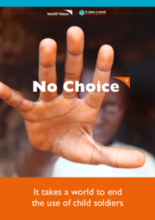
World Vision commissioned the research, 'No Choice', to better understand children associated with armed groups.