File
Displaying 541 - 550 of 4505
Este Informe Temático sobre voluntariado, volunturismo, turismo de orfanatos y tráfico de huérfanos fue elaborado para aportar lineamientos a los Gobiernos, los responsables de políticas y otros responsables de la toma de decisiones. También respalda la implementación de los compromisos internacionales asumidos en el contexto de la Resolución de la Asamblea General de la ONU 2019 sobre los Derechos de los niños y las niñas privados del cuidado parental. Explica de qué modo tomar las medidas apropiadas para abordar y prevenir los daños asociados al voluntariado en orfanatos, el turismo de orfanatos y el volunturismo, y al tráfico de huérfanos vinculado con las actividades anteriores.
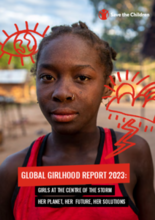
The climate crisis is already changing girls’ lives and futures. Save the Children’s analysis shows that between now and 2030, almost 60% of girls - that’s 931 million - will experience at least one extreme weather event, like flooding, drought or heatwaves.
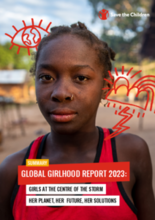
This year’s adolescent-friendly Global Girlhood Report explores how the climate crisis impacts girls’ rights. It features new analysis by Save the Children on emergency hotspots where girls face the dual threat of child marriage and climate disasters, and stories of girls advocating for climate action in their communities.
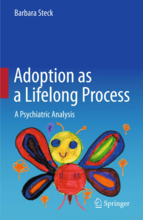
This book addresses the psychosocial complexities of adoption from multiple perspectives, including the biological family, adopted child, and adoptive parents. It highlights the must-have sensitivity and tactfulness for recurring discussions of the adoption situation.
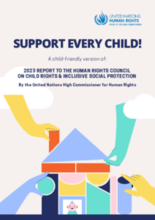
The OHCHR submitted the first-ever child-friendly report, conducted with over 600+ child participants worldwide. The premise of this report is based on children's right to social support. Most children cannot access social aid and protection and, therefore, cannot access their other rights.
This thematic brief contains guidance on key policy measures and concrete steps that may assist with the development and implementation of a whole-of-government strategy to eliminate orphanage tourism and voluntourism and to combat orphanage trafficking. It includes recommendations relevant to volunteer-sending and volunteer-receiving countries. In addition, it contains practical examples of effective measures from a diverse range of countries sending and receiving volunteers.
Researchers, members of faith communities, and other stakeholders are invited to contribute new written, audio, or video content through an online platform for public scholarship and informed commentary.
Los daños medioambientales son una amenaza importante para los derechos de la infancia en todo el mundo. Los niños y las niñas exigen que se tomen medidas inmediatas y que se protejan sus derechos.
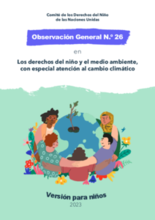
Cette Observation générale explique pourquoi il est urgent d'agir en faveur de l'environnement et du climat et ce que les gouvernements doivent faire pour protéger tous les droits des enfants. Elle précise également que les gouvernements doivent protéger les droits des enfants d'aujourd'hui et ceux des générations futures.