Image
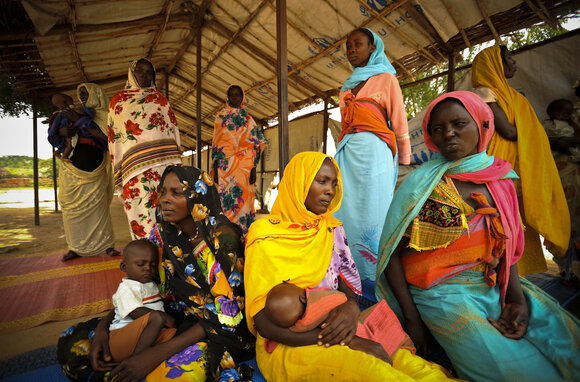
This page contains documents and other resources related to children's care in Africa. Browse resources by region, country, or category. Resources related particularly to North Africa can also be found on the Middle East and North Africa page.
Displaying 101 - 110 of 2659
This report presents findings from an evaluation by Changing the Way We Care (CTWWC) that used a realist approach to examine how care reform progressed in Guatemala, India, Kenya, and Moldova across five key system components. It identifies advocacy, government ownership, collaboration, and capacity-building as major drivers of change and offers recommendations for governments and partners to embed family care in national systems, strengthen coordination and workforce capacity, and sustain reforms through evidence, shared learning, and long-term commitment.
This paper outlines the development of a community-led child protection approach (Seeds), created through a multi-stage process involving a systematic literature review, formative research in Uganda and Lebanon, a field test in Sri Lanka, a feasibility study in Colombia, and expert review, resulting in a six-phase model designed to strengthen children’s protection and their sense of safety.
This article provides a critical examination of the Child's Rights Act in Nigeria, with a focus on strengthening foster care through the codification of the United Nations (UN) Guidelines on Alternative Care. It analyzes the existing legal framework governing foster care in Nigeria, identifying gaps and limitations that hinder the effective protection and care of children living in foster care arrangements.
This study examines the educational experiences of children in Charitable Children's Institutions (CCIs) in Kenya, highlighting how institutional care often fills gaps left by inadequate education and other services in contexts of poverty. Findings reveal that children in CCIs face marginalization, stigma, and disrupted learning, while promising interventions include cross-sector partnerships, safeguarding training, and transitioning CCIs toward community-based support within national care reform.

Changing the Way We Care (CTWWC) is a global initiative which promotes safe, nurturing family care for children.
On October 2, 2025, Kenya’s government, civil society organizations, and child protection practitioners met with Lumos Kenya to launch “costed, holistic and systematic care reform roadmaps” and case management process plans to transition children from institutional care into family‐ and community‐based care.
This study examines challenges that hinder social workers in South Africa from providing effective family reunification services, resulting in children staying in alternative care longer than necessary. Findings from a mixed-methods study suggest that providing resources, reducing caseloads, supervising and training social workers, and adhering to reunification principles are key measures to ensure holistic and timely family reunification.
This resource presents a costed policy study on investing in disability-inclusive and gender-responsive community care and support systems across the life cycle in Kenya, developed by the Ministry of Labour and Social Protection.
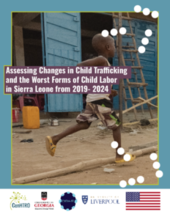
This endline report reviews changes in child trafficking and child labor across four districts in Sierra Leone between 2019 and 2024, drawing on both quantitative and qualitative data. It summarizes major findings, outlines key recommendations, and provides an overview of the study’s methodology and program phases from baseline to endline.
This technical brief examines how public health emergencies in Eastern and Southern Africa—such as polio, cholera, Ebola, Marburg, and mpox—disrupt protective environments and increase risks of violence, exploitation, and neglect for children, including those without parental care. Drawing on lessons from multiple countries, it highlights scalable approaches to embed child protection in health responses and calls for coordinated frameworks that ensure care continuity and resilience during future crises.