
Image

Displaying 301 - 310 of 785
In the current article, the cognitive, emotional, mental health, and behavioural benefits of deinstitutionalisation for children with varied disabilities in India and UK are discussed.

This study assesses the present situation of the deinstitutionalisation and alternative care arrangements in exile settlements concerning various cultural and socio-structural factors.

This article reflects different programmes and resource components that may be promoted to keep children with either their own family or within alternative family care, satisfying the rights of their overall development.
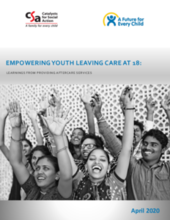
This paper describes an approach to supporting young people leaving Child Care Institutions (CCIs) in India that is potentially scalable to children in all CCIs.
This article from BBC News shares the story of one family from Pakistan who came to the UK to seek medical treatment for one of their children, leaving their eldest son behind with his grandmother in Pakistan. The grandmother later became ill and placed the boy in an orphanage where he is now "stuck" due to the COVID-19 pandemic.
The state of Kerala in India has issued guidelines for children's care homes in light of the COVID-19 pandemic, including calling on child welfare committees (CWCs) to take measures to send children home to their families, according to this article from the Times of India.
In this opinion piece for ABC News, Kate van Doore describes her experience of establishing an orphanage in Nepal in 2006, to later learn that the children in the home's care had living relatives and that many had been recruited to the orphanage.
The purpose of this study is to describe the emotional and behavioural status and the associated factors among inmates aged 11-16 years of children’s homes in the Gampaha Probationary Division of Sri Lanka.

This episode of Foreign Correspondent from ABC News in Australia exposes the "ugly truth" that donations and volunteer efforts of Westerners, including Australians, often drive an exploitative orphanage industry in developing countries (in this case, Nepal).
This article accompanies an episode of Foreign Correspondent from ABC News Australia entitled 'Paper Orphans.' It tells the story of Devi, a 10-year-old girl in Nepal "forced to pose as an orphan" who is being reunited with her family.
