File
Displaying 131 - 140 of 4554
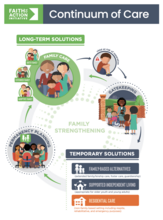
This interactive graphic depicts the vital processes, mechanisms, and care options necessary for supporting children at risk of being or already separated from their parents. It illustrates how best practices work together to prioritize famil
Cross-border case management (CBCM) is a component of child protection case management that supports children on the move and their families who cross international borders, requiring identification and registration, safe cross-border information sharing, and coordinated action among authorities across jurisdictions. This programmatic guidance provides practitioners with recommendations to implement CBCM in line with international refugee protection standards and the best interests of the child, emphasizing engagement with national authorities, continuity of protection, durable solutions, and the upholding of children’s rights within broader child protection systems.
This scoping review synthesises evidence from 77 studies (2014–2024) on violence against children in foster, residential, and kinship care, finding neglect to be the most common form of maltreatment, alongside physical, emotional, sexual, and peer violence across settings. While evidence on effective interventions is limited, the review highlights key risk factors and consequences, underscores the protective role of supportive relationships and trauma-informed care, and calls for stronger family-based care, oversight, and child-centred practices to reduce harm and promote well-being.
This paper proposes an expanded conceptual and normative framework for child protection systems to promote coherence, inclusivity, and accountability in both development and humanitarian contexts. Drawing on global data, recent initiatives, and a dual-axis framework distinguishing norms of operation and intent, it offers a field-tested definition to guide national planning, partner alignment, and systems-focused reform that upholds every child’s right to protection.

The Engaging Men in Nurturing Care: A Roadmap for Systemic Change provides a practical, evidence-informed framework for strengthening men’s and fathers’ involvement in early childhood care and development. t highlights the critical role of engaged fatherhood in improving child development outcomes, supporting family well-being, and advancing gender equality across societies.
This article examines the role of Child Care Institutions in supporting war-affected children, focusing on rehabilitation, education, psychosocial support, and reintegration. It explores the challenges of institutional care and highlights the importance of rights-based approaches that promote resilience, dignity, and family-based alternatives.
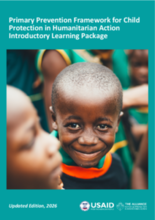
This introductory prevention learning package has been developed by the Alliance for Child Protection in Humanitarian Action and was updated in 2026. The package is designed to strengthen participants’ overall understanding of primary prevention in Child Protection in Humanitarian Action.
After working on infectious disease epidemics with the WHO, Dr. Slutkin developed the idea that violence spreads like a contagious disease and can therefore be prevented using similar interruption strategies. In this book he demonstrates that this public health approach can reduce many forms of violence, from community and domestic violence to broader conflict and even potential war.
This commentary critiques Western-led global orphan care interventions, arguing that donor-driven aid, institutionalization, and voluntourism often perpetuate trauma, family separation, and an “orphan economy” despite good intentions. Drawing on lived experience, research, and ethical reflection, it calls for trauma-informed, family-preserving, and culturally respectful approaches that prioritize children’s rights, dignity, and long-term wellbeing.
This paper presents a rights-based framework for assessing when care orders are justified in child protection, integrating human rights standards, statutory criteria, and international jurisprudence around the principles of necessity, proportionality, and the child’s best interests. It offers practical guidance to improve consistency and accountability in decision-making, supporting evidence-based reform while reducing arbitrary or disproportionate child removals and prioritizing family preservation where possible.