
File
Displaying 71 - 80 of 4554
Theirworld, UNICEF and Act for Early Years partners invite you to join them on the occasion of the World Bank Group and the International Monetary Fund 2026 Spring Meetings for a high-level event focusing on transformational early years investments and accelerating momentum towards the first-ever International Financing Summit for Early Childhood in 2027.
Save the Children and the Global Social Service Workforce Alliance (GSSWA) are pleased to invite you to a webinar on strengthening the Community-Level Social Welfare Workforce (CLSWW). The session will present key learning from the nine‑country analysis and introduce new practical guidance to help practitioners, governments, and partners strengthen the CLSWW through a Child Protection Systems Strengthening (CPSS) and localization lens.
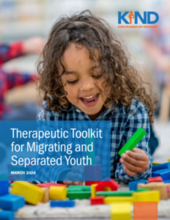
This toolkit provides tools and resources to service providers working with unaccompanied and separated children across various contexts. The toolkit presents research and background on the experiences, needs, and strengths of unaccompanied and separated children, and specific considerations for how service providers may support children’s long-term well-being and resilience while providing needed services.
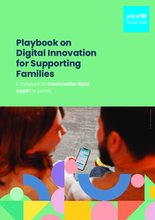
From trusted information and peer support to access to services and emerging AI-enabled tools, digital innovation is reshaping how families seek support, connect with communities, and navigate everyday challenges. This playbook is a practical framework developed by a Digital Expert Group to help governments, practitioners, innovators, and partners design more human-centered, equitable, and scalable digital support ecosystems for families.
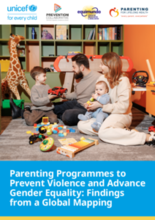
This brief presents findings from a global mapping of parenting programmes that aim to prevent violence against children and against women while advancing gender equality. It offers practical guidance for policymakers, programme designers, and implementers on how to develop, scale, and strengthen parenting interventions that promote safer, more equitable family environments.
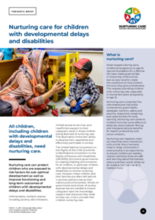
The brief outlines a nurturing care approach for early childhood development that integrates health, nutrition, safety, responsive caregiving, and early learning to support children’s well-being and long-term outcomes. It highlights that children with developmental delays and disabilities face heightened risks of exclusion and calls for inclusive, family-centered policies and services that strengthen community-based support and ensure equitable access to care.
This podcast explores why many U.S. Christians continue to financially support orphanages despite believing children thrive best in families, highlighting a gap between values and giving behaviors. Drawing on Barna research, it examines misconceptions, emotional drivers, and practical barriers influencing donor choices, while encouraging a shift toward family-based care and more ethical, community-centered engagement.
This webinar, held by the Care Leaders Council, is a space for international exchange among people with lived experience in care, aimed at analyzing regulatory progress, best practices, and challenges in the transition to independent living, strengthening global networks and promoting more effective public policies.
This webinar, held by the Care Leaders Council, is a space for international exchange among people with lived experience in care, aimed at analyzing regulatory progress, best practices, and challenges in the transition to independent living, strengthening global networks and promoting more effective public policies.
Parents living through conflict, displacement, and humanitarian crises faced extraordinary pressures that affected both their own wellbeing and their children’s development. This Global Parenting Initiative webinar brought together global and field-level perspectives to explore how parenting and psychosocial support could be better aligned within humanitarian systems.
