Image

Displaying 1731 - 1740 of 2553
Because foster parents play a critical role in supporting children in foster care, who often have experienced trauma, the Casey Foundation developed ARC Reflections, a nine-session program that child welfare agencies can use to train foster parents to better care for children who have had traumatic experiences.
This resource from the Capacity Building Center for States in the U.S. provides guidance on adapting child welfare services to better meet the needs of youth (ages 15 to 24) in care.
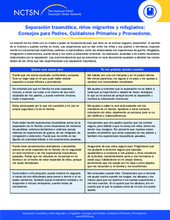
Este recurso proporciona consejos para los cuidadores y otros para ayudar a abordar las necesidades de los niños inmigrantes y refugiados que han experimentado la separación traumática.
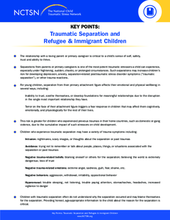
This resource from the National Child Traumatic Stress Network provides key points related to traumatic separation and immigrant and refugee children, adapted from the NCTSN fact sheet Children with Traumatic Separation: Information for Professionals.
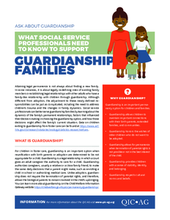
This guidance is designed for social service professionals to better serve guardianship families by learning about the dynamics of the family’s permanent relationships, factors that influenced their decision-making in choosing the guardianship option, and how those decisions might affect the family’s current situation.
This resource from the U.S. National Child Traumatic Stress Network provides tips for current caregivers and others to help address the needs of immigrant and refugee children who have experienced traumatic separation.

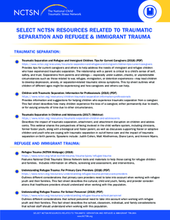
This document from the U.S. National Child Traumatic Stress Network (NCTSN) identifies existing NCTSN resources related to traumatic separation, refugee and immigrant trauma, and best practices in trauma-informed care for refugee and immigrant children and families.
This study sought to understand parents' experiences of the supports and barriers to engagement in an evidence‐based parenting intervention (EBPI).
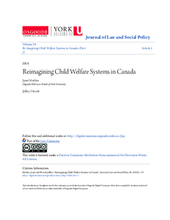
This article introduces Volume 28 of the Journal of Law and Social Policy which focuses on racism and overrepresentation of indigenous and ethnic minority children and youth in the social welfare systems.
This paper presents the qualitative analysis of pre- and post- focus groups with Children’s Aid Societies (CAS) workers who participated in the Positive Parenting Pilot Project (P4) and the emerging practice implications for working with families living with and affected by HIV.