
Image

Displaying 111 - 120 of 332
The authors of this study introduce a new construct, birth family thoughts, that captures a sense of curiosity about birth family for adopted individuals, and describe the development of an accompanying brief self-report measure, the Birth Family Thoughts Scale (BFTS).
This study zeroes in on the issue of left-behind children and draws on data from the China Family Panel Studies surveys to examine the impacts of parental absence on child development in psychological, physical and cognitive domains.
This study aimed to investigate the impact of previous maternal migration experiences on left-behind children’s (LBC) mental health status and suicidal ideation, and the possible mediating role of parent-child communication.
In this paper, the authors examined if high socio-economic status (SES) of families had an effect on youth’s adjustment by comparing 226 internationally adopted female Chinese youth who experienced pre-adoption institutionalization with 1059 non-adopted Chinese peers living in China, as well as 209 non-adopted American peers.
This study investigated whether parental stress was associated with parenting and whether this relationship was mediated by social support in a sample of 255 Chinese immigrant parents from the Survey of Asian American Families in New York City.
This is the first study that empirically investigates the associations between left-behind experience in childhood and the quality of employment in adulthood for young rural-to-urban migrants in China, a population known as new-generation migrants.
This study examined the mediating effect of psychological trait resilience on the relationship between protective factors from social network and self-esteem/depression of the left-behind children in China.
This study examined early trajectories for academic and social skills among four groups of rural, preschool-attending, children in the Guangdong province of China: Village children who remained in a rural village and lived with both parents, Migrant children who migrated with their work-seeking parents to live in an urban area, Partially-left-behind children who lived with one parent in a rural village while the other parent migrated to the city for work, and Completely-left-behind children who stayed in a rural village with relatives while both parents migrated to the city for work.
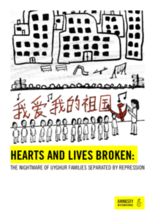
This report from Amnesty International presents testimonies from six parents residing in Australia, Canada, Italy, the Netherlands and Turkey who have been separated from their children, who are "trapped" in China.
In this article, the author focuses on the experiences of five young “left-behind” girls who were socially isolated because of the COVID-19 pandemic.