
Image

Displaying 741 - 750 of 1115
This study examined visual recognition memory and executive functioning (spatial working memory, spatial planning, rule learning, and attention shifting) in 12-year-olds who participated in the Bucharest Early Intervention Project, a randomized controlled trial of foster care for institutionally reared children.
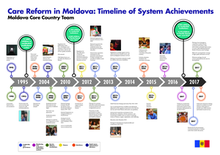
This infographic provides a historical timeline of the alternative care reform process in Moldova, marking key achievements in the establishment of policies, guidelines, procedures, and programs to improve the quality of care and protection for children without adequate family care.
This presentation by the Minister of Health, Labour and Social Protection of Moldova outlines the basic demographic data of Moldova and provides a thorough review of the situation of children's care, and care reform efforts, in the country.
This article utilizes data from the Bucharest Early Intervention Project to examine the neural indices of cognitive control and visual attention biases in children who have been institutionalized in order to understand how they influence the emergence of psychopathology in children with experience in institutional care.
Russian children have been found in orphanages throughout Iraq after their parents moved to the country to join radicals of the Islamic State (IS).
This article studies the causal factors behind the major overhaul of Russia’s system for children in substitute care that has been taking place since the late 2000’s.
This article discusses on-going foster care reform in Russia and analyses possibilities for the evolution of partnerships between stakeholders.
This article examines how Russian SOS Villages are undergoing foster reform, which prescribes a transition from institutional care for children deprived of parental care to family care model.

Lesya Belenok describes her role as a social worker with Hope and Homes for Children in Makariv, a district in the Kyiv region of Ukraine.

This report presents the findings from a secondary analysis of data from a comprehensive intervention in three baby homes in St. Petersburg, Russian Federation. The analysis examined whether caregiver-child interaction quality, number of caregiver transitions, and group size mediated the impact of intervention on children's attachment behaviors and physical growth.