
File
Displaying 3411 - 3420 of 4562
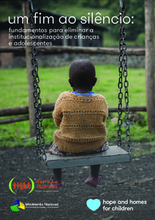
Décadas de pesquisas comprovam que o crescimento em instituições de acolhida gera consequências psicológicas, emocionais e físicas, incluindo transtornos de apego, atrasos cognitivos e no desenvolvimento, e uma falta de habilidades sociais e de competências para a vida, trazendo diversas desvantagens na idade adulta.
This policy paper from Hope and Homes for Children calls on all the stakeholders that play a role in developing, running, supporting or influencing national care systems to join forces in a collaborative action to eradicate institutional care once and for all.

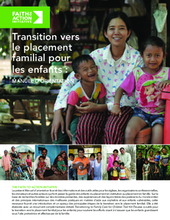
Le présent Manuel d’orientation fournit des informations et des outils utiles pour les églises, les organisations confessionnelles, les donateurs et autres acteurs qui font passer la garde des enfants du placement en institution au placement en famille.
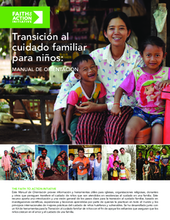
Este Manual de Orientación provee información y herramientas útiles para iglesias, organizaciones religiosas, donantes y otros que persiguen transferir el cuidado de niños que son atendidos en residencias al cuidado en una familia.
This volume of the Scottish Journal of Residential Child Care includes a collections of articles, reflections and reviews covering a wide range of subjects from taking a fresh look at leaving care interactions, to exploring the role of storytelling in social care practice.
This paper aims to understand the functioning of institution in protecting the rights of children who are in need of care and protection and highlight measures for revamping the institutional care and revolutionizing family care.
The global plan of action is a technical document informed by evidence, best practices and existing WHO technical guidance.
This book introduces the PDAK – Pusat Dukungan Anak dan Keluarga (Child and Family Support Centre) in Indonesia and the case management system utilized within the centre.
Transitioning to Family Care for Children: A Guidance Manual aims to provide practical guidance and tools for churches, faith-based organizations, donors, and others who are transitioning care for children away from residential care to care within families.
The Transitioning to Family Care for Children Tool Kit is an online resource developed by the Faith to Action Initiative for churches, faith-based organizations, donors, and others seeking to transition their care and support of children away from a residential model of care (e.g., institutions, orphanages, children’s homes, group homes) to care within families.