File
Displaying 3831 - 3840 of 4562
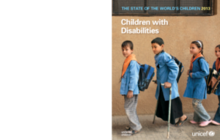
In its 2013 State of the World’s Children Report, UNICEF has chosen to highlight the particular issues, needs, and circumstances of children with disabilities worldwide. The report includes a description of the common issues that children with disabilities face, models for inclusive policy and practice, and an agenda for action moving forward.
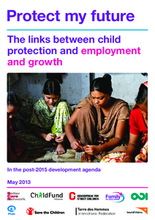
This paper was commissioned by Family for Every Child and is part of an inter-agency series on the links between child protection and major development goals. This report focuses on the links between child protection and economic growth.
This statement from a group of international and national agencies working towards children's protection include recommendations for the inclusion of a major goal and specific targets on children's care and protection as part of the framework that will replace the current Millennium Development Goals in 2015.
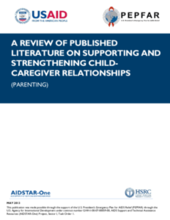
This paper presents a comprehensive literature review of evidence-based parenting programs from around the world. The report reviews published literature from 2000 to 2012 and summarizes empirically based recommendations for supporting and strengthening child-caregiver relationships in the context of AIDS and poverty.
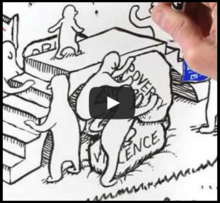
This 5-minute animated video depicts a theory of change for achieving breakthrough outcomes for vulnerable children and families. It describes the need to focus on building the capabilities of caregivers and strengthening the communities that together form the environment of relationships essential to children’s lifelong learning, health, and behavior.
The International Day for Street Children was celebrated for the third year on April 12, 2013. The Consortium for Street Children wishes to have this day recognized by the UN. To lend your support, please sign the petition.
Statement by Ms. Regina Maria Cordeiro Deputy Permanent Representative of Brazil to the United Nations on the occasion of the launch of the handbook ‘Moving Forward: Implementing the ‘Guidelines for the Alternative Care of Children’ at UNICEF House in New York on the 11th April 2013
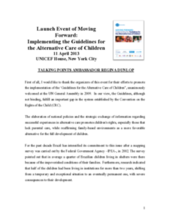
Statement by Ms. Jennifer Davidson, CELCIS & co-author of the Handbook on the occasion of the launch of the handbook ‘Moving Forward: Implementing the ‘Guidelines for the Alternative Care of Children’ at UNICEF House in New York on the 11th April 2013.
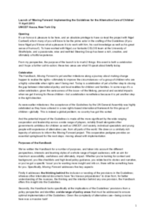
The launch of the handbook ‘Moving Forward: Implementing the ‘Guidelines for the Alternative Care of Children’ at UNICEF House in New York on the 11th April 2013 marked a milestone in the affirmation of children’s rights.
Statement by Ms.Cecilia Anicama, representing the office on behalf of the Special Representative of the UN Secretary General on Violence against Children on the occasion of the launch of the handbook ‘Moving Forward: Implementing the ‘Guidelines for the Alternative Care of Children’ at UNICEF House in New York on the 11th April 2013.