File
Displaying 201 - 210 of 1343
This is the third report by Coram Voice and The Rees Centre at University of Oxford exploring learning from the Your Life, Your Care surveys that are part of the Bright Spots Programme. It is an analysis of 9,472 responses from children and young people (aged 4-18 years) collected between 2016 and 2021 from 38 Local Authorities in England. The findings build on previous overview reports and the pilot stage in 2015 that involved 611 children and young people. By 2021, the research team had gathered over 10,000 voices from children in care in England.
These are the key findings and recommendations of a report produced by Coram Voice and The Rees Centre at University of Oxford that captures the views of 10,000 children and young people in care in the UK on their wellbeing. This report summarises responses collected through the largest survey of its kind from children and young people aged 4-18 years between 2016 and 2021, giving unprecedented insight into children in care’s subjective wellbeing.
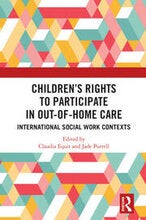
This volume covers a broad spectrum of current research findings concerning the participation of young people in foster families and residential living groups in Australia, Canada, Germany, Ireland, Italy, Portugal, Norway, Sweden, and Switzerland as well as cross-nationals perspective on children and young people’s participation in foster and residential care placements in Great Britain and France.
The Institute on Statelessness and Inclusion (ISI), Child Identity Protection (CHIP) and supporting organizations convened a symposium focusing on “The Child’s Right to Identity in Emergency Settings”. The symposium delved deeper into the challenges of protecting and preserving identity rights, including nationality rights, for children on the move and children affected by armed conflict. It examined how children’s identity rights are undermined in emergency settings, the increased risk of statelessness and the need for urgent action on repatriation, reintegration and reunification of children affected by armed conflict.
The social service workforce plays an important role within social protection systems by connecting children, individuals, and families with a range of social services across sectors. Despite the increasing challenge of poverty and vulnerability exacerbated by the COVID-19 pandemic, conflict and climate change, as well as the increasing recognition of the role of social service workers, investments in strengthening the workforce remain low across most countries. This presentation aims to clarify the role of the social service workforce in the social protection system. It also outlines key considerations for strengthening the social service workforce in their integral role in delivering effective and efficient social protection programmes and services.
This global webinar addressed the need to give greater priority to adolescent mental health, globally, and particularly in low- and middle- income countries. Experts from RTI International, Plan International, Johns Hopkins University, and AstraZeneca share research findings and present new analysis of global data with the aim of motivating and guiding action to improve adolescent mental health.
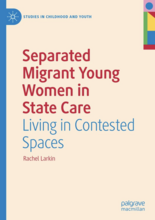
This chapter in the book "Separated Migrant Young Women in State Care" explores how state care systems respond to separated young migrants, using examples from across the globe.
El Comité destaca en particular la gravedad de la discriminación y la violencia de género contra las mujeres y las niñas Indígenas con discapacidad que viven en instituciones.
Le Comité insiste, en particulier, sur la gravité des actes de discrimination et de violence fondée sur le genre commis à l’encontre des femmes et des filles autochtones handicapées placées en institution.
The Committee highlights, in particular, the gravity of discrimination and gender-based violence against Indigenous women and girls with disabilities who are living in institutions.