Image

Displaying 31 - 40 of 785
This study addresses the urgent need for family-based care for children without parental care, as emphasised by the UN General Assembly’s 2019 resolution, India’s Juvenile Justice Act 2015, and Mission Vatsalya. The primary aim is to evaluate the effectiveness of the Thrive Scale™ tool developed by Miracle Foundation India in generating measurable, data-driven decisions to plan and implement suitable interventions for family strengthening.
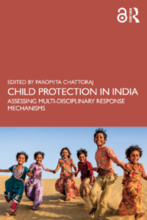
This book offers a comprehensive exploration of the institutional, legal, and social frameworks surrounding child protection in India. Anchored in a multidisciplinary approach, the book brings together insights from law, social work, psychology, education, and public policy to examine how various systems interact in addressing the issues related to protection of children from abuse, neglect, trafficking, and exploitation.
This paper explores the issue of child trafficking in Odisha, India, with a particular focus on the heightened vulnerability of children in tribal regions and the legal measures implemented to prevent trafficking and protect victims during and after the COVID-19 pandemic.
This study examines whether institutional rehabilitation for street girls in Pakistan is genuinely transformative by assessing services at the Zamung Kor Model Institute through a gender- and child-centred lens. While findings show improvements in safety, emotional regulation, and educational engagement, persistent gaps in trauma-informed care, vocational pathways, and post-discharge support highlight the need to reconceptualize rehabilitation as a continuous, community-linked process.
This paper explores the mental health and wellbeing of care-experienced girls in Pakistan, highlighting how structural and systemic factors shape their experiences. Using focus group data, it identifies limited mental health awareness, gender discrimination and harassment, and restricted opportunities as key challenges, and offers recommendations framed within children’s and women’s rights to better support their futures.
This article examines how children in Nepal are migrating either within the country or across borders—sometimes alone and other times with families—driven by a range of factors including lack of parental care, poverty, limited access to education
This article describes how Mission Vatsalya’s policy framework is being translated into practice through convergence—coordinated action across ministries, departments, local governance bodies, and civil society—to strengthen family‑based care and
This paper explores the lived experiences of Bhutanese unaccompanied and separated refugee children living in camps in eastern Nepal, examining how they navigate prolonged displacement, statelessness, and institutional neglect through ethnographic and narrative methods. It argues that these children exist in a “state-of-nowhere,” rendered politically and administratively invisible within refugee governance systems, and calls for rights-based, child-centred responses that address the structural and epistemic violence shaping their exclusion.
This evaluation of Save the Children Finland’s Child-Sensitive Social Protection (CSSP) programme (2022–2025) found that it improved access to social protection, strengthened government systems, and supported better parenting practices across six countries in Africa and Asia. The programme showed strong results—especially through its parenting component, which improved caregiver engagement and child development outcomes—while highlighting the need for greater government ownership to sustain long-term impact.
This report presents suggested adaptations to include disability-related questions across three key case management tools under the Indian Juvenile Justice Act 2015 – the Social Investigation Report, Individual Care Plan and Case History Form. It also documents the consultative process undertaken for these adaptations and offers practical recommendations to help child protection systems better identify, support, and include children with disabilities.