Image

Displaying 1 - 10 of 653
This article describes how the Lagos State Government has reaffirmed its commitment to strengthening child protection and improving conditions in orphanage homes through stricter regulation, oversight, and collaboration with care providers.
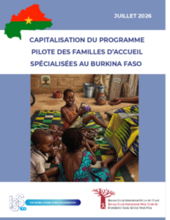
ISS and ISS West Africa, in collaboration with the child protection authorities of Burkina Faso, have been implementing since 2018 a pilot programme of specialised foster families for children living with disabilities. After six years of implementation, ISS has undertaken a capitalisation process to analyse and document this pilot experience and identify the main lessons learned, with a view to strengthening and potentially scaling up the project at a national level.
Growing up and living with albinism in rural Nigeria was tough for Aisha*. She and her two siblings with the condition were shrouded in stigma and lived in constant fear of being mutilated or killed.
This article examines the impact of the 2025 U.S. foreign aid freeze on Nigeria’s HIV response, with a focus on programs supporting orphans and vulnerable children, adolescents, and family-based prevention. It highlights how disruptions to psychosocial support and community interventions may affect HIV prevention efforts and underscores the need for sustainable, locally led systems.
This article explores the lived experiences of street-connected youth in African cities, highlighting the multiple socio-economic challenges they face alongside their resilience in navigating daily survival. Drawing on focus groups across three cities, it reconceptualizes resilience as a dynamic, context-driven process shaped by social, institutional, and environmental factors, with implications for policy and practice.
This qualitative study examines the drivers, progress, and ongoing challenges in addressing child trafficking in Ghana, drawing on interviews with 80 stakeholders across government, civil society, and affected communities. It finds that while policy and institutional advances have been made, persistent issues such as weak enforcement, limited coordination, and underlying drivers like poverty and migration require stronger, better-resourced, and more survivor-centred responses.
This AP article describes how Nigerian troops rescued seven children and two women who had been kidnapped during an attack on an orphanage in Kogi State in April 2026.
The UNICEF Caring for the Caregiver package is a counselling approach and behaviour change intervention that can be integrated into routine home-visiting by frontline workers, in a demand-responsive way, at a population level. This study aimed to evaluate caregiver outcomes and explore intervention experiences from the package in six low-income and middle-income countries.
This study explores how kinship lineage and inheritance norms in Ghana influence decisions about placing children in the care of maternal or paternal grandmothers. While traditionally significant, findings suggest these norms are weakening due to legal reforms, social change, and interethnic marriages, with limited influence on most contemporary kinship care arrangements.