Image
This page contains documents and other resources related to children's care in Africa. Browse resources by region, country, or category. Resources related particularly to North Africa can also be found on the Middle East and North Africa page.
Displaying 951 - 960 of 2669
This webinar includes presentations from the Democratic Republic of Congo and the Philippines, sharing experiences designing, managing and evaluating parenting interventions to reduce violence against children and adolescents by parents and caregivers.
In this radio segment from Newsday, Aselefech Evans, an Ethiopian adoptee who was adopted to the US at the age of six, speaks about her support of the Ethiopian Prime Minister's decision to adopt a child.
The State of Funding for Children in SADC is a report that investigates the status of resources that are earmarked for children in southern Africa.
The purpose of this assessment is to reflect on the successes and challenges of the Global Alliance for Children (GAC) experience, a large-scale initiative to support and improve outcomes for children throughout their life cycle, especially children most at risk of harm.
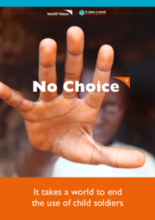
World Vision commissioned the research, 'No Choice', to better understand children associated with armed groups.
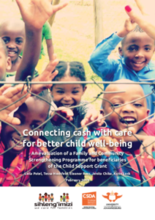
This report presents the findings of an intervention study evaluating the short-term outcomes of Sihleng’imizi Family Programme, an evidence-based preventative social-educational intervention.
"Since 2013, 3,151 out of 3,323 children living in 33 orphanages have safely been placed into family based care through the ‘Tubarere Mu Muryango’ program /Let’s Raise Children in the Family (TMM), implemented by the Government of Rwanda in partnership with UNICEF and different NGOs with financial support from USAID," according to this article from the New Times.
"Belgian authorities have asked for DNA samples of children adopted from the Democratic Republic of Congo to establish if their biological parents are still alive," according to this article from BBC News.
Agape Children's Ministry is hosting a 5-day workshop on family reintegration in Kisumu, Kenya.
This article examines the aftercare experiences of young people who have recently left a residential care institution in Lagos State, Nigeria.