
Image

Displaying 81 - 90 of 118
Charts that accompany the article Orphan Fever: The Evangelical Movement’s Adoption Obsession, illustrating the trends in international adoptions from Liberia, Kyrgyzstan, Ethiopia, Uganda, and Haiti to families in the United States.
This presentation to the 2012 Sofia Conference by Jean-Claude Legrand, Senior Regional Advisor Child Protection, UNICEF CEE/CIS, highlights the situation of children in formal care, with particular concern for children with disabilities, and recommends reform and policy initiatives to improve the childcare systems in Eastern Europe and Central Asia.
This presentation to the 2012 Sofia Conference by the Kuan Sabi Program, in Kazakhstan suggests ways to improve the knowledge and skills of Primary Health Care workers that care for children under the age of 3.
Through a comprehensive statistical analysis and literature review, this UNICEF report provides a child rights-based up-to-date review of the situation of children under the age of three in formal care in the countries of Central and Eastern Europe and the Commonwealth of Independent States (CEECIS).
This report is the result 4 of a two-year EU funded project “An Early Years Support Centre (EYSC) service in Dushanbe: Reducing poverty, empowering vulnerable families, strengthening partnerships and advocating for rights”. It outlines the model of support that was developed through the EYSC project in Dushanbe, the capital of Tajikistan.
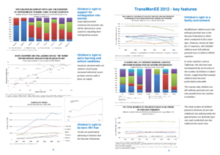
TransMonEE is a database that captures a vast range of data on social and economic issues relevant to the situation and wellbeing of children, adolescents and women in 28 countries of Central and Eastern Europe, Commonwealth of Independent States and the European Union. This document includes inter-country comparisons of data on several issues related to children’s care.
This edition of Insights produced by UNICEF summarizes the findings and recommendations of studies on the impact and outreach of social protection systems in Albania, Kazakhstan, and Ukraine where high rates of child placement in formal care still persist. The research offers important insight into the weaknesses and challenges faced by social protection systems in the region, but also point to ways in which policy-makers might maximise the impact of social protection systems in order to ‘keep families together’.
Published by UNICEF, the report At Home or in a Home, provides an overview of the major trends and concerns about children in formal care and institutions as well as adoption Central and Eastern Europe and Central Asia.
This study on violence against children in state-run residential institutions in Kazakhstan was conducted under the national Office of the Commissioner for Human Rights and UNICEF. Data was collected from six different types of state run- residential institutions for children in 3 regions using a multi-methods approach, including surveys with children ( 9-18 years old) and staffs, and interviews with young people (17-23 years old) who had left the care of these institutions.
This manual offers a training session targeted at policy makers, professionals and paraprofessionals who are already working on programs to support children without appropriate care, or who may begin work in this area. This workshop focuses on children in developing contexts, who require support within their families and those who need an alternative care placement.
