Image
This page contains documents and other resources related to children's care in Asia. Browse resources by region, country, or category.
Displaying 411 - 420 of 2061
"North Korean state media has claimed that orphans are volunteering to work in state-run mines and farms," according to this article from BBC News.
This report examines the rise in child labor and poverty during the Covid-19 pandemic in three countries: Ghana, Nepal, and Uganda, the impact on children’s rights, and government responses.

According to this article from Bloomberg, "authorities [in India] are scrambling to get a count of how many children have been abandoned, either because their parents have been hospitalized or died or because the surviving parent isn’t able to care for them." Government officials and NGOs are concerned about trafficking risks for these children.
"China plans to restructure its child welfare services and complete the reform process by 2025, shifting the focus of the service system to the protection of minors, the Ministry of Civil Affairs said at a press conference on Tuesday," says this article from Xinhua Net.
Richard Daschbach, a now-defrocked 84-year-old US priest has been charged with sexual abuse of 14 girls in the shelter he ran in Timor-Leste. This article tells the story of one of the young women who spoke out about the abuse she experienced.
Hope and Homes for Children is looking for an independent evaluator or team with a strong record in conducting evaluations as well as direct programme interventions to conduct an evaluation of a pilot project initiated to support catalytic change in care reform in Nepal.
The purpose of the current consultancy is to continue to provide technical assistance to the Government of Uzbekistan in strengthening the system of prevention of juvenile offending with a focus on prevention of placement of children in the closed institutions.
"Social media posts appealing for adoption of children orphaned during COVID-19 are illegal, warn experts. They appeal that citizens must dial helpline 1098 to pass on information about children in need of care and protection," says this article from The Hindu.
Many children in India have lost parents to the second wave of COVID-19. "Some find themselves in the care of relatives and guardians, others remain alone at hospital emergency rooms and homes not knowing what to do with their parents’ bodies."
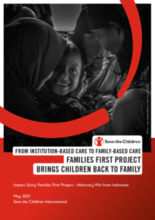
Families First Project is a program initiated by Save the Children in Indonesia in collaboration with the Indonesian Government to promote a safe family environment for raising and caring for children, either in their own families or in family and community-based care alternatives.