
Image
This page contains documents and other resources related to children's care in Asia. Browse resources by region, country, or category.
Displaying 91 - 100 of 2061
This report presents suggested adaptations to include disability-related questions across three key case management tools under the Indian Juvenile Justice Act 2015 – the Social Investigation Report, Individual Care Plan and Case History Form. It also documents the consultative process undertaken for these adaptations and offers practical recommendations to help child protection systems better identify, support, and include children with disabilities.
This report examines how India’s child protection laws interact with disability legislations, highlighting areas where greater focus is required to bring consonance to ensure that the rights of children with disabilities in need of care and protection are upheld.
This technical brief describes how climate change is a child protection crisis that disproportionately affects children in East Asia and the Pacific, driving displacement, family separation, violence, and overwhelming already-strained protection services. Investing in climate-resilient child protection systems strengthens families and communities to prevent and respond to climate-related risks, while ensuring climate adaptation efforts are more effective, inclusive, and sustainable.
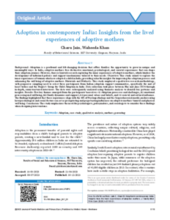
This qualitative study explores the emotional, psychological, and social experiences of adoptive mothers in India through in-depth interviews, identifying key themes related to adoption processes, wellbeing, family dynamics, personal values, and societal influences. The findings highlight how these experiences interact with biopsychosocial factors, underscoring the need for more informed, mother-centred policies and support mechanisms in the adoption system.
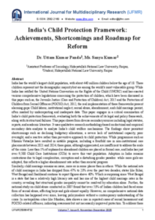
This paper critically examines India’s child protection framework, highlighting that despite comprehensive legislation like the JJ Act, POCSO, and programs such as Mission Vatsalya, systemic gaps in implementation, funding, institutional capacity, and data collection leave millions of children—particularly those in Child Care Institutions (CCIs)—vulnerable to abuse, neglect, and child marriage.
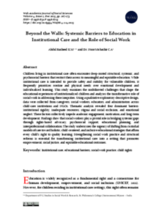
This study examines the educational barriers faced by children in institutional care in India, identifying how structural rigidity, limited resources, stigma, and emotional neglect undermine equitable access to meaningful learning. Drawing on qualitative insights from care and education professionals, it highlights the critical role of social work in advancing child-centred, rights-based approaches to transform institutional care into an environment that supports inclusion, wellbeing, and educational equity.
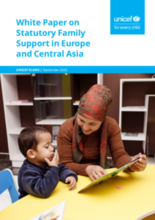
Governments across Europe and Central Asia have advanced child care reforms, yet many children—especially those with disabilities or from marginalized communities—still face risks of separation without strong statutory family support systems in place. This White Paper outlines the essential policies, services, workforce standards, and rights-based approaches countries need to prevent unnecessary separation, strengthen families, and ensure every child can grow up safely in a supportive family environment.
Street children in Bangladesh face chronic food insecurity, unstable shelter, limited access to health and education, and pervasive violence and abuse, as revealed through qualitative interviews with twenty children in Khulna district. Based on the hierarchy of needs expressed by the children, the study identifies essential long-term protection interventions, including community shelter services, psychological counseling, and skill-development training, and underscores the urgent need to implement these measures to ensure their safety and well-being.
This review compares child protection systems in Indonesia and Ethiopia using UNICEF’s Child Protection System Strengthening framework. Both countries have established solid legal frameworks and coordination mechanisms, but progress toward system maturity remains slow due to gaps in enforcement, accountability, and support services, with Indonesia showing stronger development in workforce and data systems.
This study compares child custody and guardianship norms in classical Islamic jurisprudence and modern codifications, focusing on Indonesia’s Compilation of Islamic Law and related laws in selected ASEAN and European countries. It finds that integrating the “best interests of the child” with Islamic legal reasoning through maqāṣid al-sharīʿah can promote child protection and gender equity, offering insights for legal reform in plural societies.
