Image
This page contains documents and other resources related to children's care in Asia. Browse resources by region, country, or category.
Displaying 101 - 110 of 2061
Cambiar la Forma en que Cuidamos (CTWWC, por sus siglas en inglés) es una iniciativa global que promueve un cuidado familiar seguro y afectuoso para los niños.
This study explores the experiences of young Syrian migrant women transitioning out of institutional care in Türkiye, revealing how gender, migration status, and structural barriers shape their pathways to adulthood. It finds that gaps in education, employment support, housing, social capital, and aftercare services create persistent instability and exclusion, underscoring the need for more inclusive, gender-sensitive aftercare policies.
This report documents the finding of the exercise undertaken by the Children and Families Together (CAFT)-India consortium to assess how Indian states are positioned for disability-inclusive care reform. Drawing from data across States, this highlights each State’s existing care systems and inclusion practices, offering valuable insights for policymakers, practitioners, and organizations advancing inclusive child protection and care reform in India.
This press release, from the Catholic Diocese of Darwin, highlights how a group of Northern Territory professionals are in Timor-Leste to help expand a disability care centre.
This study aims to investigate the psychological factors influencing the mental health of orphans in institutional care in Pakistan, focusing on aspects such as childhood trauma, attachment disruptions, life satisfaction, and social isolation. The findings reveal varying levels of engagement, ranging from active involvement and contentment to feelings of isolation and nostalgia for home.
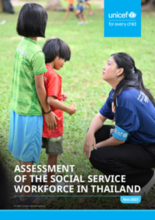
Thailand has a long history of social work and a legal framework recognizing the profession. However, social needs are growing in scale and complexity, while the social service workforce remains under resourced, unevenly distributed, and insufficiently supported. The assessment examined professional social workers, other social service professionals, paraprofessionals, and volunteers across government and non government sectors at national and sub national levels.
Changing the Way We Care’s “Care System Strengthening Learning Synthesis: Evaluation Summary” distills lessons from care reform efforts in four countries, examining how change happened across laws, workforce, financing, monitoring, and services. It finds that evidence-based advocacy, strong government ownership, collaboration, and capacity-building were central to driving and sustaining reform across diverse contexts.

This report presents an independent assessment of Cambodia’s national and intercountry adoption systems, with a focus on the country’s progress in aligning adoption practices with international standards for child protection and family-based alternative care. Commissioned by UNICEF Cambodia in collaboration with the Ministry of Social Affairs, Veterans, and Youth Rehabilitation, the assessment evaluates the current capacity, processes, and legal frameworks governing adoption, and provides recommendations to strengthen the system in the context of Cambodia’s ongoing care reform agenda.
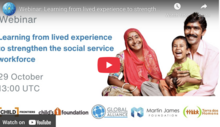
This webinar showcased the learning from Strengthening the Social Service Workforce for Family-Based Care, a two-year project implemented by the Global Social Service Workforce Alliance, with technical support from Child Frontiers, under a grant f