
Image

Displaying 41 - 50 of 1691
The UK Parliament’s Public Accounts Committee has found that hundreds of vulnerable children in England’s care were placed for months in “illegal” homes, settings not registered with the national regulator Ofsted, due to severe shortages
To launch a new Emerging Insight Series of webinars from CELCIS, this session set the scene by considering what AI might mean for children’s social care. It explored fundamental questions, potential opportunities, and challenges related to how AI is being used in practice; its role in responding to the care and protection needs of children and young people and supporting their families; and emerging understanding of the influences and impacts of AI on children’s and young people’s lives.
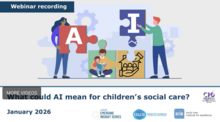
Whether we always know it or not, Artificial Intelligence (AI) is a now an element of many of the digital and electronic tools many of us use every day in our professional and personal lives.
This Chapter in the Book, Participatory Approaches in Child and Family Social Work explores the significance of advocacy in promoting the rights and well-being of children in care.
This study examines how care home staff and managers in the UK perceive and respond to children going missing from care, identifying key factors such as communication, relationships, and organizational support that influence prevention and response. Findings highlight the importance of trauma-informed, child-centred, and collaborative approaches, while noting barriers like resource constraints and inconsistent practices, and offer recommendations to improve safeguarding and outcomes.
This report builds on previous research highlighting the multiple challenges facing children of mothers with out-of-home care (OHC) experience in the UK. It draws on data from young people born in 2000 who are part of the UK Millennium Cohort Study (MCS) to deepen understanding of the association between maternal OHC experience and poor behavioural and mental health outcomes.
This article compares the existing legislative, policy and practice supports for young people transitioning from out-of-home care (known as care leavers) aged 18–25 years in three jurisdictions: Sweden, Norway and Australia. Attention is drawn to the impact of the different welfare regimes in these countries (i.e., social democratic vs liberal), the inconsistencies across different states and regions, and the eligibility and adequacy of existing support programmes.
New data from the Children’s Commissioner for England found 669 children living in unregistered children’s homes as of 1 September 2025—a 12% decrease from the previous year. While the reduction is welcome, these placements remain unlawful and unsafe, highlighting an ongoing failure to adequately protect vulnerable children.
This blog, from Hope and Homes for Children, argues that the new Netflix documentary Masaka Kids: A Rhythm Within—produced with the involvement of Harry and Meghan and set in a Ugandan orphanage—presents a superficially heartwarming story that risks reinforcing harmful perceptions about institutional care at a time when global leaders, including the UK, are advocating for family-based care and ending orphanages.
This article describes how thousands of adults who grew up in the UK care system continue to struggle to access their childhood care records — files that often hold the only written account of their early lives and decisions made about them.